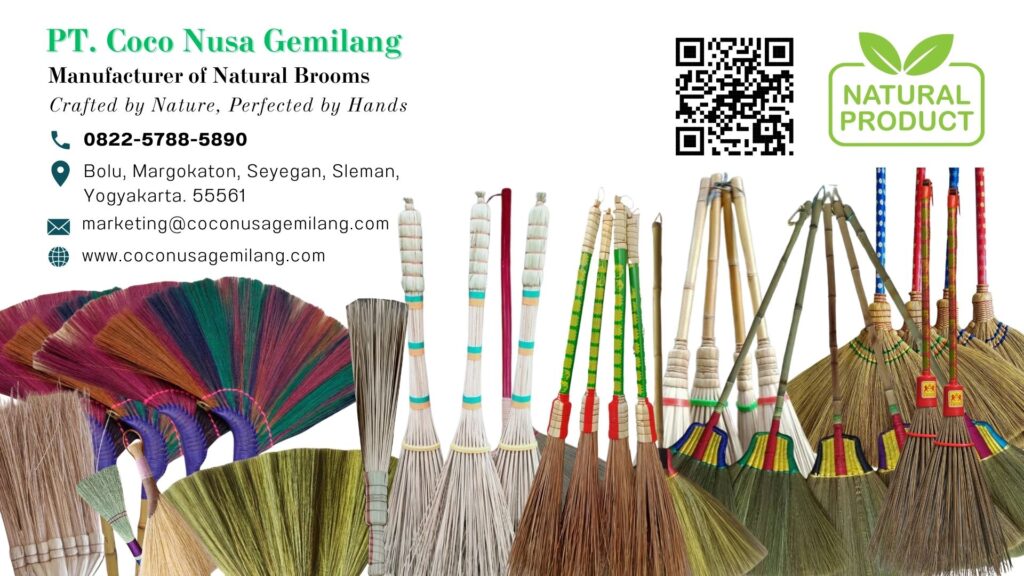


The coconut broom stick stands as one of the most understated yet deeply functional household tools across many tropical regions. Although its appearance seems simple, the craftsmanship, agricultural value, and ergonomic efficiency behind it reveal a tool shaped by generations of practical knowledge. Professionals who study sustainable materials or supply-chain behavior often view it as a remarkable case of how natural resources can be repurposed into long-lasting and commercially viable products. Even as global manufacturing trends shift toward synthetic materials, the coconut broom stick continues to hold its ground within both domestic use and international trade.
Understanding this product requires attention to several interconnected aspects: the biology of the coconut tree, the cultural habits of the communities that produce it, the evolving export markets, and the functional advantages that make it relevant even today. Although many consumers overlook its origins, the coconut broom stick embodies a fine balance between durability, environmental responsibility, and cost efficiency.
Moreover, the production process demonstrates how rural industries derive value from agricultural by-products. Instead of allowing coconut leaf sticks to decay unused, communities transform them into a variety of cleaning tools. These tools not only support household needs but also generate stable income streams. Consequently, the coconut broom stick has grown from a local necessity into a product with global appeal.
Material Characteristics That Define Its Strength
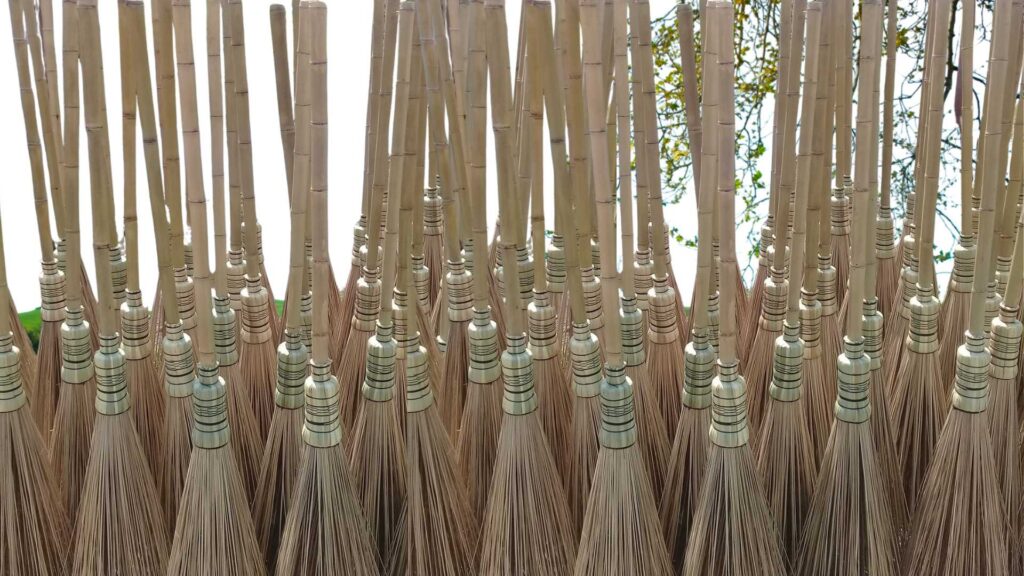
Coconut leaf midribs, often referred to as “coconut sticks,” form the primary material of the broom. Unlike soft palm fibers or chemically treated bristles, the midrib offers natural rigidity. The material preserves its stiffness even after extended use, which makes it effective for sweeping debris in outdoor and semi-outdoor environments.
In addition, the natural tapering of the midrib—thin at the tip and thicker near the base—creates a well-balanced sweeping motion. Users often notice that it distributes force evenly across the sweeping stroke. This characteristic eliminates the need for added synthetic reinforcements, thereby reducing both cost and environmental impact.
Furthermore, the coconut stick’s resistance to moisture contributes to its longevity. Tropical climates expose cleaning tools to humidity, rain, and rapid drying cycles. Under such conditions, many synthetic fibers degrade quickly, yet coconut midribs maintain structural integrity. Their organic oils protect them from rapid decay, offering a practical advantage in communities where tools are used daily in rough outdoor settings.
Craftsmanship and Production Techniques
Crafting a coconut broom stick requires skill that has been refined over decades. Although modern equipment is available, much of the production still depends on manual selection, trimming, and binding. This ensures that the broom maintains consistent stiffness and appropriate weight distribution.
Producers often begin by selecting mature coconut leaflets. These leaflets contain midribs with optimal firmness. After collection, the midribs undergo a drying process that stabilizes their structure. The next stage involves stripping away leaf material to expose the central rib. Craftsmen then sort the sticks based on thickness, color, and straightness.
Once sorted, the midribs are bundled, aligned, and tied together using natural rope, wire, or synthetic binding depending on market preference. However, producers also tailor the binding material to specific environmental conditions. For instance, regions with high humidity sometimes prefer nylon ties because they resist mold. Meanwhile, eco-conscious buyers may request natural fiber bindings.
Skilled workers adjust the broom head’s density by adding or removing sticks. Higher-density broom heads suit industrial cleaning tasks because they generate a firmer sweeping action. Lighter configurations are preferred for residential or indoor use. Therefore, the production process must accommodate diverse market needs.
Cultural Value and Daily Use
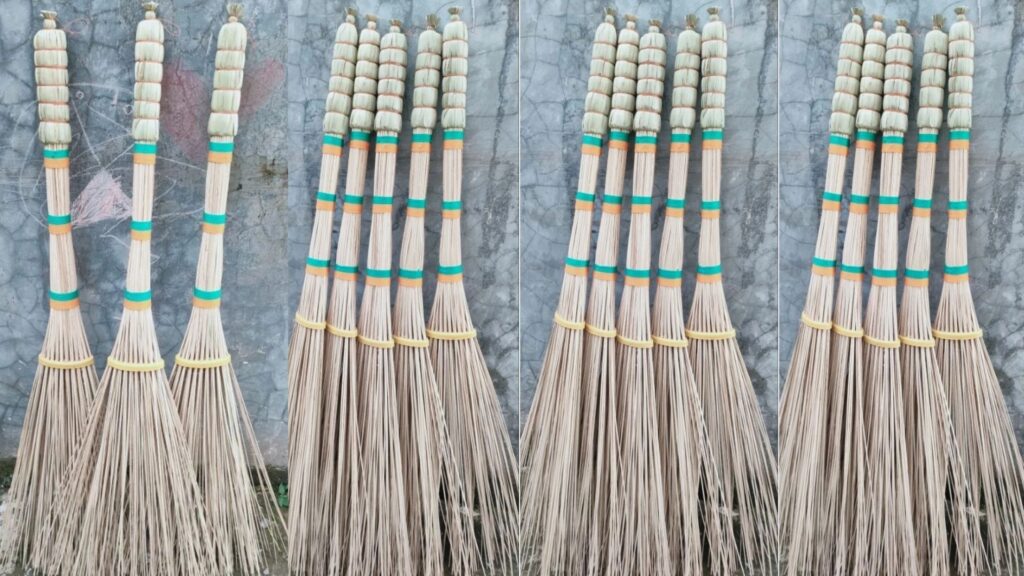
In many Southeast Asian and South Asian households, coconut broom sticks hold cultural and practical importance. They are commonly used for sweeping yards, gardens, terraces, and traditional floors made of stone or cement. Their ability to remove dust, leaves, and fine debris makes them indispensable.
More importantly, the broom is not merely a tool. It represents a cultural rhythm of cleanliness practiced early each morning in many communities. Sweeping the yard at dawn carries symbolic meaning: it marks a fresh start, signals discipline, and reflects good household management. Although modern tools exist, families continue to rely on the coconut broom because it fits seamlessly into cultural routines.
Additionally, its lightweight structure and non-abrasive tips make it ideal for delicate outdoor cleaning tasks. Children and elders find it easy to handle. The absence of sharp bristles ensures that surfaces remain unharmed, which is particularly relevant for traditional flooring materials.
Environmental Considerations and Sustainability
The coconut broom stick exemplifies what sustainable design looks like in practice. It is produced entirely from renewable resources and requires minimal energy input. As demand increases globally for eco-friendly products, buyers increasingly seek alternatives to synthetic brooms made of plastic.
Coconut midribs are agricultural waste by default. Harvesters do not need to cut down trees to obtain them. As a result, the production helps reduce environmental impact while simultaneously promoting resource efficiency. In farming communities, each part of the coconut tree serves a purpose: fruit, shell, husk, leaves, and trunk all become usable materials.
Moreover, the typical lifecycle of a coconut broom stick aligns well with sustainability goals. It decomposes naturally when discarded, leaving no harmful residue. This characteristic appeals strongly to markets in Europe, Japan, and the Middle East where environmental awareness continues to rise.
Governments and supply-chain analysts have noted that products made from agricultural by-products significantly reduce carbon footprints. Therefore, the coconut broom stick fits into global sustainability frameworks without requiring alterations to its traditional design.
Market Behavior and Global Demand

Interest in natural household cleaning tools is growing. While plastic brooms remain common, many retailers now highlight eco-friendly alternatives. Importers appreciate the practicality, low cost, and broad consumer acceptance of coconut broom sticks. Furthermore, the simple production process allows manufacturers to scale output quickly to meet international orders.
Export data trends show a steady rise in demand from the Middle East, South Asia, East Asia, and parts of Europe. Regions with large expatriate communities from tropical countries often drive the initial demand. Once introduced, local consumers adopt the product because it performs well on textured outdoor surfaces.
Importers also value the consistency of supply. Countries such as Indonesia, India, Sri Lanka, and the Philippines produce coconut leaf sticks throughout the year, ensuring stable availability. Consequently, wholesalers and retailers can maintain reliable stock.
In addition, the product offers considerable versatility. Private labels can request custom branding, length variations, packing methods, or bundle sizes. Buyers often seek bulk packaging to reduce shipping costs. Others look for premium presentation for retail shelves. Manufacturers adapt quickly because the underlying production method remains flexible.
Ergonomic and Functional Advantages
Although the coconut broom stick is simple, its ergonomic benefits are significant. Many users prefer its natural weight. Plastic or metal-based brooms can strain the wrist during prolonged use, yet the coconut broom feels light and well-balanced.
The sweeping motion it creates is precise. Because each midrib is slender, the broom head spreads slightly when pressed against the ground. This movement catches debris without scattering it, particularly on rough outdoor terrain. Consequently, the tool becomes indispensable in gardens, walkways, chicken coops, barns, and open yards.
Another advantage lies in its resistance to splitting. The natural fiber structure allows it to withstand repeated impact. As a result, the broom maintains performance even after months of heavy outdoor use. Unlike synthetic brooms that bend permanently, the coconut broom retains shape and stiffness.
Economic Impact for Rural Communities
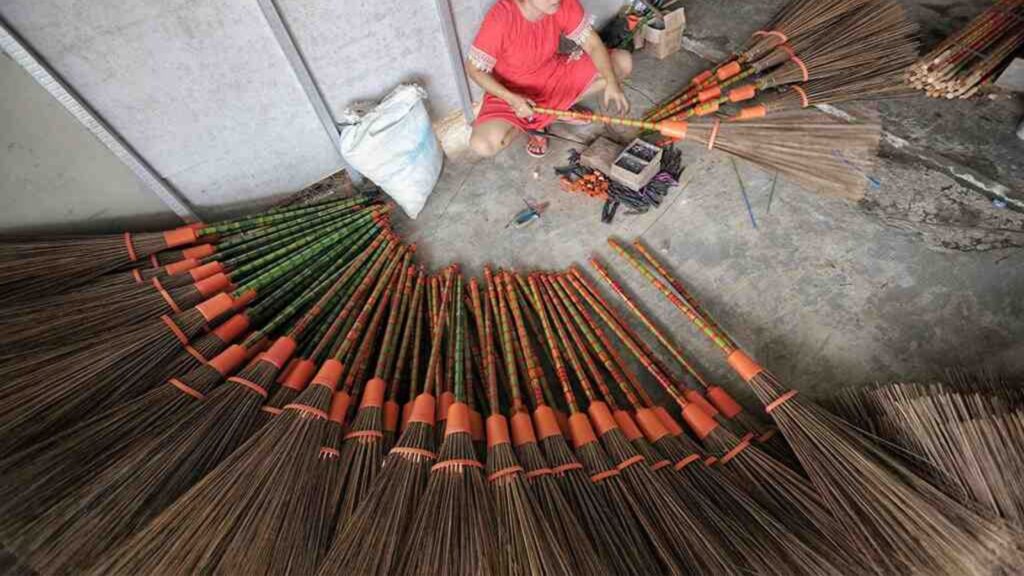
The coconut broom stick industry supports thousands of rural households. More than a cleaning tool, it represents income stability for families in agricultural areas. Many small-scale producers rely on this craft as a primary or supplementary source of livelihood.
Furthermore, the business model encourages community-based production. Workers harvest, process, and bundle coconut sticks using local resources. This localized supply chain strengthens village economies. Middlemen, exporters, transporters, and packaging suppliers also benefit, creating a broader economic ecosystem.
Because the production is labor-intensive, it expands employment opportunities even in regions where industrial jobs are scarce. The demand for skilled handwork ensures that knowledge is passed from generation to generation. As a result, traditions remain alive while contributing to global trade.
Quality Considerations for Buyers
Importers and retailers often evaluate several quality factors before purchasing coconut broom sticks. These include:
- Stick rigidity: Higher rigidity supports heavy-duty sweeping.
- Stick length: Preferred lengths vary by market, typically from 80 cm to 120 cm.
- Binding technique: Tight and clean binding enhances durability.
- Color consistency: Even-toned midribs often indicate proper drying.
- Density of broom head: A thicker broom head provides stronger sweeping action.
However, preferences vary across countries. For example, Middle Eastern markets often request dense broom heads for outdoor sweeping on sandy surfaces. Japanese buyers may prefer cleaner finishing and uniform color. Therefore, manufacturers must maintain flexible production standards.
Why Coconut Broom Sticks Remain Globally Relevant
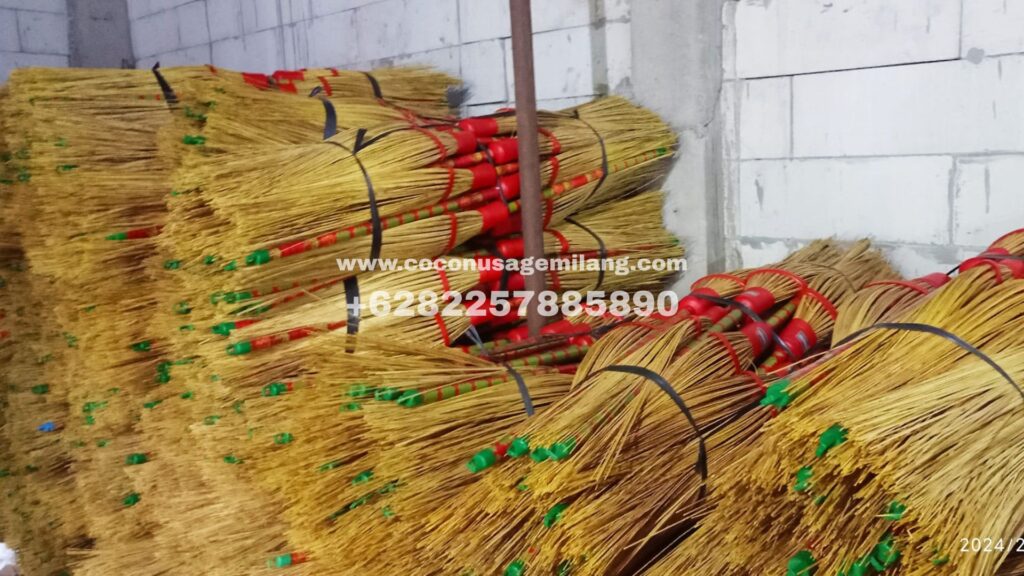
Despite technological change, the coconut broom stick continues to thrive. Its blend of affordability, durability, sustainability, and simplicity ensures consistent demand. Even as new synthetic cleaning tools emerge, very few match the natural sweeping action of coconut midribs.
Moreover, the product aligns perfectly with global environmental trends. Consumers now prefer biodegradable cleaning equipment. Businesses increasingly highlight natural materials in marketing. Governments impose stricter regulations on plastic waste. The coconut broom stick fits neatly within all these developments.
Nevertheless, success in international markets still depends on reliable suppliers. Importers need consistent quality, competitive pricing, and secure logistics. Manufacturers who can meet these expectations quickly become trusted partners.
Coco Nusa Gemilang: Reliable Manufacturer & Global Supplier
Coco Nusa Gemilang stands among the leading manufacturers and suppliers of coconut broom sticks from Indonesia. The company provides high-quality products suitable for global buyers who value durability, sustainability, and consistent craftsmanship. In addition, Coco Nusa Gemilang maintains strict quality control to ensure that each broom meets international standards, from material selection to final packaging.
Furthermore, the company is fully prepared to supply coconut broom sticks for export worldwide. Buyers can request customized packaging, broom sizes, or labeling based on their market requirements. The pricing remains competitive, starting from 0.9 USD to 2 USD per piece (FOB Port Semarang, Indonesia), with rates adjusted according to order volume. Of course, all prices remain negotiable depending on the agreement between both parties.
Moreover, Coco Nusa Gemilang is committed to offering the best value for international partners. The combination of premium raw materials, skilled craftsmanship, and efficient logistics makes the company a dependable source for importing natural cleaning tools. Transitioning to a trustworthy supplier can significantly strengthen your business, and Coco Nusa Gemilang is ready to support that growth with consistent supply and professional service.