

The coconut broom stick occupies an unusual position in today’s cleaning landscape. It stands at the intersection of tradition, ecological practicality, and quiet engineering. Although many modern households increasingly rely on synthetic tools, the coconut broom continues to hold its ground in both domestic and industrial environments. Its value does not emerge only from nostalgia. Rather, it stems from a unique combination of material durability, ergonomic efficiency, and environmental integrity.
Manufacturers across Asia have spent decades refining the craft of coconut broom production. Their approach blends agricultural wisdom with evolving consumer expectations. Instead of discarding coconut leaf ribs, artisans convert them into a cleaning instrument that delivers consistent sweeping power. Consequently, the broom becomes a byproduct of sustainable resource management rather than a simple household commodity.
Furthermore, growing awareness of ecological waste has reshaped how professionals evaluate cleaning tools. Many institutional buyers now consider sustainability alongside price, logistics, and durability. In this broader context, the coconut broom stick has gained renewed relevance. Its biodegradable nature fits neatly into corporate environmental policies, while its performance in outdoor and rough-surface cleaning remains unmatched.
Material Composition and Structural Performance
A coconut broom stick is composed of stiff midribs that come from coconut leaves. The natural hardness of these ribs gives the broom its characteristic firmness. This stiffness becomes an advantage on surfaces that accumulate heavy debris. For example, garden pathways, industrial yards, and workshop floors respond better to coconut broom sticks than to many synthetic alternatives.
Each rib undergoes a drying and curing period that enhances its strength. When assembled, the ribs interlock to form a dense sweeping fan. As a result, the broom produces a directional sweeping pattern that removes particles with surprising efficiency. It also tolerates friction and repeated impact far longer than many polymer-based tools.
Additionally, coconut midribs resist moisture in ways that synthetic fibers often cannot. When exposed to rain or humidity, they maintain their structural consistency. This durability allows professional users—such as gardeners, outdoor cleaning teams, or facility staff—to rely on the broom throughout shifting climates.
Ergonomics and User Experience
Ergonomics plays a significant role in determining whether a cleaning tool succeeds in large-scale or repetitive tasks. The coconut broom stick has a naturally balanced weight distribution. Users who perform extended sweeping sessions often find that the broom minimizes wrist and shoulder fatigue. This improvement comes from the rigidity of the midribs, which means fewer strokes are required to move debris.
Moreover, the handle—commonly made from treated wood or bamboo—provides a comfortable grip and absorbs vibration. While many synthetic brooms focus on lightweight designs, the coconut broom leverages a slightly heavier construction to improve control. When used outdoors, this weight becomes an asset, particularly in windy or uneven environments.
In industrial environments, user experience directly affects efficiency. When workers handle tools that feel stable, predictable, and powerful, productivity increases. This is why the coconut broom stick remains prominent in facilities such as agricultural plantations, open-air markets, and coastal workspaces. These environments demand reliable sweeping tools that can withstand dirt, sand, leaves, and loose materials.
Environmental and Economic Considerations
Sustainability continues to influence procurement decisions in global markets. Every component of the coconut broom stick is biodegradable. Because the midribs come from agricultural waste, the broom contributes to circular production systems. Once the broom reaches the end of its service life, the natural components decompose without creating harmful residue.
On the economic side, coconut broom sticks maintain a competitive cost structure. Production relies mainly on natural materials and artisanal assembly. These factors keep wholesale prices accessible for international buyers. Therefore, companies looking for high-value cleaning tools that also align with environmental standards often consider coconut brooms a strategic option.
Beyond that, their long lifespan reduces replacement frequency. Buyers who maintain large cleaning teams, such as municipal divisions or industrial operators, often benefit from this economic efficiency. When combining longevity, low material waste, and ease of transport, the coconut broom becomes not only affordable but also surprisingly sophisticated.
Global Demand and Market Adaptability
The global demand for natural cleaning tools has increased in recent years. Countries with expanding eco-friendly retail sectors have shown particular interest in coconut-based products. Meanwhile, regions with large agricultural or industrial operations continue to rely on coconut broom sticks for their strength and simplicity.
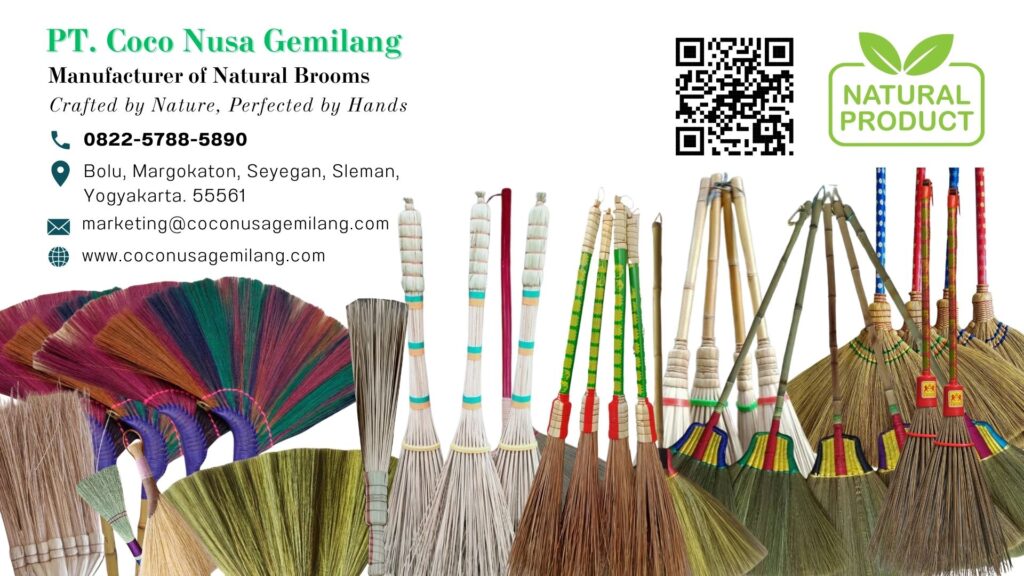
Manufacturers have also created multiple product variations to fit diverse market expectations. Some brooms feature reinforced bindings for heavy-duty work. Others use polished handles for indoor applications. These adjustments allow buyers to select models that align with climate, culture, and intended use.
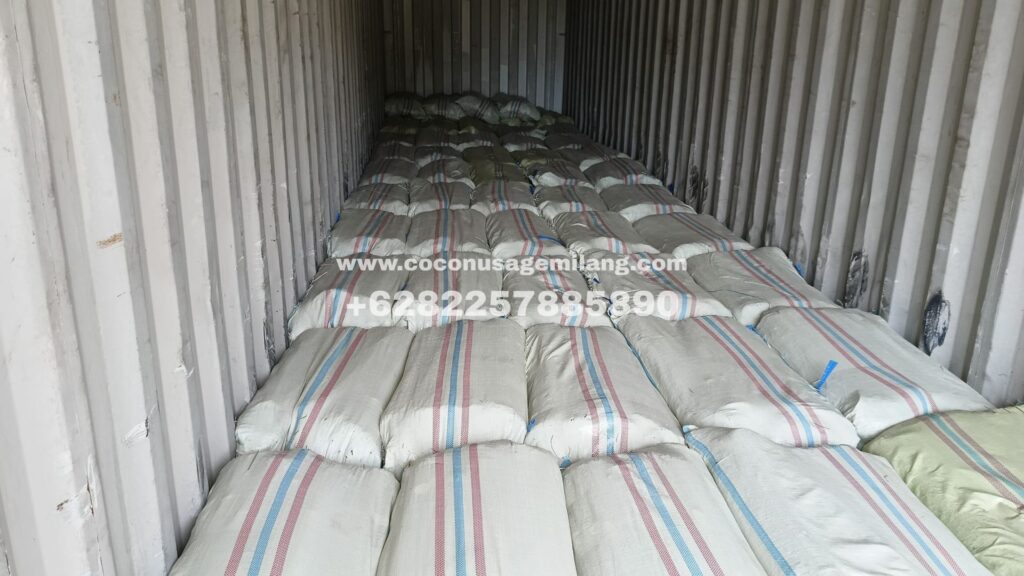
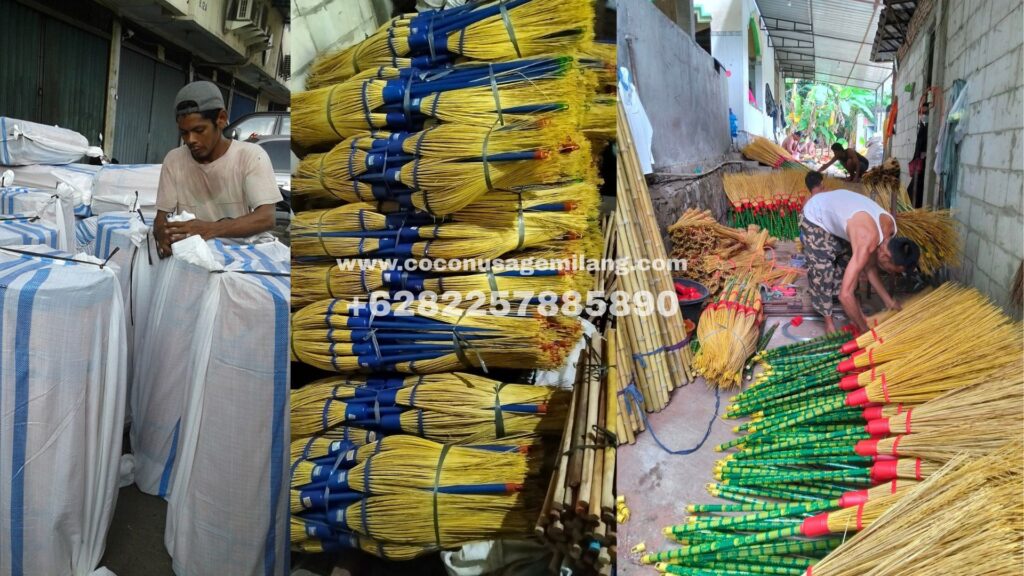
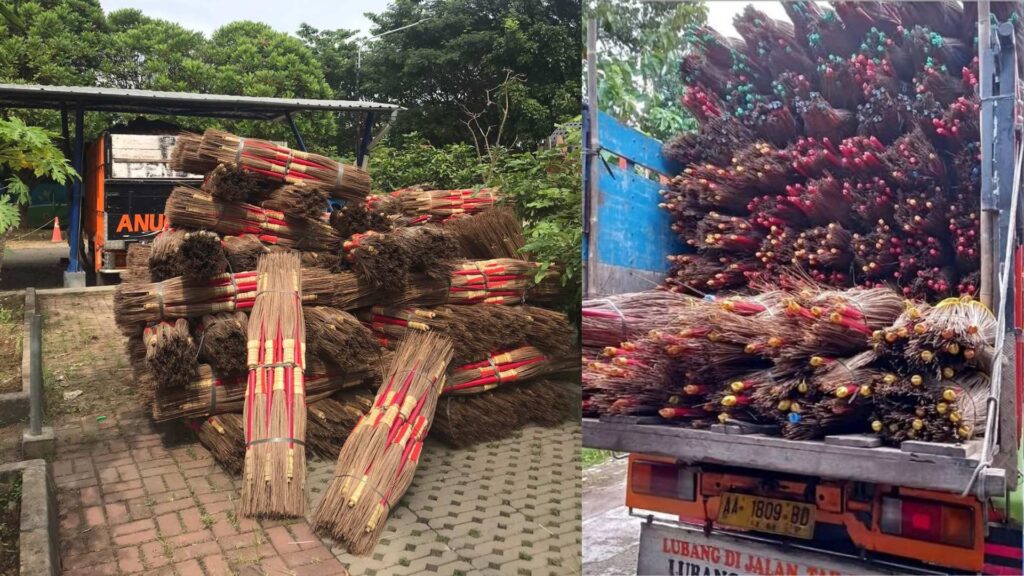
Furthermore, the broom’s compact structure simplifies packaging and transport. Because the ribs can be bundled tightly and secured with minimal materials, exporters can ship large volumes efficiently. Consequently, buyers benefit from lower freight costs and predictable delivery schedules.
Integration in Commercial, Domestic, and Industrial Settings
In commercial settings, coconut broom sticks remain staples for cleaning outdoor entrances, sidewalks, and open-air facilities. Their stiff bristles clear debris faster than many soft indoor brooms. Additionally, businesses appreciate tools that require little maintenance and withstand frequent use. The coconut broom fits this profile perfectly.
At the domestic level, homeowners rely on the broom for gardens, porches, garages, and driveways. Even though modern vacuum devices have reached high levels of sophistication, they cannot replace the tactile control and agility of a coconut broom in exterior environments. Users often prefer the broom for quick cleanups that do not justify powering an electronic device.
Industrial zones also continue to integrate coconut brooms into routine operations. Surfaces that gather gravel, wood filings, metal scraps, or dust demand tools with serious resilience. Since coconut midribs remain intact even under friction, workers can sweep confidently without worrying about premature wear. As a result, the broom supports consistent cleaning standards across demanding sectors.
COCO NUSA GEMILANG — MANUFACTURER & SUPPLIER OF COCONUT BROOM STICKS
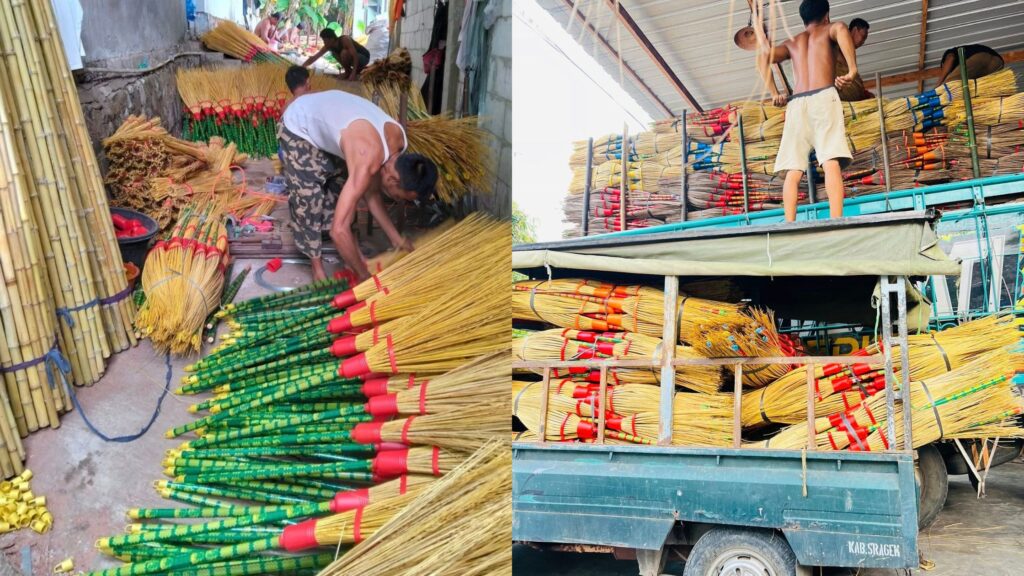
Coco Nusa Gemilang stands as a dedicated manufacturer and supplier of coconut broom sticks for global wholesale markets. The company provides multiple types and models designed to meet the expectations of international buyers. Transitioning from small-scale production to international export, the company has maintained a strong commitment to quality while supplying large volumes worldwide.
Moreover, Coco Nusa Gemilang offers competitive and flexible pricing. Wholesale rates begin at 0.9 USD to 2 USD per piece, based on order volume and specifications. All products are shipped FOB Port Semarang, Indonesia, ensuring smooth export logistics. Because the company values long-term partnerships, pricing can still be negotiated depending on mutual agreements and shipment size.
In addition, Coco Nusa Gemilang emphasizes consistent quality control. Every broom stick undergoes careful selection and preparation to ensure durability, stiffness, and uniformity. International buyers often praise the company’s ability to match specifications while maintaining affordable prices. This balance between craftsmanship and efficiency positions the company as a reliable partner in the global cleaning products market.
Furthermore, the company continues expanding its production capacity to meet rising export demand. With diverse models ready for shipment, Coco Nusa Gemilang welcomes inquiries from wholesalers, trading companies, retail distributors, and large-scale procurement firms. The combination of competitive pricing, dependable quality, and responsive communication allows the company to build long-standing relationships with buyers around the world.