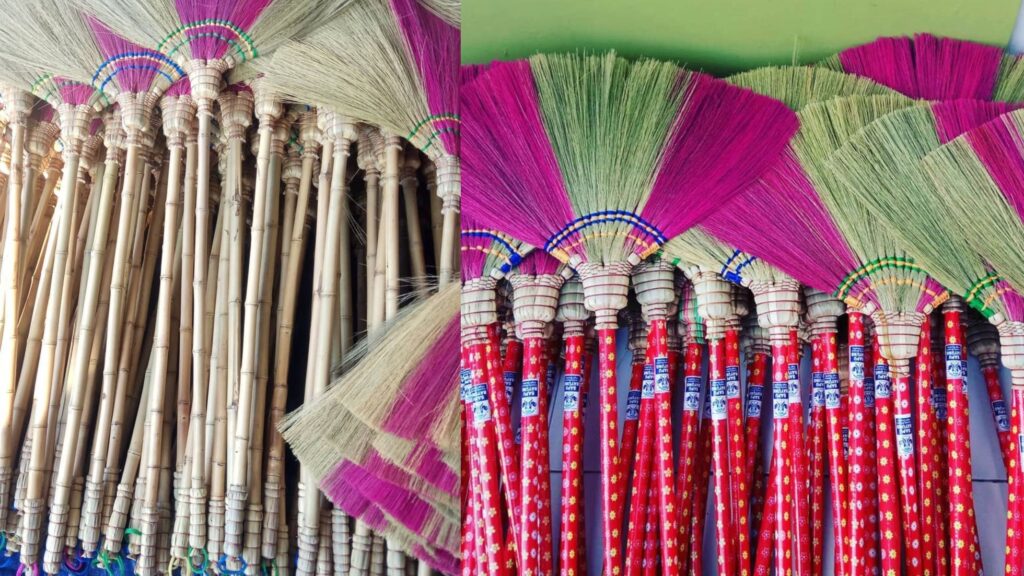

Floor brooms remain one of the most enduring tools in human history. Their simple construction and universal purpose have secured their position across cultures and centuries. Even in a world shaped by automation, robotics, and smart appliances, the floor broom still holds its ground as a tool of precision, efficiency, and familiarity. While its design has evolved, its purpose has not. Every household, workshop, warehouse, and public facility relies on a straightforward tool that can handle dust, debris, and daily messes without requiring electricity or complex mechanisms.
Understanding the modern floor broom begins with understanding its underlying structure. Although the general form looks uncomplicated, each detail—from bristle selection to handle ergonomics—shapes its usability. In commercial spaces where floors endure heavy traffic, the wrong broom type results in extra work and wasted time. Conversely, when the broom’s materials match the environment, productivity rises and labor strain declines. For this reason, professional buyers tend to evaluate floor brooms on a combination of durability, stiffness, weight balance, and sweeping efficiency.
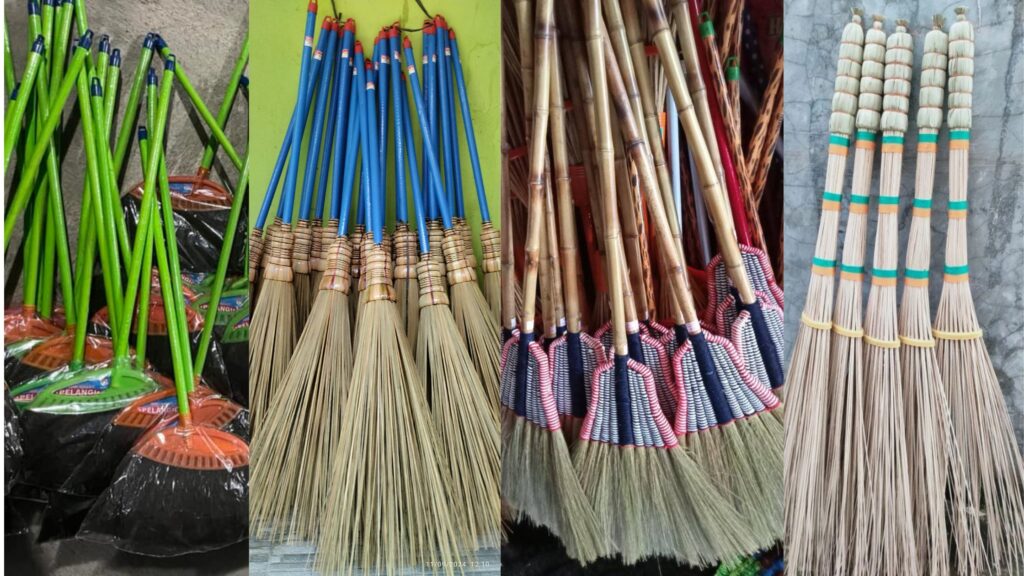
The selection of raw materials is the starting point of any high-quality broom. Manufacturers choose between natural fibers, synthetics, or a blend of both. Natural fibers include coconut, sorghum, and broom grass. These materials offer texture and friction that synthetic bristles cannot fully mimic. Synthetics such as PET or PP remain popular due to their resistance to moisture and chemicals. Each choice shapes the broom’s ideal application. For instance, natural-fiber brooms excel on rough surfaces and outdoor environments, while synthetic ones serve well in polished indoor spaces. Understanding this difference helps buyers avoid mismatches that reduce tool life.
However, raw materials represent only one dimension of the broom-making process. The construction method defines long-term reliability. Clamping, stitching, resin bonding, or wire binding all influence how a broom behaves under stress. Manufacturing processes grounded in craftsmanship tend to produce tools that withstand years of sweeping. Industrial production offers consistency, but without the right quality controls, bristles fall out or deform. Because the broom remains a tool that must operate through repetitive motion, even small weaknesses eventually show. This is why many experienced distributors evaluate not only the material but also the forming technique behind every broom they import.
The Evolving Role of Floor Brooms in Modern Cleaning
Despite the popularity of vacuum systems, floor brooms thrive for reasons that extend beyond simplicity. First, they provide immediate results. When glass shatters, a vacuum poses hazards; a broom solves the problem within seconds. Second, brooms offer a silent cleaning solution. This makes them indispensable in hospitals, schools, temples, and office buildings where noise disruption must be minimized. Third, a broom requires no electricity, no recharge period, and no complicated parts. For many communities around the world, this reliability matters more than any modern feature.
Even in technologically advanced regions, the broom has adapted rather than disappeared. Commercial janitorial teams use wide-head push brooms in warehouses and airports. Restaurants prefer angled brooms that reach under equipment. Residential users gravitate toward compact models for quick daily tasks. These diverse needs have pushed broom designers to refine ergonomics, improve grip textures, and strengthen bristle cores. As a result, today’s floor broom reflects a blend of traditional craftsmanship and industrial innovation.
More importantly, the global shift toward environmentally responsible goods has renewed interest in natural brooms. Consumers increasingly avoid tools that shed microplastics or degrade quickly. Natural-fiber brooms offer an appealing alternative because they last long, generate minimal waste, and rely on renewable resources. The sustainable-home movement, which has grown rapidly over the past decade, supports this transition. Consequently, manufacturers who work with natural materials occupy a significant niche in the international market.
Material Science Behind an Effective Floor Broom
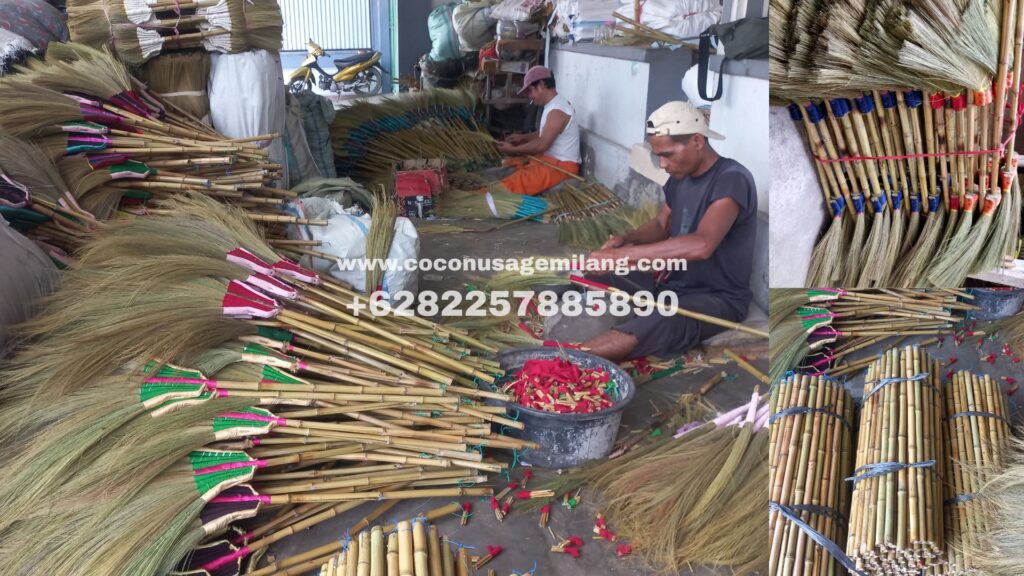
Material science influences everything from sweeping comfort to bristle longevity. Natural fibers provide friction and stiffness that trap dust, while synthetic bristles deliver precision on smooth flooring. Yet within each category, the variations are extensive. Coconut fibers, for example, resist moisture but require consistent grading. Broom grass fibers offer flexibility, though they must be dried carefully to avoid brittleness. PET bristles perform well on polished surfaces, but their static charge sometimes scatters lighter debris. Because of these variations, professional buyers evaluate material choice based on the floor types in their target markets.
Handle construction is equally important. Hardwood handles, while traditional, have given way to bamboo, fiberglass, and coated metal. Each material carries advantages. Bamboo remains lightweight and sustainable. Fiberglass resists bending and cracking. Metal handles withstand heavy commercial abuse. Grip design also plays a measurable role, especially for workers who sweep for several hours each day. A well-balanced handle minimizes wrist strain, while a poorly constructed one causes fatigue.
Global Market Dynamics for Floor Brooms
The global floor broom market has expanded steadily due to rising cleaning standards, urbanization, and shifting consumer expectations. Large economies require vast numbers of tools to maintain public spaces. Meanwhile, developing regions still depend heavily on manual cleaning methods, which translates into consistent demand for durable floor brooms. In addition, small artisanal broom producers contribute to niche markets that value handcrafted quality and natural materials.
Supply chains play a central role in pricing and availability. Countries in Asia and Latin America supply natural fibers, while many factories in Southeast Asia lead global production due to their skilled labor and access to raw materials. Export hubs like Indonesia, Vietnam, and India retain strategic advantages because they can manufacture brooms efficiently and ship them competitively. Yet market expectations extend beyond price. Buyers expect consistent quality, secure packing, clear documentation, and adaptable design options for private labels.
Technological improvements have also influenced global distribution. Manufacturers now integrate quality tracking, fiber sorting machines, and automated compression systems into their production lines. These upgrades increase output without sacrificing uniformity. As a result, wholesalers and retailers receive products that meet international standards even at large volumes.
Craftsmanship, Durability, and Long-Term Performance
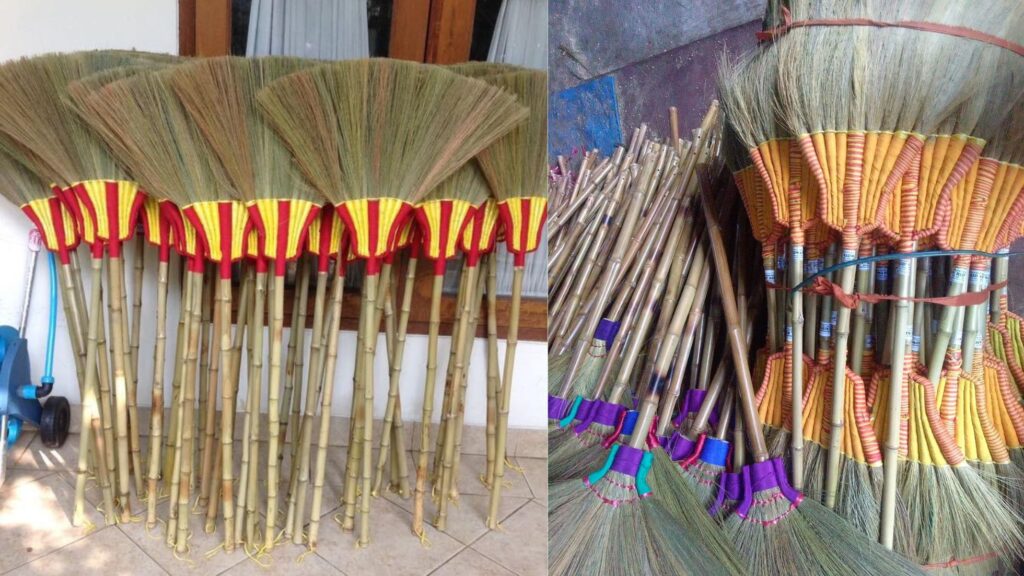
A good floor broom represents more than an assembly of bristles and a handle. It embodies craftsmanship. Skilled makers know how to taper bristles so that they conform to the floor without excessive drag. They understand when to blend fibers of different stiffness levels. They pay attention to the density of each row and the compactness of the head. These subtle elements determine whether a broom feels cumbersome or efficient.
Durability depends not only on construction but also on environmental conditions. Brooms stored in humid environments degrade faster. Synthetic bristles may resist moisture, but natural fibers require adequate drying after use. High-quality suppliers communicate these care instructions to ensure customers receive full lifespan value. The more transparent the manufacturer, the longer the tool performs.
Serviceability forms another aspect of thoughtful broom design. Many commercial floor brooms feature replaceable heads. This reduces waste and extends handle life. Rather than discarding the entire broom, users replace only the worn portion. This approach appeals to environmentally conscious markets and reduces long-term costs for business owners.
Why the Floor Broom Will Continue to Matter
The future of cleaning tools will not be dominated by automation alone. Manual tools will always serve a role that machines cannot fully replace. A broom handles urgent spills instantly. It reaches corners that automated devices miss. It adapts across surfaces, indoors or outdoors. More importantly, manual tools remain affordable, dependable, and easy to maintain. These advantages ensure the floor broom’s place in homes and businesses for generations to come.
Even as smart technology evolves, the broom persists because it integrates into daily routines without friction. People trust it, understand it, and rely on it. It is not an accessory but a necessity. Consequently, manufacturers who continue to honor both tradition and innovation will shape the next era of broom design.
COCO NUSA GEMILANG — YOUR GLOBAL FLOOR BROOM MANUFACTURER
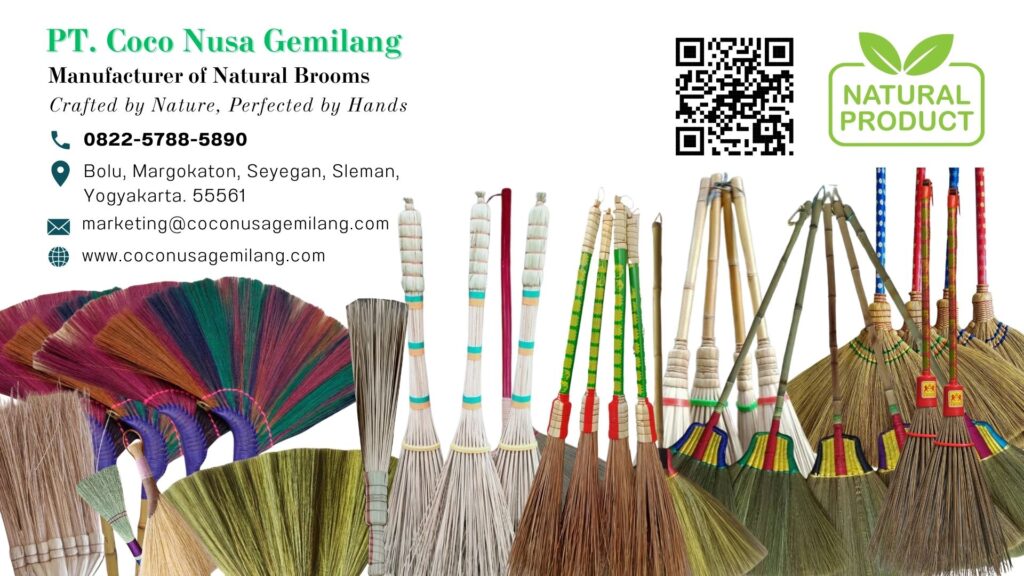
Coco Nusa Gemilang stands as a dependable floor broom manufacturer ready to export to markets around the world. Our products are designed with international performance expectations in mind, ensuring that every broom we produce aligns with the sweeping habits, floor types, and durability requirements of global buyers. Furthermore, we refine each production stage—from fiber selection to packaging—to ensure consistent quality that distributors can trust.
In addition, our company adapts rapidly to shifting international standards. Whether the destination is Asia, America, Africa, or Europe, we adjust broom specifications to match market preferences. This includes bristle density, handle material, length variations, and branding options. To support buyers of different scales, we offer prices starting from 0.9 USD to 2 USD per piece (FOB Port Semarang, Indonesia). These rates are suitable for wholesalers, retailers, and private-label brands seeking profitable resale margins.
Moreover, Coco Nusa Gemilang ensures packaging that protects each broom through long-distance transit while meeting foreign import requirements. We are committed to delivering tools that provide genuine value—strong, efficient, and ready for resale. As a guiding philosophy, we uphold best handicraft, best cleaning tools, demonstrating that craftsmanship and practicality can coexist in every broom we manufacture.