
Natural fiber brooms have survived centuries of technological shifts, not because modern tools failed to advance, but because these brooms offer a blend of practicality, cultural identity, and sustainability that synthetic alternatives rarely match. Their continued relevance speaks to something deeper than utility. They embody a craft that respects local ecology, human skill, and the rhythm of traditional work. More importantly, they have evolved into export-ready commodities that serve households, workshops, industrial facilities, and retailers across the world.
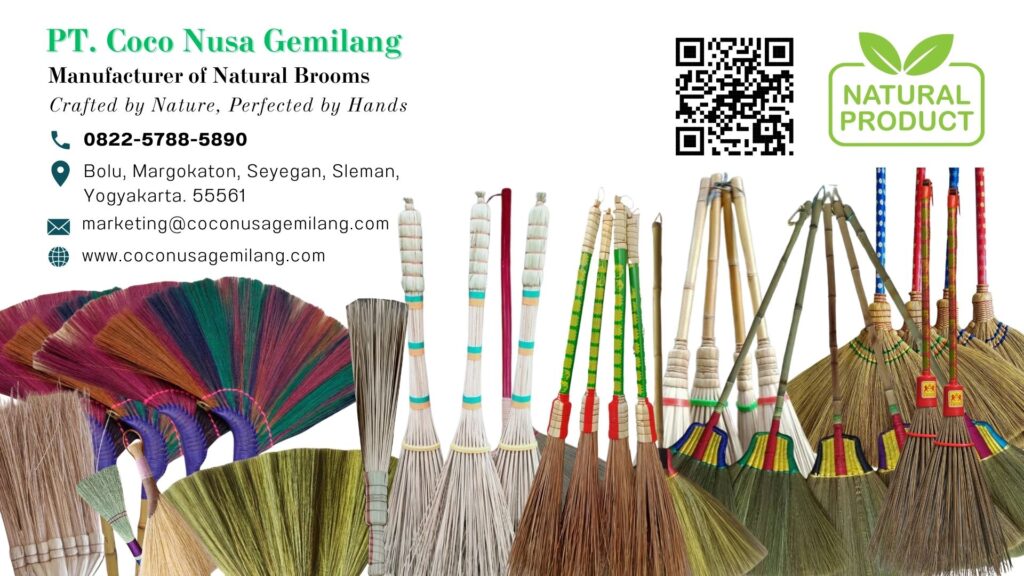
Across continents, natural fiber brooms occupy distinct cultural niches. Some communities value them for daily sweeping, while others treat them as artisanal symbols tied to rituals or seasonal traditions. The variety is immense: grass brooms with delicate sweeping ability, coconut fiber brooms designed for durability, sorghum brooms tailored for rugged surfaces, and palm-based brooms that thrive in tropical use. Each type responds to a specific environment. This relationship between material and function creates products that feel intuitive, ergonomic, and relatable.
Manufacturers and exporters now treat natural fiber brooms not just as handcrafted goods but as a globalized commodity category. The surge in demand comes from consumers who prefer biodegradable, low-waste, and ethically produced household products. Retailers emphasize these attributes because they reflect broader lifestyle trends. Sustainability is no longer niche. It stands at the core of how individuals and businesses make purchasing decisions. Natural fiber brooms, in this regard, sit comfortably at the intersection of tradition and contemporary market expectations.
The Materials Behind the Craft
Natural fiber brooms rely on materials derived from plants that thrive in specific climates. These fibers offer structural qualities that synthetic fibers often imitate but do not fully surpass. Every material carries its own story.
Grass fibers, for example, come from species like thysanolaena maxima or broomcorn grass. These plants grow along hillsides and tropical midlands where rainfall is generous and soil remains loose. The fibers are soft yet sturdy, which makes them suitable for fine sweeping. They barely scratch surfaces and leave minimal streaks. Their light weight contributes to the overall comfort of the broom, especially when used over long periods.
Coconut fibers deliver a very different character. Unlike the softness of grass, coir fiber is coarse, moisture-resistant, and abrasion-tolerant. Its resilience results from the coconut husk’s unique cellular structure. As the husk ages, lignin concentrations rise, improving rigidity and durability. This makes coconut brooms ideal for outdoor sweeping, construction sites, warehouses, and rough-textured floors. The fibers shed less than synthetic bristles, which makes them dependable even under heavy use.
Sorghum, another widely used material, balances the softness of grass with the tenacity of coir. It bends without breaking, resists moisture better than many plant fibers, and offers a uniform texture that supports consistent sweeping. Sorghum brooms have been staples in rural landscapes for generations. Today, they form a major component of the natural broom export industry because they maintain shape even after long-term mechanical stress.
Palm leaf ribs and midribs represent yet another category. These components come from natural pruning and fall cycles rather than forced harvesting. This makes them inherently sustainable. The midribs possess a natural stiffness that works particularly well for long-handle household brooms. They create a sweeping head that remains aligned even with repeated pressure.
Together, these materials form a diverse system of resources. Each one conveys a different tactile feel, motion behavior, and visual identity. Transitional products that blend two or more fiber types also exist. They aim to strike a balance between softness and durability. As global demand increases, manufacturers continually experiment with material combinations to improve efficiency without compromising authenticity.
Regional Craftsmanship and Production Techniques
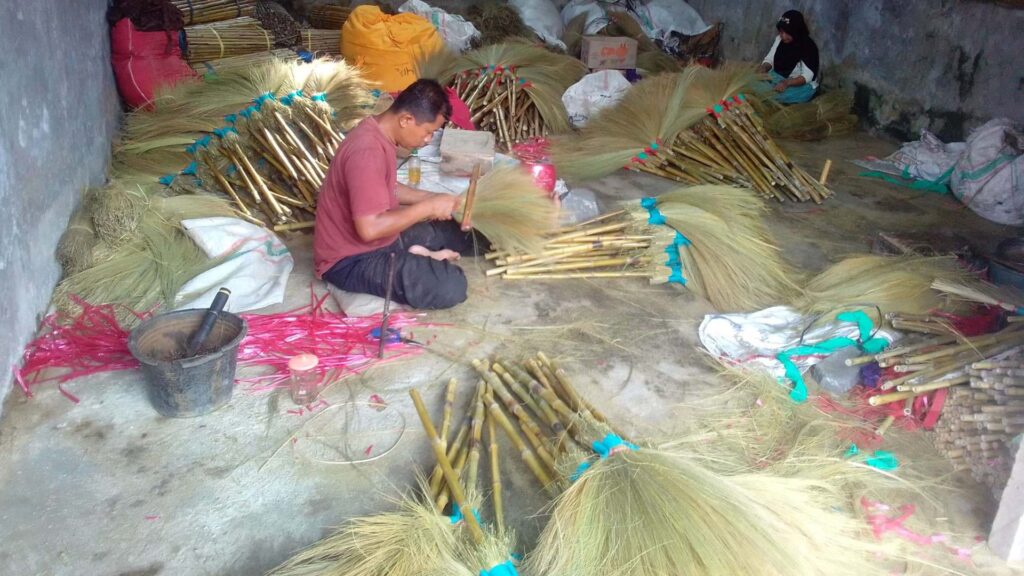
The craftsmanship behind natural fiber brooms varies from region to region, yet many techniques have survived for centuries. Artisans start by drying raw fibers. This step stabilizes the material and protects it from fungal growth. Once dry, the fibers are sorted by length, thickness, and color. This sorting process is essential because uniform fibers create a more consistent sweeping pattern.
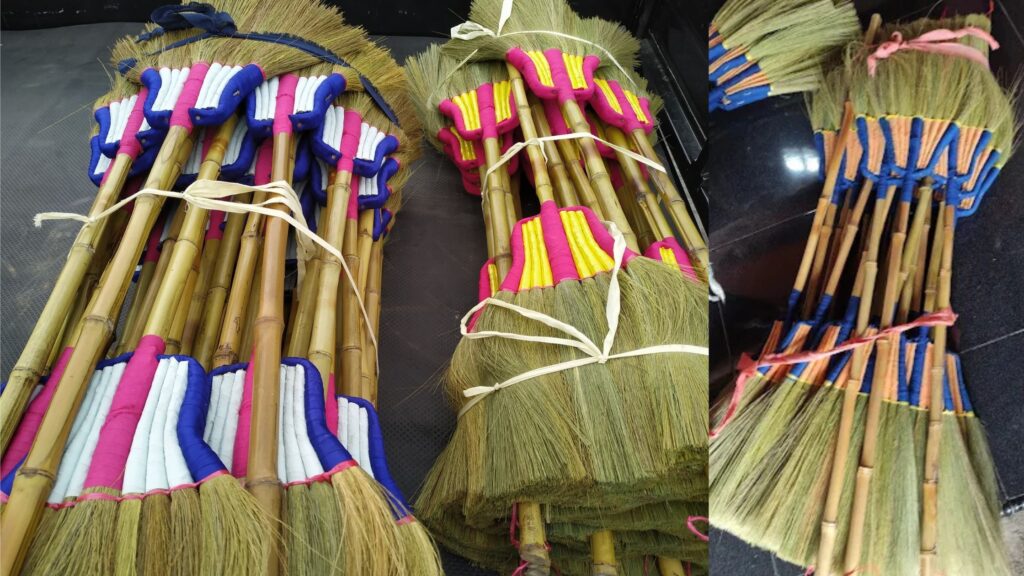
Binding techniques differ based on cultural preferences and broom type. Grass broom makers often rely on tight wire or thread binding to form a compact sweeping head. Coconut broom makers use thicker wire or bamboo holders to control the fibers’ direction. Sorghum broom artisans stitch the fibers through wooden or bamboo handles, ensuring tight reinforcement and preventing unwanted loosening.
Manufacturers who supply international markets have adopted hybrid systems. They maintain artisanal techniques for fiber preparation and broom assembly while integrating industrial tools for trimming, quality control, packaging, and logistics. This balanced approach preserves craftsmanship while scaling output.
Another layer of complexity stems from moisture management. Natural fibers react to humidity, so exporters take drying and storage very seriously. Many facilities now use temperature-controlled storage rooms to prevent mold growth or fiber deformation. This attention to detail ensures that products arrive in export destinations in pristine condition.
Straw Broom Crafts: Tradition, Technique, and the Evolving Market for Natural Cleaning Tools
Performance and Ergonomics
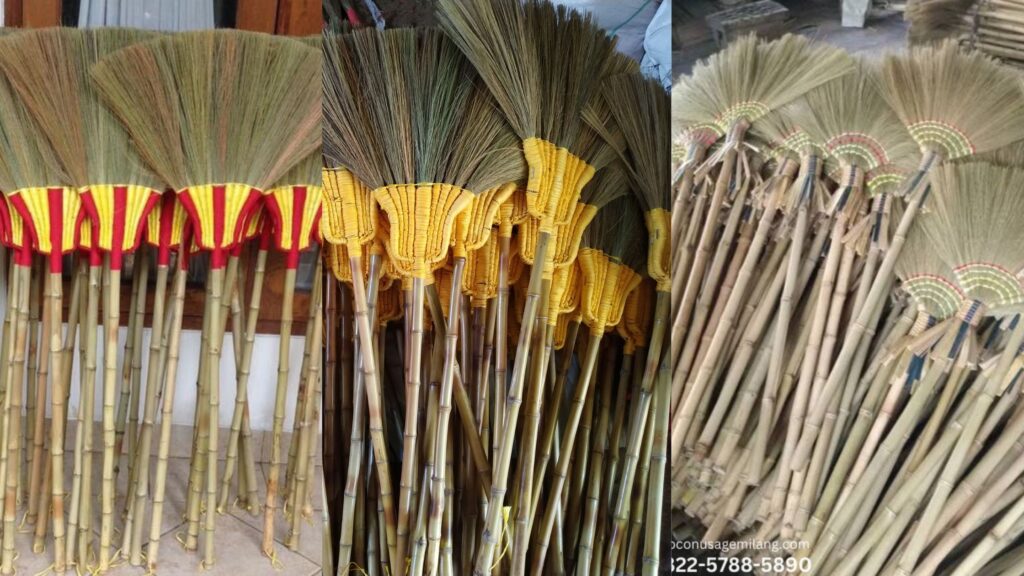
Natural fiber brooms excel in functional performance for several reasons. First, the rhythmic flexibility of plant-based fibers allows them to trap and collect dust more effectively than rigid synthetic bristles. The fibers bend and glide across surfaces rather than forcing debris into air currents. This makes sweeping smoother and reduces airborne particles.
Second, the ergonomic advantages are hard to ignore. The handles, often made of bamboo or lightweight wood, create a natural balance point. Brooms feel stable in the hand, require less force to maneuver, and reduce fatigue during extended use. This ergonomic structure arises not from modern engineering but from centuries of iterative craft refinement.
Third, natural fiber brooms are remarkably quiet. Many synthetic brooms produce harsh, scraping sounds on tile or concrete. Natural fibers mute these sounds, making them more suitable for indoor environments, hospitality spaces, and commercial cleaning tasks that require minimal disruption.
Finally, the lifespan of these brooms often exceeds expectations, especially when users understand how to maintain them. A brief shaking to remove dust, light washing when necessary, and proper drying extend their durability. Their biodegradable nature ensures that even at the end of their lifespan, they return to the environment without leaving lasting waste.
Sustainability as a Core Advantage
Transitioning from synthetic cleaning tools to natural fiber brooms offers immediate environmental benefits. Plant-based fibers degrade naturally. They do not create microplastic pollution. They require fewer chemical processes during production. These environmental advantages resonate strongly with eco-conscious consumers, especially in regions where green procurement policies are enforced.
The cultivation of natural fibers also supports smallholder farmers and rural economies. Grass, sorghum, coconut, and palm all grow in regions where agricultural diversification matters. Farmers rely on these crops to stabilize income, reduce dependency on single-commodity farming, and strengthen community resilience.
Moreover, natural broom production supports gender-inclusive labor dynamics. In many regions, women lead essential stages of fiber preparation and assembly. Exporters who operate ethically help reinforce fair wage systems and empower communities through stable employment opportunities.
International buyers appreciate these human-centered stories. They enhance brand narratives for retailers and distributors. Consumers want transparency. They want to know where their products come from. Natural fiber brooms offer that transparency because their production relies on open, traceable, and sustainable processes.
The Global Market and Export Landscape
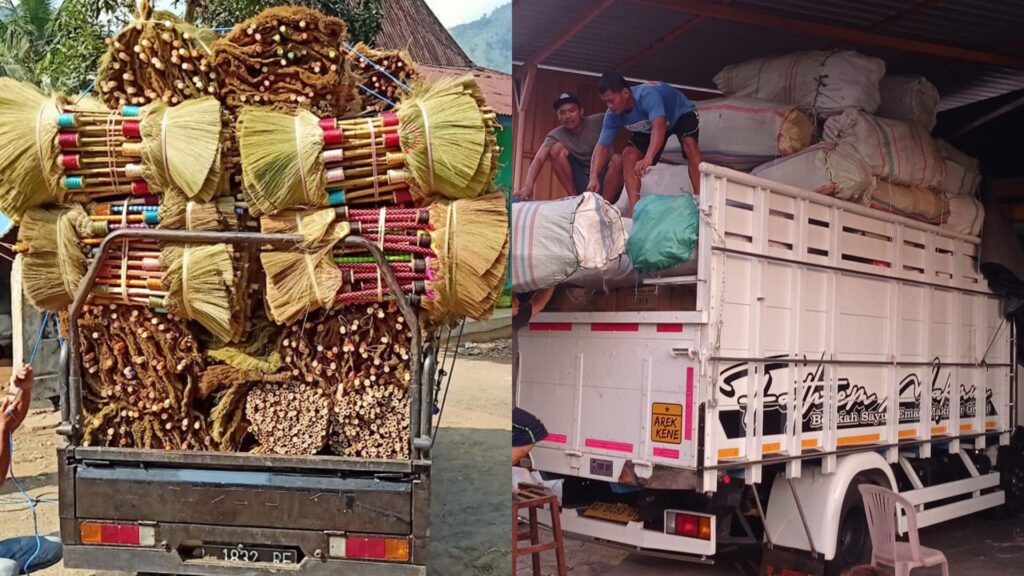
The global broom and brush market continues to expand, with natural fiber brooms occupying a stable and growing segment. Retail chains, wholesale distributors, online marketplaces, and cleaning-supply companies seek suppliers who can deliver consistent quality at competitive prices. This creates a strategic opportunity for manufacturers in Indonesia, India, Thailand, Vietnam, and the Philippines.
Indonesia, in particular, holds a strong position. Its access to abundant natural fibers, combined with a skilled workforce and port infrastructure, gives it an operational edge. Exporters can scale production while maintaining artisanal quality. Logistical routes from ports like Semarang, Surabaya, and Jakarta facilitate steady shipping volumes to Asia, Europe, the Middle East, and North America.
Buyers gravitate toward Indonesian natural fiber brooms because they combine quality, cost efficiency, and reliable supply chains. Countries with tropical agriculture often outperform temperate nations when producing fiber-rich brooms. This gives Indonesian exporters long-term competitive stability.
As export markets evolve, custom product lines become increasingly relevant. Buyers may request thicker sweeping heads, different handle lengths, personalized branding, special packaging, or bundled cleaning sets. Manufacturers who anticipate such requests strengthen their global presence and increase buyer loyalty.
Transition to Supplier Introduction
Given this global context, buyers looking for dependable natural fiber broom suppliers prioritize consistency, material selection, and transparent pricing structures. Competitive pricing remains essential, but reliability in shipment timelines and fiber quality is just as important. Indonesian suppliers who understand international expectations stand out in this market, especially when they commit to clear communication and flexible ordering terms.
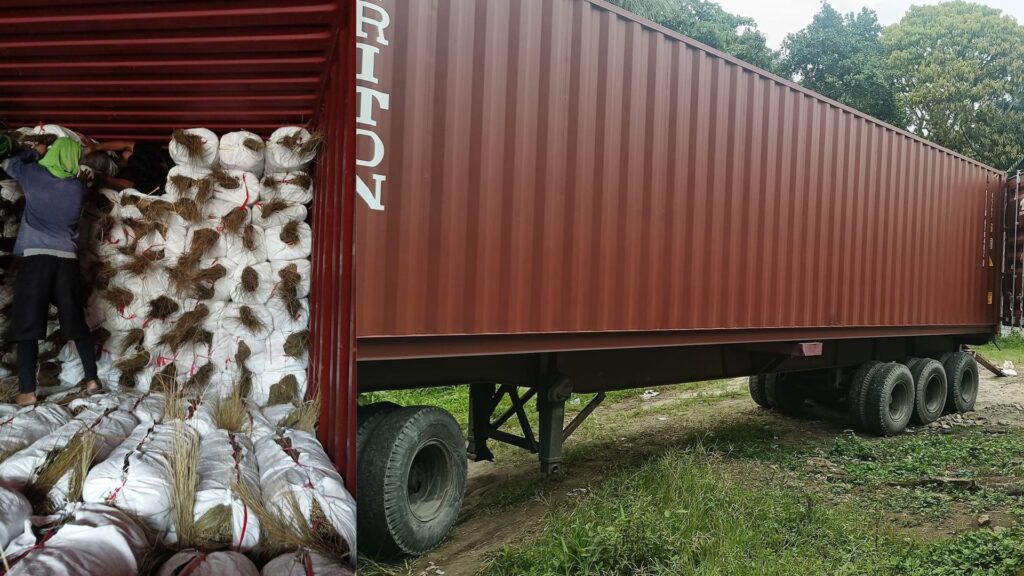
As demand grows, the role of trustworthy exporters becomes increasingly important. Importers want long-term partners rather than one-off vendors. They seek suppliers who can support seasonal fluctuations, meet container-load quantities, and maintain compliance with export standards. This is where Coco Nusa Gemilang enters the conversation as a dependable industry partner.
Coco Nusa Gemilang: Reliable Supplier of Natural Fiber Brooms
Coco Nusa Gemilang stands at the forefront of Indonesia’s natural fiber broom industry. The company supplies high-quality natural brooms to international markets and focuses on long-term export partnerships. Every broom reflects the combination of skilled craftsmanship and reliable material sourcing. With access to experienced artisans and abundant natural fibers, Coco Nusa Gemilang ensures that its products meet global expectations for durability, consistency, and aesthetic appeal.
Pricing remains flexible and market-sensitive. Depending on the buyer’s order volume, Coco Nusa Gemilang supplies natural fiber brooms at 0.9 USD to 2 USD per piece (FOB Port Semarang, Indonesia). This pricing structure allows distributors, wholesalers, retailers, and import agencies to maintain competitive margins. Of course, price discussions remain open. The company welcomes negotiation because each market has unique demands and container configurations. Transitional price agreements ensure mutually beneficial outcomes.
Coco Nusa Gemilang positions itself as a long-term partner rather than a short-term vendor. The company is ready to supply natural fiber brooms to the world, backed by a commitment to quality, affordability, and dependable order fulfillment. Buyers seeking consistent supply chains, responsive communication, and adjustable order options will find the company a strong and cooperative supplier for global distribution.