
Straw broom crafts hold a distinct position in the world of handmade utilitarian goods. While synthetic cleaning tools dominate many markets, the enduring appeal of natural straw brooms reveals something deeper than simple utility. People continue to value the sensory balance of texture, durability, and environmental friendliness that crafted brooms provide. Moreover, artisans around the world infuse regional identity into every finished piece. As a result, straw broom crafts represent a remarkable intersection of culture, economy, and sustainable design.
Although many households see brooms as trivial objects, the craft behind them reflects centuries of practical innovation. Artisans have always relied on available natural fibers—rice straw, sorghum, vetiver, grass, coconut leafstick, and palm materials—to create sweeping tools with specific performance characteristics. Today, the craft has evolved into both a livelihood for rural communities and a niche export commodity. Increasing international demand for eco-friendly household items has renewed interest in handmade straw brooms, giving traditional makers an unexpected global audience.
Understanding this craft requires a closer look at its materials, processes, and economic potential. Beneath its simple form lies a detailed workflow that demands consistency and skill. Beyond technique lies a changing marketplace that rewards quality and sustainable sourcing. When these elements come together, straw broom crafts become more than household items—they become markers of craftsmanship and cultural continuity.
Materials That Define the Craft
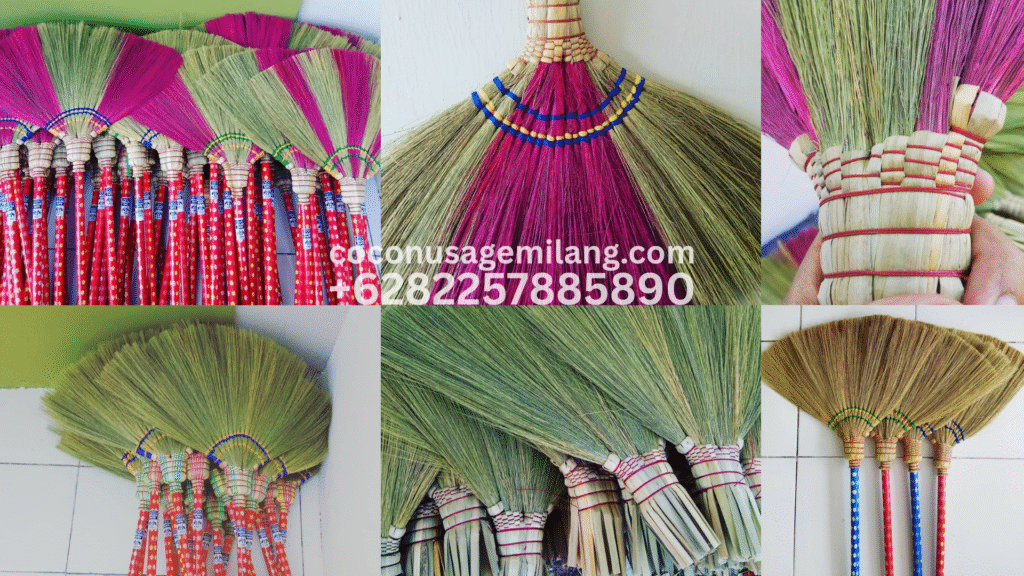
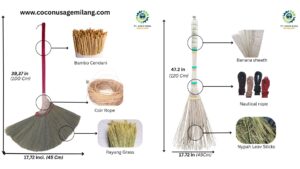
Straw broom artisans typically begin by selecting fibers with the right combination of stiffness and flexibility. Rice straw offers a smooth, golden tone and performs well on dry indoor surfaces. Sorghum fibers create a firmer, more structured sweep suited for outdoor areas. Coconut leafsticks add weight and rigidity, making them ideal for heavy debris. Each material influences both function and aesthetics.
Producers must also consider seasonal variation. Straw harvested during peak maturity has stronger fibers and better color consistency. However, climate fluctuations can alter density, moisture absorption, and drying time. Skilled makers adapt to these changes with careful sorting and pre-processing, ensuring a uniform final product. This step requires experience and attention to detail, especially when large export volumes demand consistency.
Moreover, binding materials play a central role. Cotton twine produces a traditional look and allows subtle flexibility. Nylon thread increases longevity, especially in humid climates. Wire bindings, although durable, must be applied with precision to avoid damaging the straw. Every decision shapes how the broom performs and how long it lasts.
The Crafting Process: From Raw Fiber to Finished Tool
Crafting a straw broom begins with washing and drying the fibers. Artisans use controlled sunlight to reduce moisture without bleaching the natural color. Once dried, the straw is combed or shaken to remove dust and broken fragments. This preparation stage determines the smoothness of the final sweep.
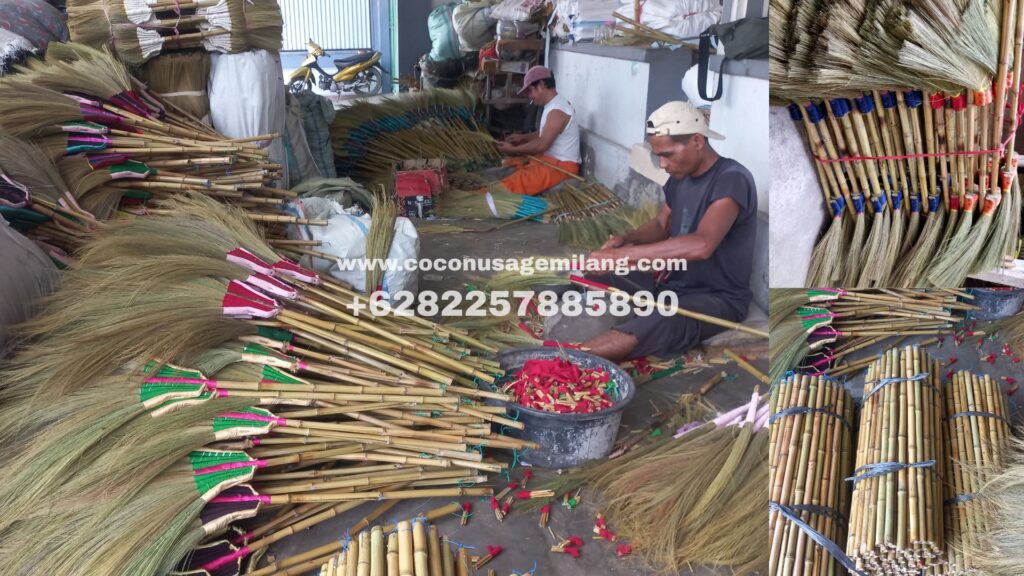
Next, artisans group the fibers into bundles according to weight and thickness. These bundles form the core of the broom. A wooden, bamboo, or rattan handle is inserted and secured tightly, forming the internal structure. Because this step requires strength and accuracy, experienced makers work with steady rhythm and practiced motion. Proper alignment ensures the broom remains balanced in use.
After attaching the handle, makers add additional layers of straw around the core, binding them with thread or wire. This phase demands precision because uneven binding can distort the broom’s shape. Although machines assist in some large-scale operations, many producers still rely on manual techniques to achieve the signature profile of a premium straw broom.
Shaping comes next. Artisans trim the broom head using knives or industrial cutters, giving it a uniform edge and correct sweep angle. Some producers burnish or press the fibers to enhance stiffness. Others leave the natural texture untouched, preserving the organic feel.
The final stage involves quality inspection. Artisans examine each broom for density consistency, handle alignment, binding tightness, and fiber integrity. Export-ready products undergo additional checks, including odor control, moisture testing, and packaging examination. These steps ensure that buyers receive brooms that reflect true craftsmanship and long service life.
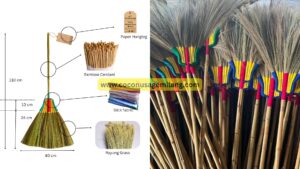
Broom Making Supplies: Crafting the World’s Most Essential Cleaning Tool
Why Consumers Still Prefer Straw Brooms
Despite modern alternatives, straw brooms continue to outperform synthetic tools in several contexts. Many users find natural fibers more responsive to fine dust and irregular surfaces. Unlike plastic bristles, straw creates less static electricity, reducing the tendency for debris to cling. Consequently, a well-crafted straw broom feels intuitive, efficient, and quiet.
Additionally, consumers appreciate the sustainability factor. Straw is biodegradable and renewable, giving the product a minimal ecological footprint. As environmental awareness increases, buyers look for household tools that align with sustainable values. In many markets, straw brooms also evoke nostalgia and cultural familiarity, creating emotional value that synthetic products cannot match.
Nonetheless, quality varies significantly by origin and maker. Buyers now examine fiber selection, binding method, density, and handle design before committing to large purchases. Craftsmanship remains the differentiating factor, especially in international trade.
Regional Crafting Styles and Cultural Identity

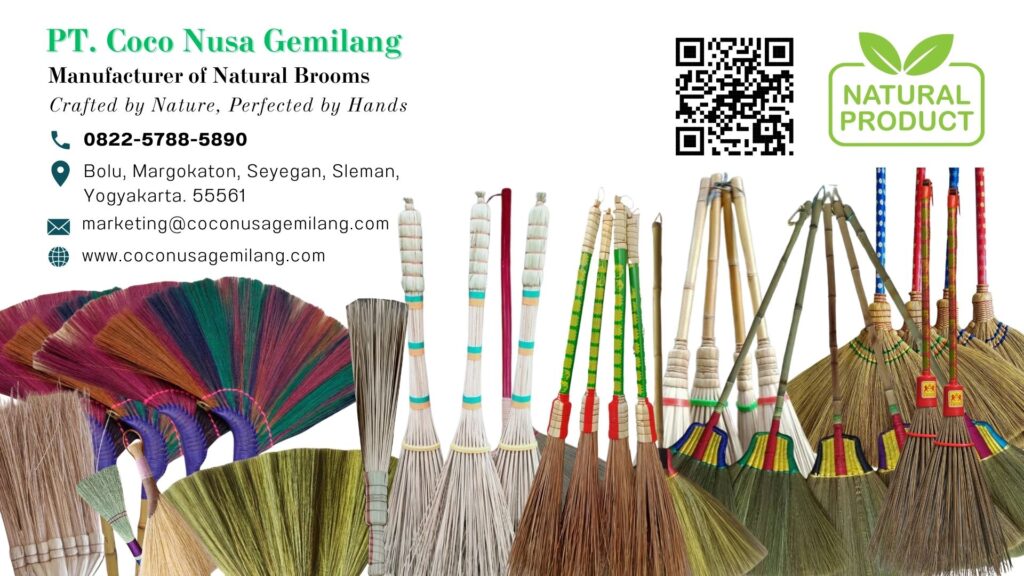
Around the world, straw broom craftsmanship takes on distinct regional forms. In Japan, artisans often produce ultra-dense palm and grass brooms with elegant minimalist symmetry. In Eastern Europe, sorghum brooms with thick, rigid heads dominate agricultural and outdoor use. Southeast Asia offers lighter indoor brooms with smooth sweeping motion, crafted from rice straw, vetiver, or coconut leafstick.
These differences arise not only from available natural resources but also from traditional cleaning practices and aesthetic preferences. In many cultures, broom-making becomes a generational craft, preserved by families and small cooperatives. While global demand has increased, the identity embedded in each broom remains deeply local.
Furthermore, cultural stories often accompany the craft. Straw brooms appear in seasonal rituals, domestic traditions, and symbolic ceremonies. Indonesia’s long-handled grass brooms, for instance, have become practical icons of rural life. By exporting these brooms, artisans share not only products but also narratives rooted in heritage.
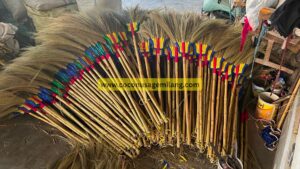
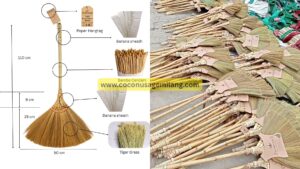
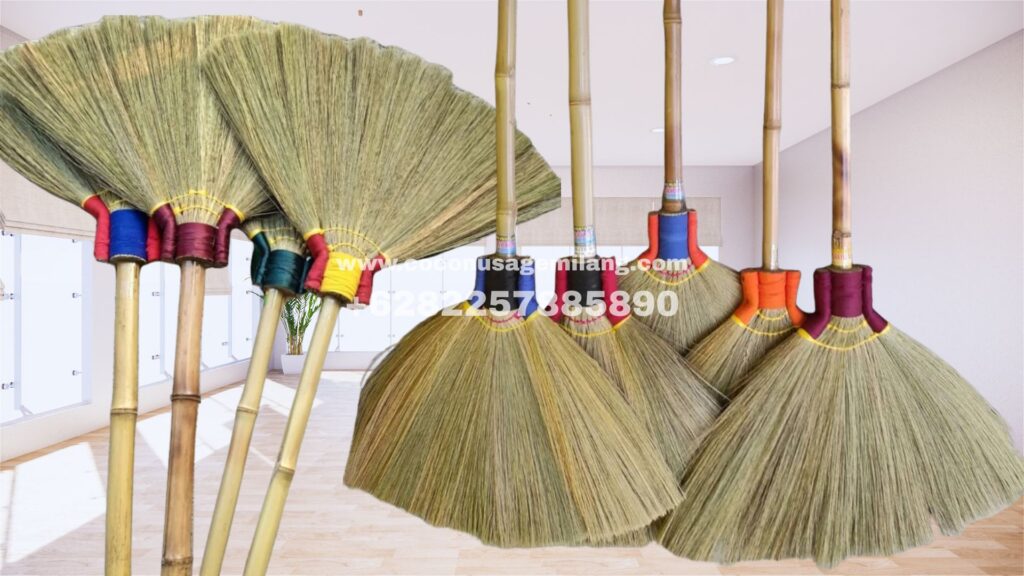
Grass broom is a traditional cleaning tool made from carefully selected natural grass that offers an eco-friendly alternative to synthetic plastic brooms. Widely used for sweeping indoor and outdoor areas, a grass broom is appreciated for its durability, flexibility, and excellent dust collection performance. The soft yet resilient grass fibers effectively remove dust, dirt, leaves, and small debris from concrete floors, tiles, wooden surfaces, and patios without causing scratches. Because it is produced from renewable natural materials, a grass broom supports environmentally responsible cleaning while reducing plastic waste.
Many homeowners, commercial cleaning companies, hotels, schools, and public facilities choose grass brooms for their reliable performance and long service life. High-quality grass brooms are usually handcrafted by experienced artisans who carefully sort, dry, and bind the grass to ensure consistent quality and strength. The handle, commonly made from bamboo or hardwood, provides a comfortable grip and makes sweeping easier during extended use. As global demand for sustainable household products continues to grow, Indonesian grass broom manufacturers have become trusted suppliers for international buyers by offering OEM services, customized sizes, private label packaging, and export-quality products that meet various market requirements while maintaining competitive prices and dependable production capacity.
Economic Significance and Market Growth
Straw broom crafts contribute meaningfully to rural economies. The production process creates employment across multiple roles—harvesting, drying, sorting, binding, assembling, packaging, and distribution. Because much of the work requires manual skill rather than heavy machinery, the craft provides accessible income opportunities for communities with limited industrial infrastructure.
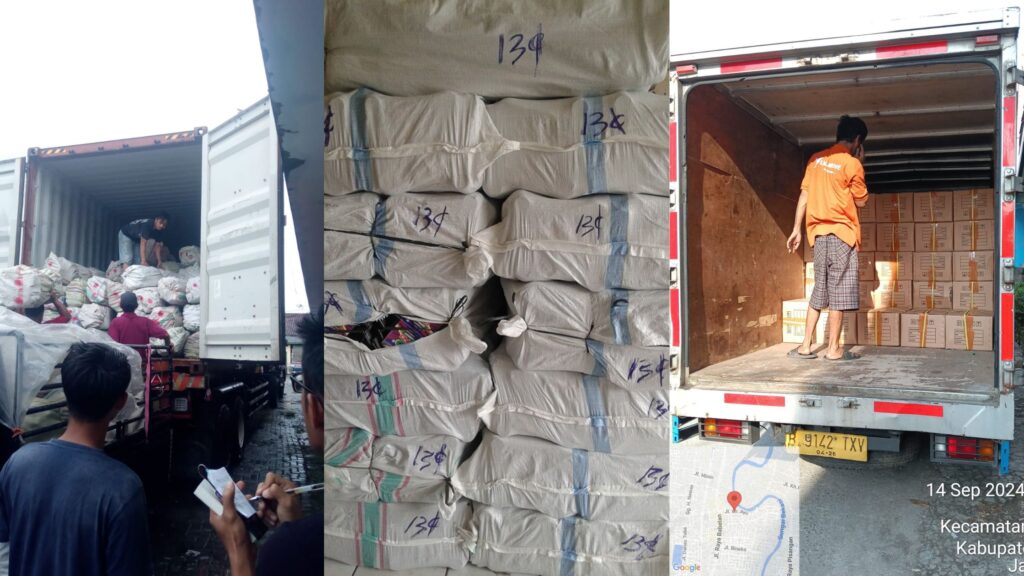
International demand for natural household goods has further expanded the market. Buyers from the Middle East, East Asia, Europe, and Africa seek reliable suppliers capable of meeting quality standards and large-volume orders. Consequently, many workshops have transitioned from small-scale craft operations to structured export production units.
Nevertheless, the market is competitive. Companies must balance craft integrity with scalability. They must also maintain consistent supply chains, stable pricing, and compliance with import requirements. Producers who excel at these areas develop strong long-term relationships with international distributors and retailers.
Sustainability and Future Outlook
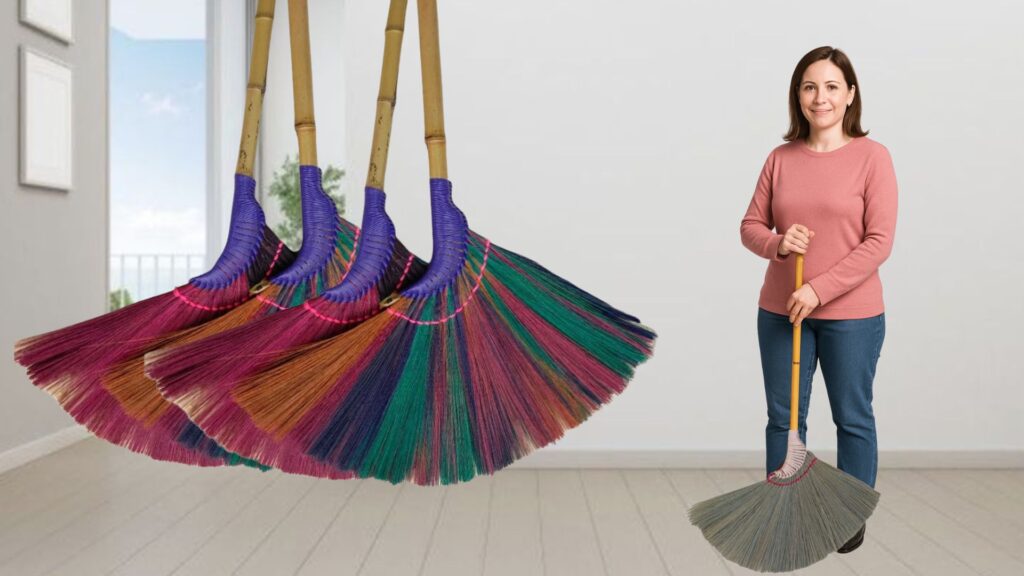
As awareness of environmental issues grows, straw broom crafts occupy a promising niche. Natural-fiber brooms create little waste, require no petroleum-based plastics, and support local agricultural ecosystems. Moreover, the craft encourages utilization of agricultural by-products such as sorghum stalks, rice straw, and coconut materials that might otherwise be discarded or burned.
Looking forward, demand for eco-friendly products is likely to increase. Exporters who embrace ethical sourcing, fair labor practices, and transparent production processes will stand out in the global marketplace. Additionally, improved packaging designs and modern branding strategies can elevate traditional straw brooms into premium lifestyle products.
Although technological tools may assist production, the core of the craft will remain human skill. Artisans understand the subtle variations in natural fibers, something machines cannot replicate entirely. This synergy between tradition and modern demand will shape the future of straw broom craftsmanship.
Coco Nusa Gemilang: A Reliable Export Partner for Straw Broom Crafts
Coco Nusa Gemilang stands at the forefront of Indonesia’s natural broom manufacturing industry. As demand for sustainable cleaning tools grows, the company offers a dependable supply of high-quality straw broom crafts designed for global markets. With years of experience and a commitment to excellence, they consistently deliver products that meet both aesthetic and performance expectations. Moreover, they operate with a clear understanding of international standards, ensuring every shipment maintains superior craftsmanship.
In addition to quality, Coco Nusa Gemilang emphasizes affordability. Their pricing structure accommodates different buyer needs by adjusting costs based on order volume. Export prices range from 0.9 USD to 2 USD per piece, FOB Port Semarang, Indonesia, giving distributors and retailers flexible options while preserving value. Furthermore, their production capacity supports both small and large-scale orders, making them suitable for a wide range of business partners.
Most importantly, the company commits to reliable communication, transparent processing, and timely delivery. As global interest in natural cleaning tools continues to rise, Coco Nusa Gemilang remains ready to supply straw broom crafts to markets around the world. Their blend of craftsmanship, sustainability, and competitive pricing positions them as a trusted manufacturing partner for businesses seeking long-term cooperation.