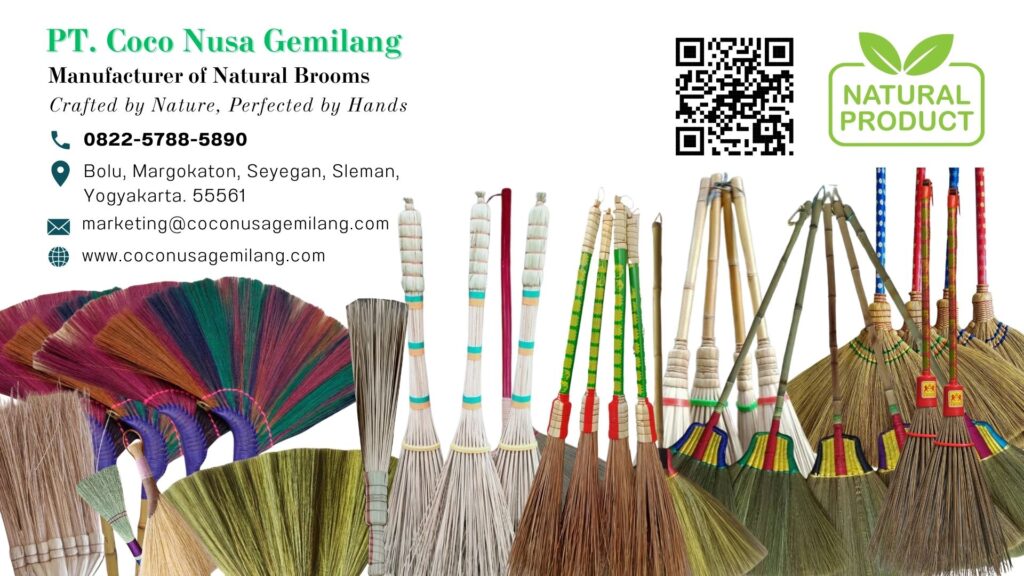


The coconut midrib broom stands as one of the most recognizable symbols of practical design in tropical cultures. Its construction, rooted in centuries of craftsmanship, reflects how communities adapt natural resources with efficiency and creativity. Although the tool may appear simple at first glance, its history conveys a deeper narrative about sustainability, cultural identity, and the enduring value of hand-crafted utility products.
Across Southeast Asia, South Asia, the Pacific, and parts of Africa, the broom has become integral to daily living. People rely on it not only for sweeping yards, garden paths, verandas, and work areas, but also for maintaining a sense of cleanliness closely tied to social norms. Over time, coconut midrib brooms moved beyond village households and entered commercial markets, contributing to the global rise of natural cleaning tools. While synthetic materials became dominant in the 20th century, the resilience of natural brooms never faded. Instead, they gained new relevance as society began paying more attention to the environmental consequences of plastic products.
The Anatomy of Coconut Midrib Brooms
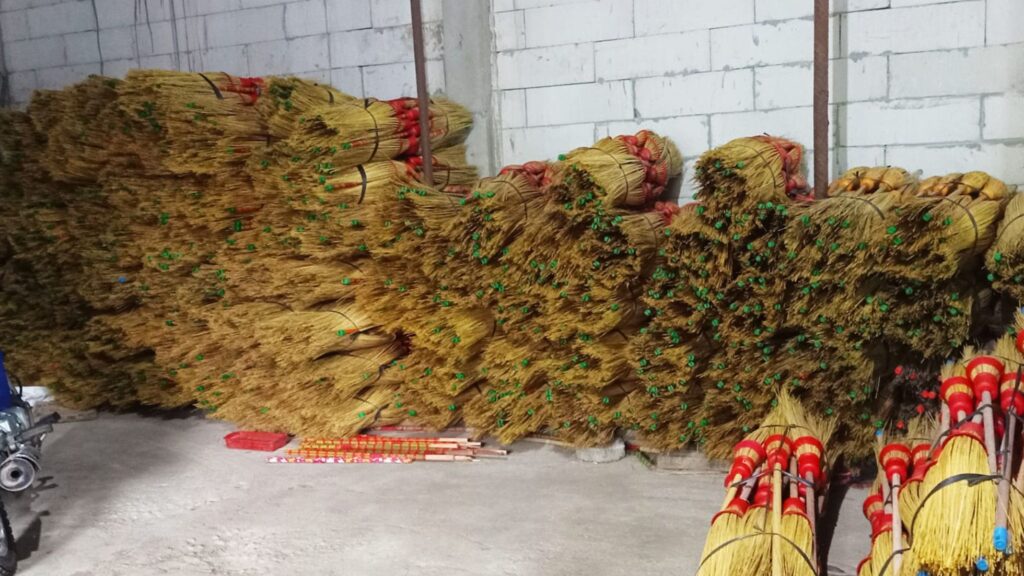
The broom derives its structure from the stiff central rib of coconut leaflets, locally known as “lidi” or “midrib.” Each leaflet contains a slender spine that becomes rigid once dried. These spines are collected, trimmed, soaked, polished, and bound into a uniform bundle. The process demands precision. A skilled artisan evaluates the diameter, elasticity, and straightness of each stick before deciding whether it belongs in the final product.
Because the broom is created from naturally fallen or harvested coconut leaves, its ecological footprint remains minimal. Coconut trees produce leaf fronds continuously throughout their lifespan, making the raw material abundantly available. Moreover, midribs require no chemical treatment to harden. Sun-drying is usually enough to complete the natural curing process. As a result, the broom remains biodegradable, safe to use, and environmentally responsible—qualities that resonate strongly with modern consumers.
The handle typically uses either bamboo, rattan, or a tightly bound cluster of the same midribs. Each region adapts the design to meet local needs. In coastal regions, artisans sometimes reinforce the binding with woven palm fiber cord. In mountainous areas, a longer handle allows users to sweep steep paths without bending too often. Because of these cultural nuances, the broom serves as both a utilitarian object and a marker of regional identity.
Historical Importance and Cultural Significance
The coconut midrib broom has always been more than a tool. In many traditions, sweeping carries symbolic meaning. It represents clarity, order, and the removal of negative energy. Some communities use the broom in welcoming ceremonies, believing that sweeping the threshold brings good fortune. In other areas, it is gifted during weddings as a reminder that maintaining a home requires effort, cooperation, and shared responsibility.
Historically, broom-making provided livelihood for rural households. Families passed the craft down across generations, turning coconut waste into saleable goods. The skill involved goes beyond simple bundling. Experienced craftsmen understand how moisture levels affect durability, how much tension to apply during binding, and how to achieve the perfect balance between flexibility and stiffness. Each broom therefore reflects the maker’s expertise, making it unique in its own right.
Even as modern tools emerged, the cultural position of coconut midrib brooms remained firm. In many villages, children still learn sweeping habits using these natural brooms. Markets continue to showcase them in a wide array of sizes and binding styles. Furthermore, tourists often bring them home as cultural souvenirs, charmed by both their practicality and craftsmanship.
Functional Advantages in Daily Use
The popularity of coconut midrib brooms arises largely from their functionality. The rigidity of the midrib sticks creates a firm sweeping action ideal for removing leaves, debris, sand, and fine dust. This firmness provides an advantage over softer, plastic-based bristles that tend to bend excessively on rough surfaces. As a result, the broom performs exceptionally well outdoors or in semi-outdoor spaces such as porches and work areas.
Another important benefit is ease of maintenance. Because the broom contains no synthetic adhesives, users can wash it, sun-dry it, and store it without concern for chemical degradation. Natural bristles also remain less prone to static buildup. Consequently, dirt does not cling to them as aggressively as it would to certain polymer bristles.
Its simple, lightweight construction supports ergonomic use. The broom does not strain the wrist, and the handle length can be tailored to user preference. These characteristics explain why gardeners, janitorial teams, workshop employees, and homeowners continue to favor this tool.
Sustainability and the Changing Global Market
As global attention shifts toward environmental responsibility, coconut midrib brooms have regained prominence. The world faces a serious challenge in reducing plastic waste, and the demand for compostable household items continues to rise. Natural brooms provide an elegant solution to this problem. They require no petroleum-based components, contain minimal carbon input, and decompose fully without leaving toxins.
Governments and importers in Europe, in particular, have implemented strict regulations on eco-friendly household items. Because the coconut midrib broom aligns with such standards, exporters find increasing opportunities in these markets. Consumers appreciate not only the broom’s functionality but also its story—one tied to sustainability, responsible sourcing, and the preservation of traditional craftsmanship.
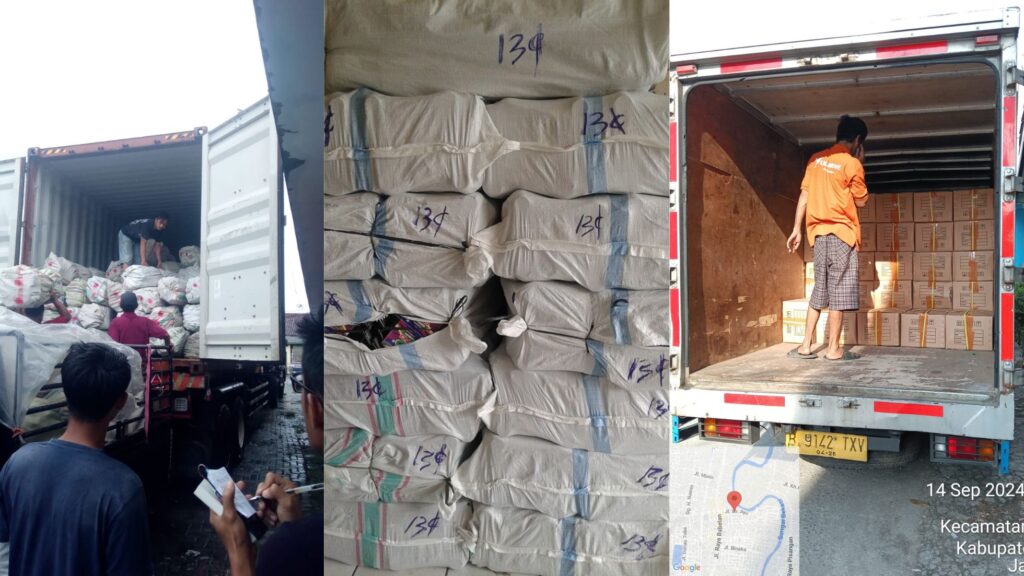
The export supply chain has adjusted to accommodate this renewed interest. Manufacturers standardize broom lengths, weights, binding materials, and packaging to suit international requirements. Certifications regarding ethical sourcing, fair labor practices, and environmentally conscious production help strengthen market acceptance. Consequently, the coconut midrib broom is transforming from a rural craft to a globally recognized cleaning instrument.
Craftsmanship in the Modern Context
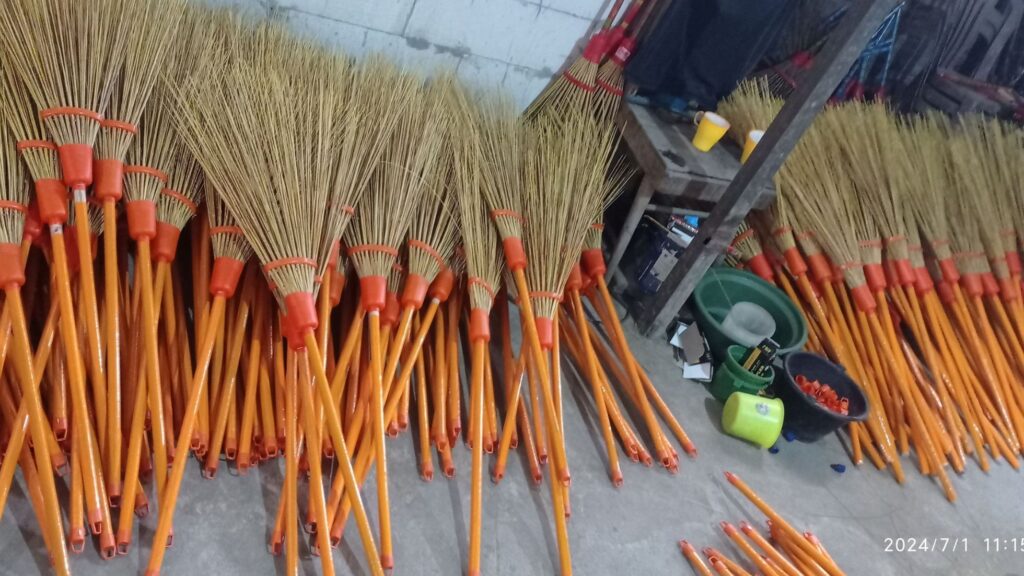
Although industrialization influences many traditional sectors, the coconut midrib broom industry still relies heavily on human skill. Machines can assist with cutting or trimming, yet binding and quality-checking are still best handled by trained artisans. This human involvement gives the broom a distinct character that mass-produced synthetic alternatives cannot replicate.
Craftsmanship evolves with consumer expectations. Some producers now experiment with decorative bindings, color-coordinated handles, and upgraded packaging designs. Others focus on preserving classical patterns without altering the original aesthetic. Both approaches contribute to the broom’s expanding commercial appeal. As buyers seek authenticity alongside functionality, the product’s hand-crafted nature becomes a valued selling point.
Additionally, fair-trade initiatives help protect traditional artisans and ensure that broom-making communities receive proper compensation. By promoting ethical production, exporters and buyers strengthen the economic resilience of rural populations.
The Evolving Role of Floor Brooms in Modern Cleaning Systems
Economic Value for Producing Regions
Coconut-producing regions benefit significantly from the broom industry. Since coconut trees thrive in tropical climates and require minimal agricultural input, communities can sustain production without extensive investment. Raw materials are inexpensive, readily available, and renewable. As a result, broom-making offers stable employment opportunities, especially for women and small household workshops.
Many local economies integrate broom production into broader coconut-based industries. Farmers who harvest coconuts for food, oil, or fiber often supply midribs to broom manufacturers, ensuring that no part of the tree goes to waste. This closed-loop resource utilization reflects an efficient and ecologically sound economic model.
Moreover, exporting coconut midrib brooms creates opportunities for developing countries to enter global markets without high entry costs. The product demands skill and consistency, but not heavy machinery. As buyers increasingly prioritize sustainable sourcing, regions with strong coconut resources remain well-positioned to meet global needs.
Market Demand Trends in Europe and Beyond
European buyers have shown growing interest in coconut midrib brooms over the past decade. Several factors contribute to this trend. First, the shift toward natural materials aligns with Europe’s environmental policies. Second, outdoor sweeping tools made of coconut midribs perform exceptionally well on stone walkways, terraces, garden spaces, and rough surfaces common in European households. Third, the product’s rustic appearance fits naturally into aesthetic preferences associated with eco-living, handmade goods, and sustainable home décor.
Retailers distribute these brooms through garden centers, hardware stores, household cleaning aisles, and online platforms specializing in environmentally friendly goods. Importers often request consistent quality grading, which encourages manufacturers in producing countries to adopt better quality-control systems.
Beyond Europe, demand is also rising in the Middle East, East Asia, and Australia. Each region appreciates the broom for different reasons: practicality, affordability, durability, or cultural familiarity. As global supply chains become more interconnected, the coconut midrib broom stands as a product capable of bridging traditional craftsmanship with modern consumer expectations.
COCO NUSA GEMILANG — Export-Ready Coconut Midrib Broom Manufacturer
Coco Nusa Gemilang has emerged as a dedicated manufacturer of high-quality coconut midrib brooms crafted by skilled Indonesian artisans. With production facilities close to the raw-material sources, the company maintains consistent standards that meet the expectations of international buyers. Each broom undergoes strict quality inspection, ensuring uniformity in length, strength, and binding. As global demand for natural cleaning tools increases, Coco Nusa Gemilang is fully prepared to supply export-ready products that align with modern sustainability values.
In addition to craftsmanship, the company provides pricing structures tailored to various order volumes. International buyers can source coconut midrib brooms at competitive rates, typically ranging from USD 0.9 to 2 per piece, FOB Port Semarang, Indonesia. This flexible pricing allows distributors, wholesalers, and retail chains to optimize margins without compromising product integrity. Moreover, Coco Nusa Gemilang adapts its packaging and labeling standards to meet the requirements of European markets, ensuring a smooth import process.
Because the company focuses on combining efficient logistics, traditional craftsmanship, and contemporary export standards, Coco Nusa Gemilang continues to strengthen its position as one of Indonesia’s best sources for natural handicraft brooms. Their products represent not only the best in handcrafted cleaning tools but also the dedication of local communities who preserve time-honored techniques. As a result, buyers seeking reliable supply, stable quality, and eco-friendly materials will find Coco Nusa Gemilang to be a trusted long-term partner.