

Introduction
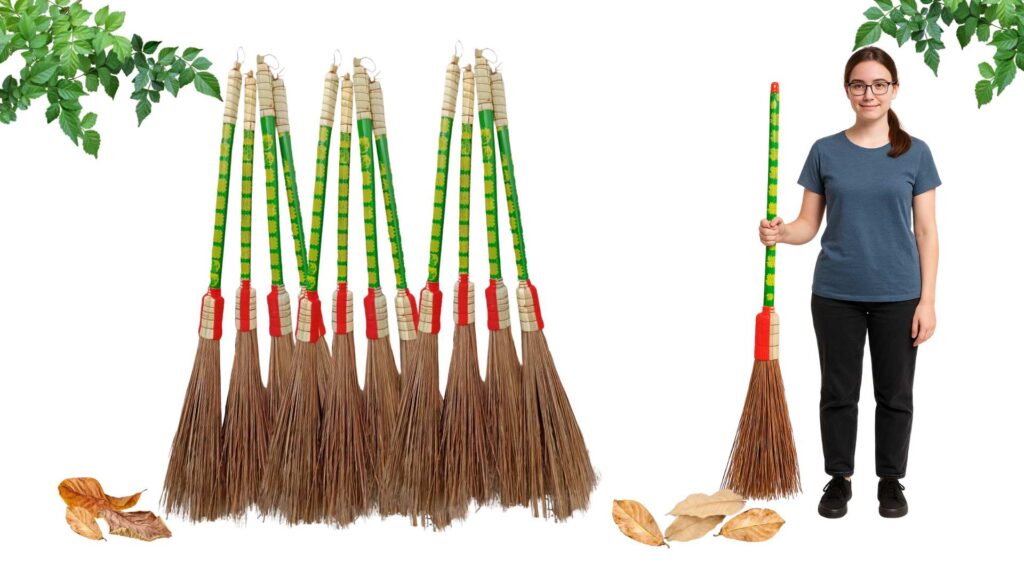
Across Asia, one can find a simple yet deeply meaningful tool: the broom. Among the wide variety of household implements, the Asian broom stands out for its craftsmanship, functionality, and cultural significance. It is more than a cleaning device—it represents tradition, sustainability, and human connection to nature.
For generations, Asian communities have relied on natural materials such as coconut sticks, bamboo, sorghum grass, and palm fibers. Each region contributes unique styles and techniques, reflecting both environmental conditions and cultural heritage.
The Roots of Asian Broom Craftsmanship
The story of the Asian broom begins centuries ago. Long before modern tools existed, people used natural resources to keep their surroundings clean. They collected fallen twigs, grass, or palm leaves and bound them together. Over time, this evolved into the structured and refined designs we see today.
From the rice fields of Indonesia to the mountain villages of Nepal, broom-making became an inherited skill. Families passed down knowledge about material selection, binding methods, and drying processes. Each broom, though simple, carries the essence of human creativity shaped by nature.
Interestingly, broom-making in Asia never lost its local touch. Even as machinery entered other industries, artisans continued to craft brooms by hand. This dedication preserved not only product quality but also cultural integrity.
Materials That Define the Asian Broom

Asia’s biodiversity provides a vast range of natural fibers suitable for broom-making. Different materials produce distinct types of brooms, each with specific uses.
Coconut Stick Brooms—made from the midribs of coconut leaves—are popular in tropical countries. They are strong, stiff, and ideal for outdoor cleaning.
Grass Brooms, often crafted from Thysanolaena maxima, are soft yet durable. They work well on smoother surfaces such as tile or wooden floors.
Bamboo and Palm Fiber Brooms blend flexibility and resilience. Bamboo handles provide lightweight structure, while palm fibers offer sweeping efficiency.
Rice Straw Brooms, common in East Asia, are delicate and precise. Their fine bristles capture even small dust particles.
Each material reflects the region’s environment and available resources. Artisans carefully harvest and process these fibers, ensuring sustainability while maintaining high performance.
The Handmade Process
Every Asian broom begins with patient, meticulous work. The process involves selecting, drying, and shaping raw materials. Unlike industrial products, handmade brooms require human intuition and precision.
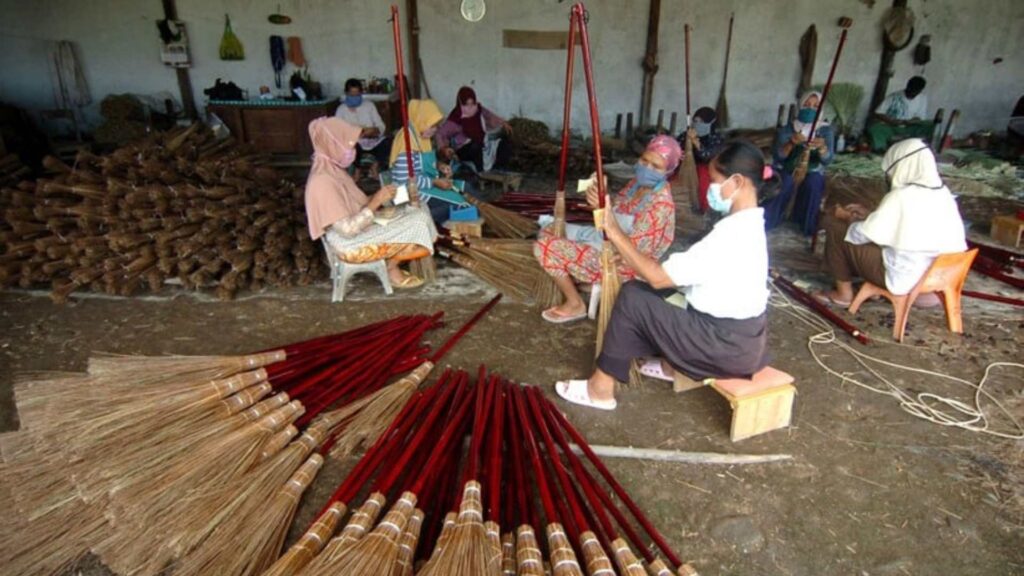
First, artisans collect leaves, stalks, or grass from local farms. The materials are then cleaned and sun-dried to remove moisture. After drying, fibers are sorted according to thickness and length. This ensures uniform balance and visual harmony.
Next, the fibers are bundled tightly. Natural twine, rattan, or wire is used to bind them securely. For brooms with handles, bamboo or wooden sticks are attached carefully to provide strength and control.
Every motion matters. The angle of the bristles, the firmness of the tie, and the final trimming all influence the broom’s performance. This attention to detail reflects the artisan’s pride in their work.
Moreover, handmade production minimizes waste. Since natural fibers are biodegradable, the process aligns perfectly with eco-friendly values.
Cultural Symbolism of the Broom in Asia
In Asia, brooms carry meaning beyond function. In many cultures, sweeping is symbolic—it clears not only dust but also bad energy. During the Lunar New Year, people in China and Vietnam sweep their homes to invite good fortune. In Japan, the act of sweeping is tied to mindfulness and simplicity.
Similarly, in Southeast Asia, brooms represent humility and order. They are tools of daily discipline, used in temples, schools, and homes alike. The rhythmic motion of sweeping connects people to their surroundings, promoting a sense of calm and care.
Thus, the Asian broom is not merely an object of labor; it is part of cultural identity. It reminds people that cleanliness, respect, and balance begin with small, consistent acts.
Design and Functionality
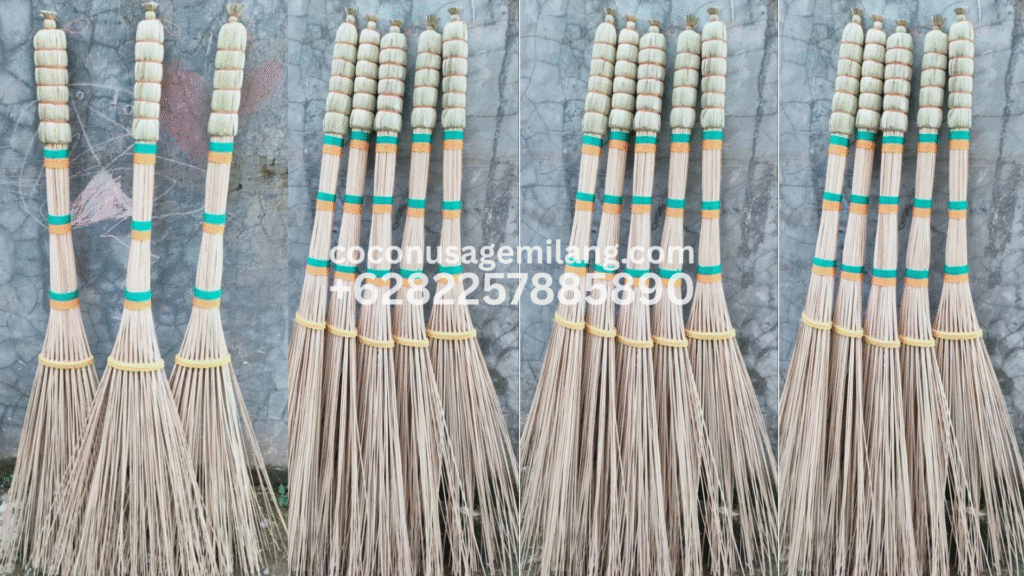
What distinguishes the Asian broom from Western designs is its structure. Asian brooms are typically fan-shaped, allowing wide coverage in each stroke. The bristles are soft yet dense, ensuring efficient dust collection without scratching surfaces.
The absence of plastic in traditional brooms is another defining trait. Instead, makers rely on bamboo, rattan, or natural wood for handles. This not only enhances durability but also reduces environmental impact.
Because each component is natural, the broom feels organic in hand. It flexes slightly as it moves, adapting to the texture of the surface. The design prioritizes simplicity and effectiveness, a hallmark of Asian ingenuity.
Furthermore, artisans often tailor brooms for specific purposes. Some are optimized for wet areas, while others are lighter for indoor cleaning. This adaptability has helped the Asian broom remain relevant even in modern households.
Ergonomic and Practical Benefits
Although handmade, the Asian broom is thoughtfully engineered. Its design emphasizes comfort, control, and endurance. The balanced weight prevents fatigue, allowing users to maintain an upright posture. The soft yet firm bristles make sweeping smoother. And quieter than synthetic alternatives. For outdoor use, sturdier versions with thicker bristles handle leaves, soil, and debris efficiently.
Many prefer these brooms for their tactile quality. The natural materials feel grounded, making cleaning a meditative experience rather than a chore. Even professional cleaners appreciate their lightness and versatility.
Regional Variations Across Asia
Each Asian country contributes distinct broom styles.
In Indonesia, coconut stick brooms dominate rural and urban markets. Known locally as sapu lidi, they are valued for durability and simplicity.
In Thailand, ya tam or grass brooms feature elegantly bound handles and fine bristles, often dyed for aesthetic appeal.
In the Philippines, the walis tambo—made from tiger grass—is an everyday essential, especially for indoor cleaning.
Meanwhile, Japan’s houki exemplifies refinement. Made from soft sorghum fibers, it is used in traditional tea houses and temples.
These regional variations showcase how environment, culture, and function influence design. Yet all share one principle: a respect for nature and craftsmanship.
Sustainability and Environmental Value
The Asian broom embodies sustainability in its purest form. Its production relies on renewable, biodegradable materials and low-energy processes. In contrast to mass-produced plastic brooms, it leaves no toxic footprint.
Most raw materials come from agricultural by-products. Coconut leaf midribs, for instance, are gathered from fallen fronds. Tiger grass and palm fibers are cultivated sustainably without harming the ecosystem.
Artisans often use sunlight for drying rather than electric dryers, reducing energy use. Natural binding materials further eliminate plastic waste. In this way, broom-making aligns seamlessly with global sustainability goals.
Moreover, the industry provides fair livelihoods for rural communities. It supports local economies, particularly women who play central roles in production. Sustainability here means not only environmental care but also social responsibility.
Market and Export Dynamics
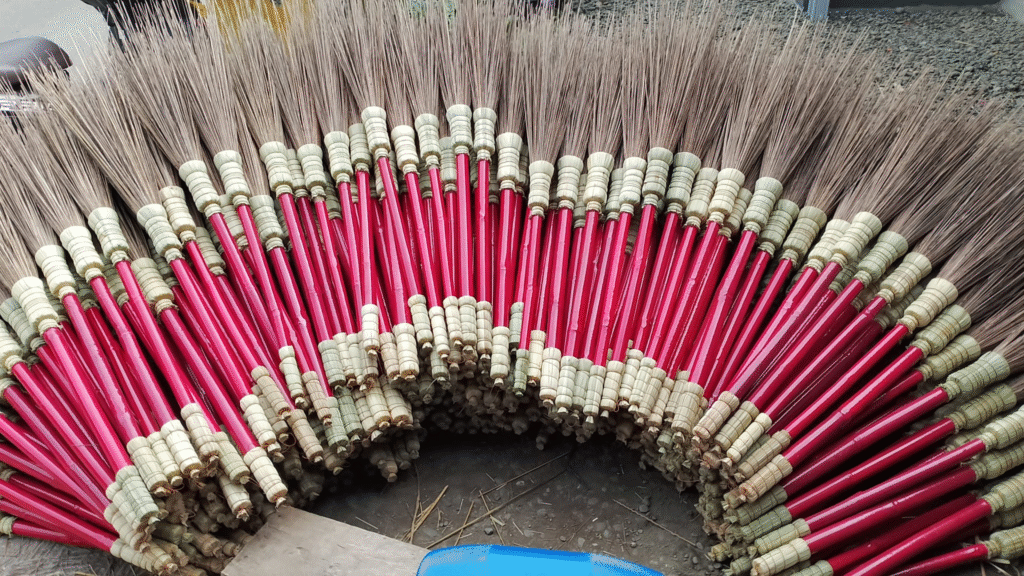
The global market for natural brooms has grown steadily in the past decade. European, Middle Eastern, and North American buyers increasingly favor eco-friendly and handcrafted goods.
Asian brooms, known for their authenticity and aesthetic appeal, occupy a strong position in this market. Importers appreciate their handmade nature, biodegradable composition, and traditional appeal.
Indonesia, Vietnam, and the Philippines remain leading exporters. Their proximity to abundant natural materials ensures supply stability. Additionally, manufacturers have adopted stricter quality control to meet international standards.
However, export success requires more than product quality. Packaging, branding, and storytelling also play critical roles. Buyers respond positively to transparency about materials, origins, and artisan communities. Consequently, ethical marketing has become a defining feature of modern broom exports.
Challenges in the Industry
Despite rising demand, the broom industry faces ongoing challenges. Seasonal weather affects material drying and supply consistency. Heavy rain can delay production, while extreme heat may damage fibers.
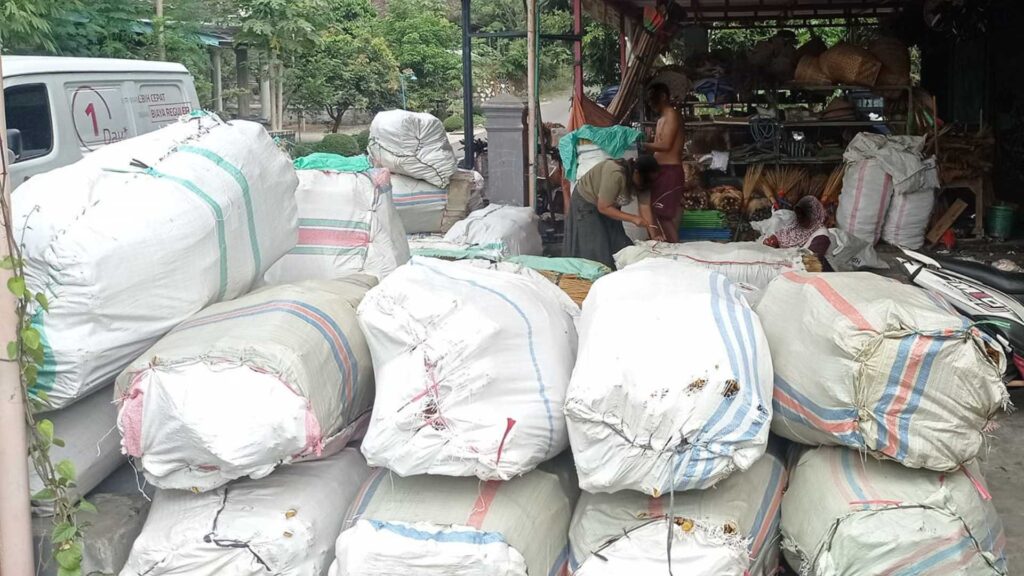
Transportation costs also pose difficulties, as brooms occupy large shipping space relative to their weight. Efficient packing and container optimization are therefore essential for exporters.
Competition from low-cost plastic brooms persists as well. Yet, natural broom producers rely on quality, tradition, and sustainability to distinguish their products. Consumers seeking authenticity and environmental responsibility continue to drive the market forward.
Technology and Adaptation
Though handmade at heart, the industry has embraced selective modernization. Digital weighing, quality tracking, and moisture control help ensure consistency. Some producers experiment with ergonomic handle designs or hybrid materials to improve comfort.
Still, artisanship remains central. Machines can assist, but they cannot replicate the intuition and rhythm of hand-binding. The balance between human touch and efficiency defines the industry’s modern identity.
By blending tradition with light innovation, producers maintain authenticity while staying relevant in competitive markets.
Economic and Social Impact
Beyond export potential, broom-making sustains local economies. Many villages across Indonesia, Thailand, and the Philippines rely on it as a main livelihood. The craft provides flexible employment, especially for women and older workers.
Small workshops and cooperatives often operate as family enterprises. They preserve generational knowledge while adapting to changing demands. Income from broom sales funds education, healthcare, and community development.
Hence, the Asian broom represents more than environmental care—it embodies social empowerment. It shows how simple, low-impact industries can generate lasting benefits for both people and planet.
Design Innovation for Modern Consumers
Judul Halaman Pemisah Judul situs
As global interest grows, design adaptation has become vital. Exporters now experiment with color accents, branding tags, and modern packaging. Some integrate recycled metal handles for durability while preserving traditional bristle textures.
Others market brooms as decorative items or eco-home accessories, expanding beyond cleaning utility. These innovations attract younger, sustainability-conscious consumers who value aesthetics and story-driven products.
Nevertheless, artisans remain faithful to traditional integrity. Innovation enhances, rather than replaces, their heritage.
Why the Asian Broom Endures
Its endurance rests on three pillars: function, sustainability, and cultural depth. Few tools offer such a combination of utility and environmental harmony. Each broom reflects centuries of experience and adaptation.
In an age dominated by synthetic alternatives, the Asian broom reminds us that progress does not always mean artificial. Simplicity, when executed with skill and respect for nature, can achieve remarkable effectiveness.
Thus, the Asian broom continues to sweep not just dust, but the boundaries between craft, ecology, and commerce.
The Asian Broom: Tradition, Craftsmanship, and Sustainability
Coco Nusa Gemilang: Crafting Authentic Asian Brooms for the World
Among Indonesia’s notable producers, Coco Nusa Gemilang stands out for its dedication to handmade excellence. The company specializes in Asian brooms crafted from natural fibers, including coconut sticks, broom grass, and palm midribs.
Every product is handmade by skilled artisans who preserve traditional techniques while ensuring modern quality standards. Each broom reflects patience, precision, and pride. The company emphasizes sustainability, using renewable resources and minimizing waste throughout production.
Coco Nusa Gemilang is ready to supply Asian brooms for export to Europe and other global markets. Its commitment to ethical sourcing and sustainable craftsmanship defines its brand identity.
Through its handmade process, Coco Nusa Gemilang upholds not only product quality but also the values of environmental care and cultural heritage. The company’s philosophy is clear: true craftsmanship connects people, nature, and purpose.
Conclusion
The Asian broom endures as a symbol of harmony between human ingenuity and the natural world. It tells the story of people who create with intention, respect their resources, and sustain their communities through skill.
As industries seek greener alternatives, the handmade broom stands as proof that traditional wisdom remains relevant. Each sweep renews not only a space but also a principle: that quality and sustainability can coexist beautifully.
Through dedicated manufacturers such as Coco Nusa Gemilang, this timeless craft continues to reach global homes—bringing with it the gentle strength of Asian tradition and the promise of a cleaner, more sustainable future.

Hi. I am looking for Bamboo broom sticks to import. Our requirement is a 40ft container to the port of Karachi pakistan. Will you be able to supply us with the product?
Yes, we can supply bamboo broom sticks and are able to support a 40ft container to Karachi Port.
To provide the best price and production schedule, could you please share your required size, packing details, and target shipment time?
WA +62 822-5788-5890
Email: marketing@coconusagemilang.com
We look forward to working with you.