Handcrafted Strength: Indonesia’s Natural Broom Corn Sector and Its Export Future
Broom corn holds a quiet but important position in Indonesia’s natural fiber economy. This plant, often associated with rural agriculture and handmade tools, supports thousands of households and contributes to sustainable livelihoods. While many people think of brooms as everyday cleaning instruments, the story behind broom corn production reveals culture, trade, and environmental responsibility. Indonesia’s production ecosystem blends tradition with rising international demand, offering significant potential for global buyers.
Across Java, Sulawesi, and parts of Sumatra, farmers cultivate broom corn varieties suited for tropical climates. These regions maintain community-based agricultural systems, enabling local growers to sustain income while keeping production close to raw materials. The broom corn industry reflects resilience. Farmers manage seasonal cycles, drying barns, and fiber sorting yards with patience developed over generations. Their practices bridge past knowledge and present economic needs.
What Makes Broom Corn Special
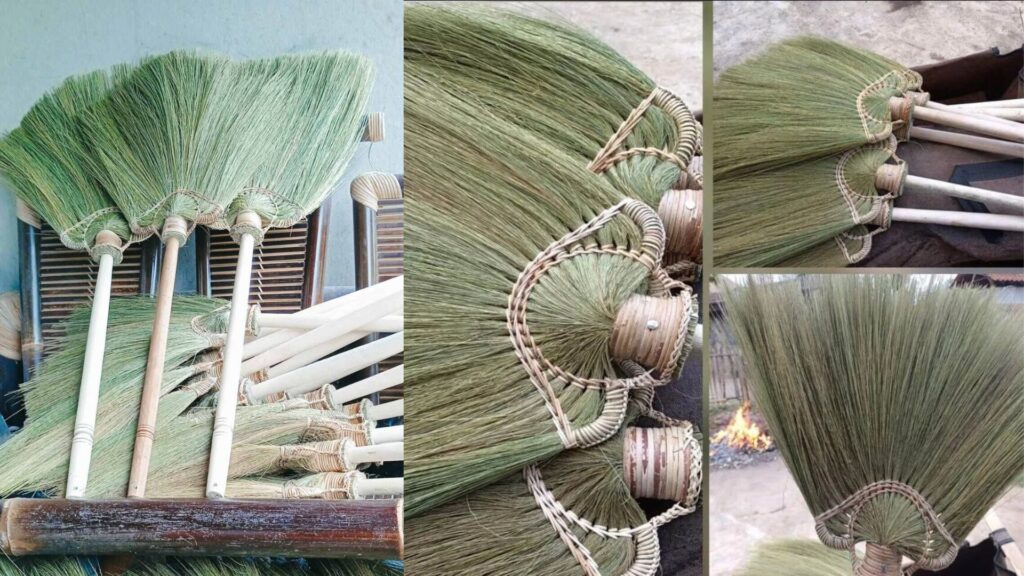
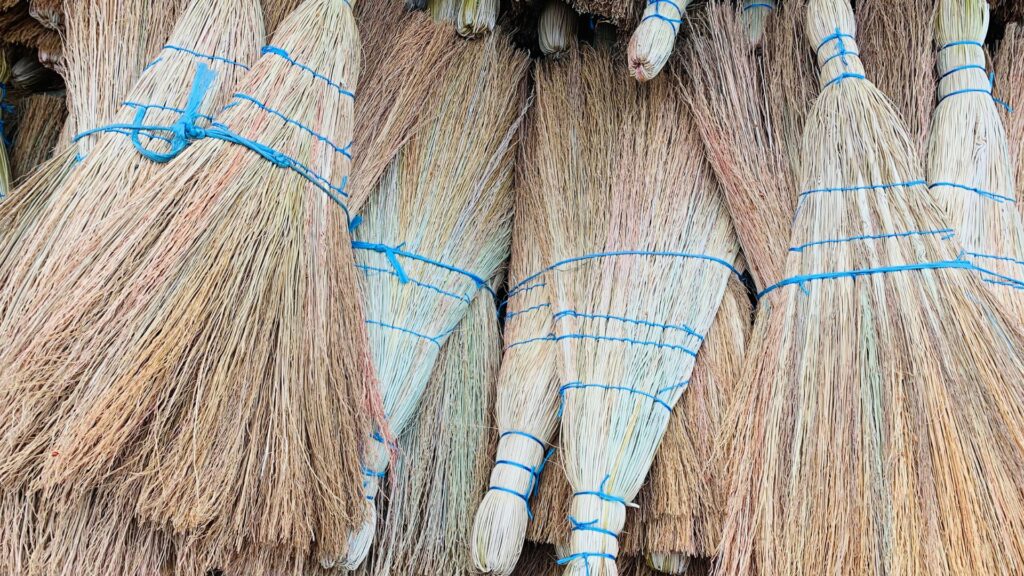
Broom corn, technically a type of sorghum, produces long and sturdy fibers ideal for sweeping tools. Unlike synthetic brooms that bend or degrade quickly, broom corn bristles remain firm and abrasive. Users value the natural texture because it traps dust effectively. Due to increasing interest in eco-friendly home products, broom corn has regained importance in both domestic and international markets. Natural fiber brooms also appeal to consumers who want alternatives to petroleum-based plastics.
The material offers durability and biodegradability. When a broom reaches the end of its life, it decomposes without leaving harmful residue. This aligns with sustainability principles and circular product design. In Europe, sustainable living movements boost attention toward handmade tools with traceable raw materials. Indonesian broom corn fits this growing preference. Environmental values now shape purchasing decisions, and traditional industries benefit from this shift.
Farming and Harvesting Practices
The cultivation of broom corn in Indonesia requires careful timing. Farmers prepare land at the beginning of the rainy season. Seeds planted in well-drained soil develop strong stalks, while moderate rainfall strengthens fiber growth. After maturing, broom corn plants reach optimal height and thickness for harvesting. Farmers cut stalks manually using small sickles or sharpened knives. This manual approach preserves fiber length and reduces crop damage.
Drying follows harvesting. Farmers spread broom corn bundles across raised bamboo platforms or hang them under sunlight. Controlled drying prevents mold and maintains fiber integrity. They watch weather cycles closely. Sudden rain showers require quick action to protect fibers, which are then relocated under shelter. Their attentiveness demonstrates craftsmanship even at farming level. After drying, fibers are sorted by length, thickness, and color. The sorted material enters the next stage of broom production or is packed for wholesale buyers.
Traditional Craftsmanship and Processing
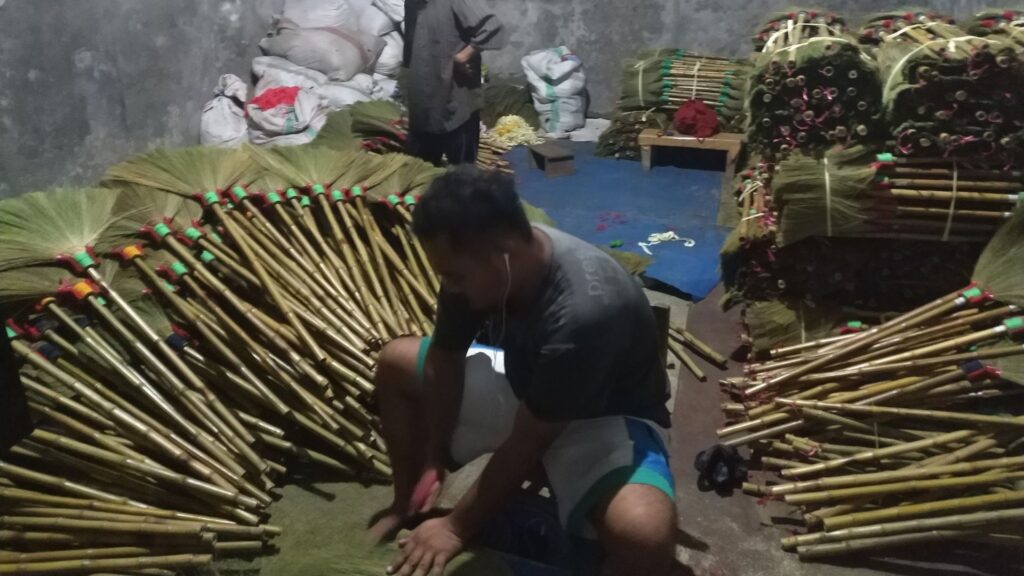
Broom makers use both hand tools and simple binding machines. Fiber bundles are aligned, compressed, and tied around wooden or bamboo handles. The most skilled artisans trim, adjust, and tighten each cluster. Their hands know the exact tension needed for long-lasting firmness. Production supervisors inspect each broom to ensure consistent quality. This kind of craftsmanship stands in contrast to mass-produced synthetic brooms, where machines dominate every step.
In many communities, broom making provides employment for women and older individuals. Home-based production systems allow flexible working hours. Neighborhood workshops often operate with shared equipment and cooperative structures. Local economies grow through steady export orders. Families involved gain financial stability while preserving traditional skills.
Indonesian Position in the Global Market
Indonesia stands among key broom corn producers in Southeast Asia. Market interest originates from Europe, the Middle East, Africa, and South Asia. Buyers appreciate Indonesian broom corn for its fiber strength and handmade finishing. Global distributors also value the ethical and natural production approach. Compared to machine-heavy broom industries in other countries, Indonesia presents a unique identity anchored in artisanal quality.
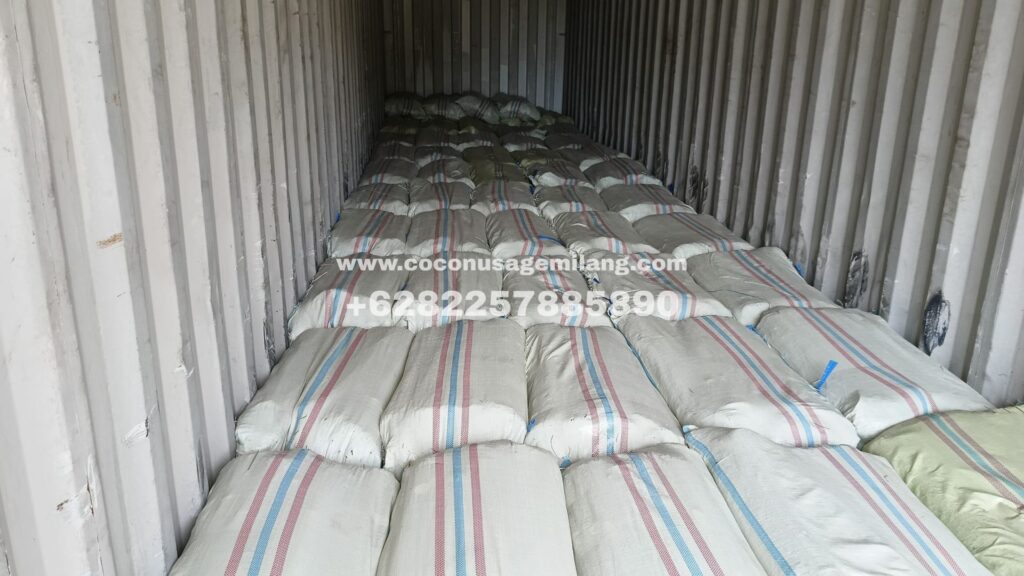
Export volume increases steadily as more buyers search for natural cleaning tools. Shipping infrastructure also continues improving, particularly ports like Semarang, Surabaya, and Jakarta. Exporters coordinate logistics, container packing, fumigation, and compliance documentation to meet international requirements. This progress positions Indonesia as a competitive sourcing hub. A well-developed supply chain allows timely order fulfillment for bulk shipments.

Coco Nusa Gemilang and Export Commitment
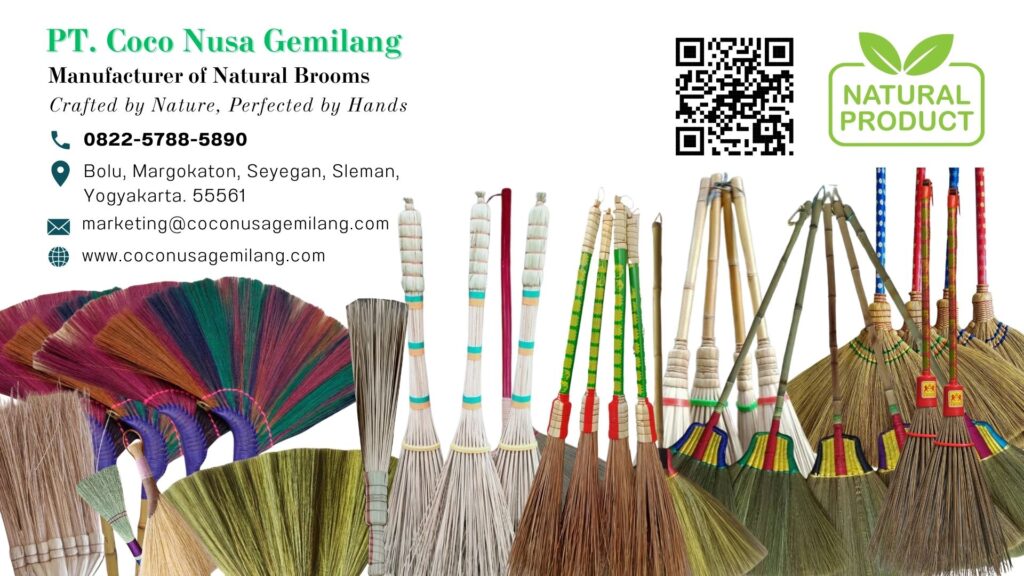
One prominent player contributing to this growth is Coco Nusa Gemilang, a broom corn manufacturer based in Indonesia. The company produces high-quality broom corn brooms and supplies global buyers. It highlights strong export readiness, particularly toward European markets. Their production prioritizes quality control and consistent fiber selection. Workers craft each broom by hand, reflecting commitment to durability and natural design.
Coco Nusa Gemilang offers competitive pricing tailored to volume. Export buyers can secure supply starting at 0.9 USD to 2 USD per piece FOB Port Semarang, Indonesia. These price ranges depend on model, grade, packing style, and order size. The company welcomes small trial orders and large shipments. Its transparent approach helps importers plan inventory and marketing. Through this model, international clients benefit from stable pricing and reliable supply.
Material Grading and Specifications
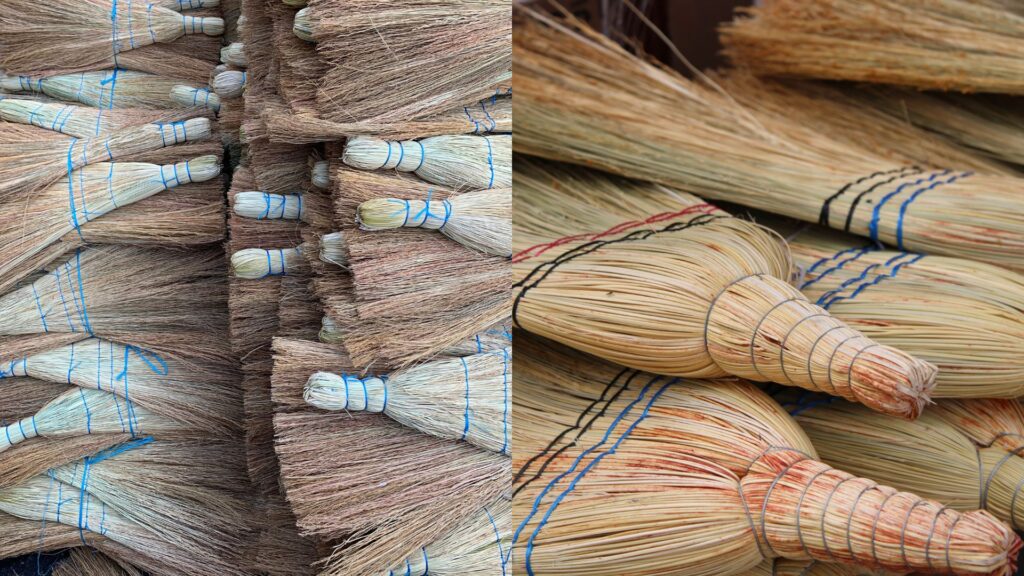
Broom corn quality varies by length, stiffness, and fiber color. Indonesian producers categorize fibers into premium, standard, and economy grades. The best fibers measure long and straight, ideal for sweeping fine dust. Standard grades handle daily household use. Economy grades serve industrial cleaning or outdoor sweeping needs. Buyers usually request specific fiber lengths and handle designs.
Common handle materials in Indonesia include bamboo, wood, and sometimes rattan. Bamboo remains popular due to light weight and resilience. Producers shape handles through cutting, polishing, and varnishing. Each step improves comfort and durability. Finished brooms undergo packing procedures that protect fibers during shipping. Export packaging often uses woven sacks, cardboard boxes, or compressed bundles depending on destination preferences.
Sustainability and Environmental Value
Natural broom corn offers advantages beyond function. It supports ecological balance. Farmers cultivate crops without heavy chemical reliance. The plant improves soil texture and can grow in low-fertility land. This makes broom corn a strategic crop in rural agriculture. Instead of switching to intensive farming that harms ecosystems, communities preserve biodiversity.
Waste from production also returns to nature. Fiber scraps become compost. Wooden handle offcuts fuel small ovens or are repurposed for handicraft. Water use stays moderate, and manual processing reduces carbon emissions. Customers who prioritize sustainability see broom corn as a meaningful alternative to plastic brooms imported from high-emission manufacturing centers.
International buyers influence production conditions.
Economic and Social Impact
Rural communities benefit significantly from broom corn activities. Families earn steady seasonal income from farming, sorting, and broom assembly. This reduces migration pressure and supports financial independence. Young workers gain skills from experienced craftsmen. Senior citizens contribute through sorting and trimming tasks. Household economies remain balanced, and local culture stays intact.
Financial empowerment at micro-level strengthens national development. Communities reinvest income in education, healthcare, home improvement, and cooperative facilities. Government programs often assist small producers through training and access to agricultural support. These initiatives create long-term stability in rural regions.
Challenges Facing the Industry
Despite promising growth, challenges remain. Weather fluctuations impact drying cycles, increasing risk of fiber discoloration or moisture damage. Farmers rely on traditional prediction methods, though modern tools slowly enter the sector. Price competition from synthetic broom imports can affect small producers. Some regions still lack advanced storage facilities, leading to inconsistency during rainy seasons.
However, these challenges also encourage innovation. Producers explore better drying systems, fiber processing machines, and training programs. Cooperative networks negotiate fair pricing and improve export readiness. Through incremental improvements, broom corn production gains strength and resilience.
Buyer Responsibilities and Market Trends
International buyers influence production conditions. Fair pricing supports ethical labor and quality standards. Long-term contracts encourage farmers to plan crops more efficiently. Transparent communication regarding shipping schedules and packaging needs builds trust. Importers who value sustainable supply chains strengthen the industry.
Global market trends move toward eco-friendly household goods. Retailers highlight natural material origins and cultural backstory. Consumers respond well to meaningful product narratives. Indonesian broom corn fits this marketing approach naturally. Brands that incorporate story-based labeling elevate product value while honoring Indonesian craftsmanship.
Broom corn in Indonesia represents more than agricultural output.
Looking Forward
Indonesia’s broom corn industry holds solid potential for further expansion. Digital marketing and international trade platforms provide new avenues to reach diverse buyers. As sustainability continues dominating global conversations, natural broom corn products gain advantage. Investments in logistics, drying infrastructure, and packaging will lift competitiveness even higher.
Coco Nusa Gemilang remains ready to scale with international demand. Its focus on handmade excellence, export compliance, and transparent pricing reflects modern business values. With flexibility for volume-based orders and price ranges between 0.9 USD and 2 USD FOB Semarang, it offers competitive access to quality products. This approach positions the company as a trusted partner for global distributors.
Conclusion
Broom corn in Indonesia represents more than agricultural output. It symbolizes heritage, livelihood, and environmental respect. Through cultivation, processing, and export, communities sustain traditions while embracing global interaction. Buyers who choose natural broom corn do more than purchase cleaning tools. They support sustainable agriculture, rural employment, and meaningful craftsmanship.
Indonesia’s future in broom corn production looks bright. With consistent improvement, rising eco-awareness, and strong export partners like Coco Nusa Gemilang, the industry stands ready to serve international markets responsibly and competitively.