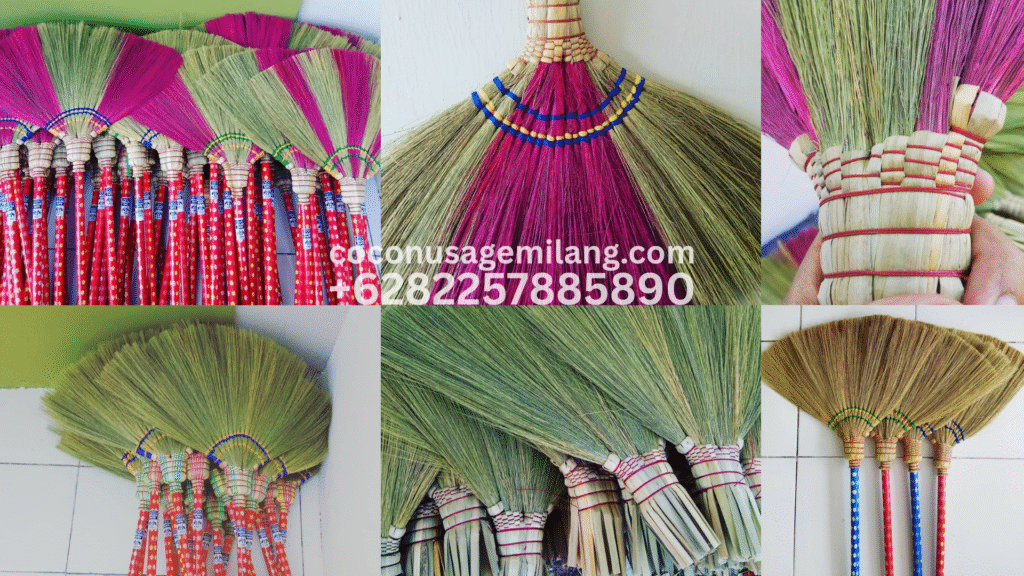


The natural grass broom remains one of the most recognizable and enduring household tools across Asia, Africa, and parts of Eastern Europe. Although simple at first glance, its structure, craftsmanship, and cultural symbolism reveal a tool shaped by centuries of adaptation. Unlike mass-produced plastic brooms, the natural grass broom carries both ecological and anthropological meaning. Its design reflects detailed knowledge of local plants, and its continued relevance illustrates how traditional objects can survive in a world driven by industrial manufacturing.
Professionals studying sustainable materials, export supply chains, or rural economics often return to the natural grass broom as a case study. It demonstrates how a modest, plant-based product can meet modern market expectations without sacrificing cultural identity. Moreover, it highlights how producers in rural areas transform natural resources into commodities that travel far beyond their villages. Although modern technology has reshaped many cleaning tools, the natural grass broom continues to secure its place because its efficiency, durability, and tactile feel resonate with users across different regions.
Furthermore, many consumers value its organic texture and sweeping action. Plastic bristles cannot replicate the gentle friction of natural grass. The broom’s performance on tile, wood, terrazzo, and cement floors proves its versatility. Even in urban settings where modern cleaning devices dominate, the natural grass broom remains relevant because it handles fine dust more effectively than many synthetic alternatives. Consequently, demand for the product persists in households, offices, schools, and small industries.
Understanding the Materials Behind the Broom
The natural grass broom usually relies on several species of long, fibrous grasses. The most common material is Thysanolaena maxima, often referred to as “broom grass.” This plant grows abundantly in tropical and subtropical climates, especially in mountain and hill regions. Its fibers are strong yet supple. These characteristics give the broom its ability to capture dust without damaging surfaces.
In addition, the grass stems dry evenly and maintain texture without breaking. This stability allows craftsmen to bundle the fibers tightly without worrying that the broom will become brittle over time. The drying technique, although simple, plays a major role in determining quality. Grass that dries too quickly may curl or weaken. Grass that dries too slowly may develop mold. Proper craftsmanship requires observing weather patterns, airflow, and humidity.
Moreover, natural grass fibers have micro-grooves that increase friction during sweeping. These grooves collect fine particles and trap dust before it becomes airborne. Unlike some synthetic bristles that push debris around, broom grass binds it gently. Consequently, users often prefer the natural grass broom for indoor sweeping where dust control matters.
Craftsmanship and Production Traditions
Producing a natural grass broom requires a mix of skill, patience, and attention to detail. Although machinery assists in some stages, the most critical work still depends on human craftsmanship. Workers begin by harvesting mature grasses. The length, thickness, and color of the fibers determine which plants qualify for premium broom production.
After harvesting, the grasses undergo a cleaning process. Workers remove leaves, knots, and irregular pieces to ensure consistency. Then, the fibers are dried under controlled sunlight. Too much exposure bleaches the fibers, while insufficient exposure leaves them moist. Producers who understand this delicate balance maintain strict handling routines.
The next stage involves sorting the dried fibers. Craftsmen grade them by length and firmness. Higher-grade fibers form the outer layers of the broom, while denser fibers shape its core. Sorting also influences the broom’s balance during sweeping. A well-balanced broom feels effortless in the hand, while a poorly arranged one strains the wrist.
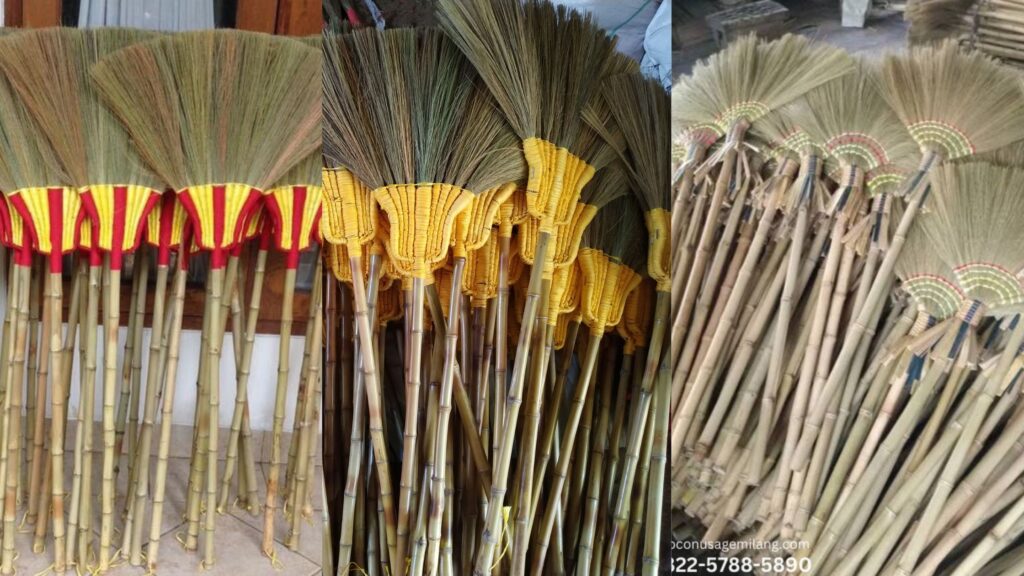
Once sorted, the fibers are tied around a wooden, bamboo, or rattan handle. The binding process varies by region. Some communities use tight weaving methods. Others rely on multiple layers of string, wire, or natural fiber rope. The strength of these ties determines how well the broom withstands daily use. Therefore, a skilled binder ensures that the fibers remain stable without restricting natural flexibility.
Likewise, finishing touches such as trimming and shaping enhance both appearance and function. A balanced and evenly trimmed broom sweeps smoothly. This final step reflects the craftsman’s experience and attention to detail.
Cultural Meaning and Symbolic Value
Grass brooms hold cultural value in many societies. In rural Southeast Asia, sweeping often symbolizes order and renewal. Homes rely on daily sweeping routines not only for cleanliness but also for ritual meaning. Early morning sweeping signals discipline and a fresh start. Households believe it clears both physical and spiritual residue from the previous day.
Additionally, the natural grass broom appears in festivals, ceremonies, and gift traditions. In some cultures, it symbolizes new beginnings or serves as a customary house-warming gift. Its presence in cultural practices strengthens its relevance even in regions where modern vacuum cleaners are widespread.
Moreover, the broom’s associations with nature and simplicity resonate with consumers seeking authenticity. As global trends shift toward minimalism and eco-conscious living, many people rediscover traditional tools that embody these values. Consequently, the natural grass broom has experienced renewed interest in markets far removed from its origins.
Environmental Benefits and Sustainable Appeal
The environmental advantages of natural grass brooms are significant. They contain no plastic, no synthetic chemicals, and no petroleum-based components. Every part of the broom is biodegradable. Once it reaches the end of its lifespan, it returns to the soil without leaving harmful residues.
Furthermore, the grasses used to produce the broom grow rapidly and require minimal agricultural input. Farmers do not need fertilizers or pesticides. The plants thrive naturally in mountain regions where other crops may not flourish. Harvesting the grass does not damage the ecosystem because the plant regenerates quickly.
This sustainable growing cycle supports broader ecological systems. Grass harvesting helps reduce fire hazards caused by overgrown vegetation. It also creates opportunities for rural communities to engage in sustainable farming practices. Therefore, the natural grass broom offers value beyond its functional use—it contributes to environmental conservation.
In addition, its low-carbon production process distinguishes it from synthetic cleaning tools. Plastic brooms require extraction, processing, molding, and transportation of petroleum-derived materials. Grass brooms, in contrast, rely primarily on manual labor and simple drying methods. This reduced energy footprint appeals strongly to environmentally conscious buyers.
Modern Functionality and Everyday Use
Despite its traditional roots, the natural grass broom remains highly functional in modern households. Its broad sweeping head covers large areas quickly. The soft bristles glide smoothly across surfaces, picking up fine dust that often escapes synthetic brooms.
Furthermore, it works well on both smooth and slightly textured surfaces. Tile floors, stone paths, terrazzo floors, bamboo mats, and laminate surfaces all respond well to the broom’s sweeping motion. The fibers bend gently to reach narrow corners and edges. Consequently, the broom requires less effort to remove dust from areas that other cleaning tools miss.
Users also appreciate how silent it is. Unlike stiff plastic bristles that create noise during sweeping, grass bristles move quietly. This quiet motion makes it suitable for early morning or late night cleaning. Meanwhile, its lightweight structure reduces fatigue, even during prolonged use.
Economic Importance for Rural Communities
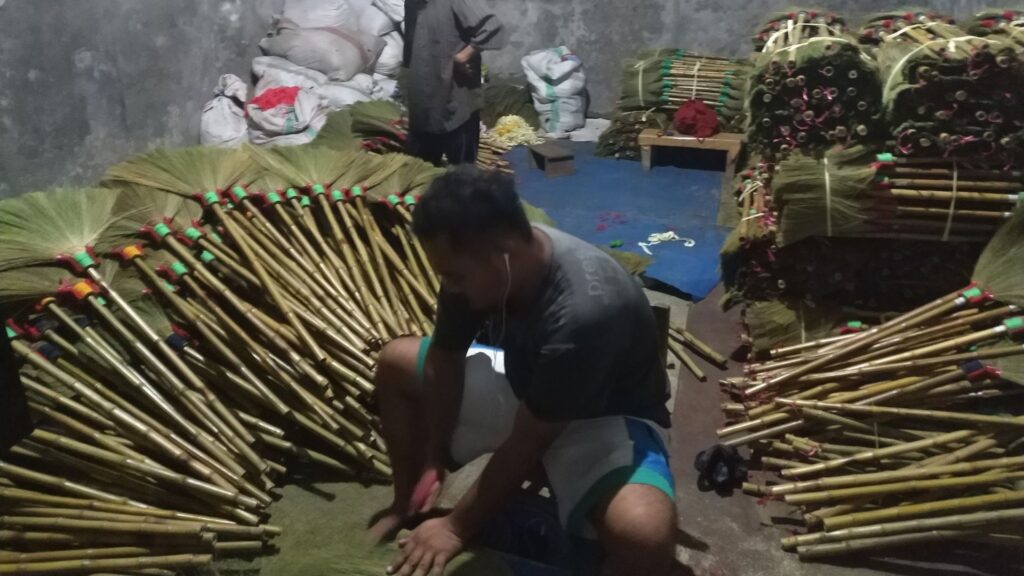
The production of natural grass brooms sustains thousands of rural families across Indonesia, Thailand, Vietnam, India, Nepal, and the Philippines. It represents an important source of income, especially in remote areas with limited access to formal employment.
Moreover, the value chain surrounding broom production includes harvesters, cleaners, sorters, binders, packers, and transporters. Each stage creates job opportunities. Local economies benefit from steady demand, while families preserve traditional skills passed down through generations.
Women play a prominent role in many production communities. Their craftsmanship ensures that broom-making remains a stable home-based industry. This involvement empowers women economically and contributes to long-term social stability. Therefore, the natural grass broom is more than a household tool—it is an economic lifeline.
Export Demand and Market Dynamics
Global demand for natural grass brooms continues to rise. Several factors contribute to this trend: environmental awareness, nostalgia for handmade products, and the growing preference for natural household items. Moreover, buyers appreciate its low price relative to other eco-friendly tools.
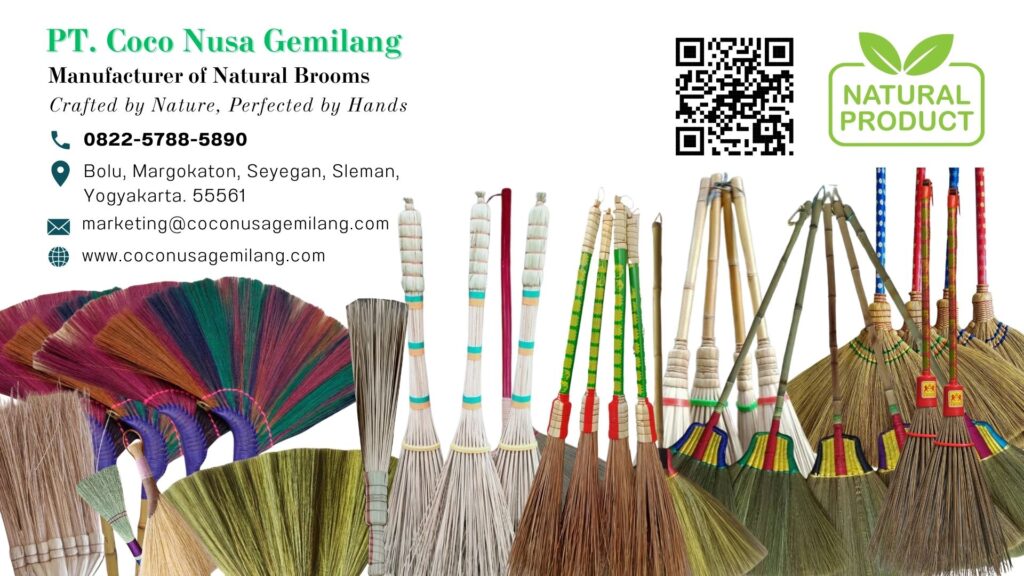
Importers from the Middle East, East Asia, the United States, and Europe request large quantities annually. Retailers include supermarkets, home-goods stores, cleaning-supply distributors, and ethnic specialty shops. Some markets prefer brooms with colored bindings or patterns for visual appeal. Others request plain, minimalist styles.
Furthermore, the product adapts easily to private-label branding. Manufacturers can pack brooms in shrink wrap, woven bags, printed sleeves, or bulk bundles. These flexible packaging options enable wholesalers to tailor presentation to their local markets.
Because grass brooms compress efficiently, they also offer favorable shipping economics. High container capacity reduces transportation costs per unit. Consequently, bulk buyers can maintain competitive retail pricing while achieving healthy margins.
Key Indicators of High-Quality Natural Grass Brooms
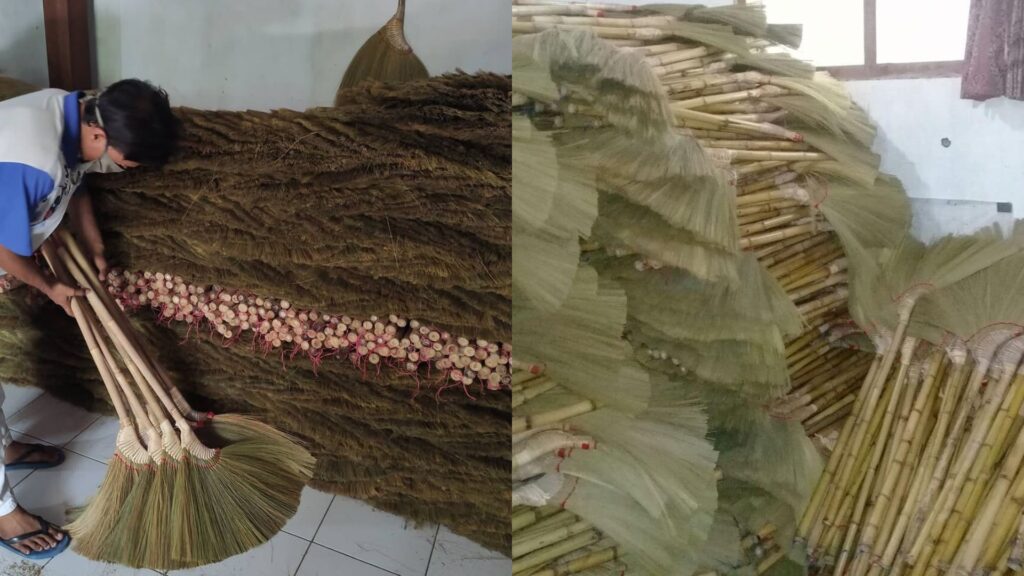
Buyers often evaluate several attributes to determine quality. These include:
- Fiber length and uniformity: Longer, consistent fibers produce smoother sweeping.
- Sweeping density: Thick broom heads deliver stronger performance.
- Binding strength: Secure ties ensure long-term durability.
- Handle comfort: Wooden, bamboo, or rattan handles must feel balanced.
- Color and moisture level: Even-toned fibers indicate proper drying.
In addition, high-quality brooms should not shed fibers excessively. Minimal shedding reflects proper curing and sorting. Buyers looking for premium models often request specially graded fibers to ensure both visual and functional consistency.
Why Natural Grass Brooms Continue to Thrive
Although synthetic cleaning tools dominate many markets, natural grass brooms maintain steady demand because they satisfy a combination of practical, cultural, and environmental needs. The sweeping action feels precise and controlled. The broom’s texture connects users to nature in a way synthetic materials never achieve. Furthermore, its affordability positions it as a practical household staple regardless of economic conditions.
As more consumers seek low-impact products, natural grass brooms will likely become even more popular. Their production supports sustainable agriculture and rural industries. Their ecological benefits align perfectly with modern environmental standards. Therefore, despite technological advancements, the natural grass broom remains a timeless tool with a promising future.
Coco Nusa Gemilang: Manufacturer & Global Supplier of Natural Grass Brooms
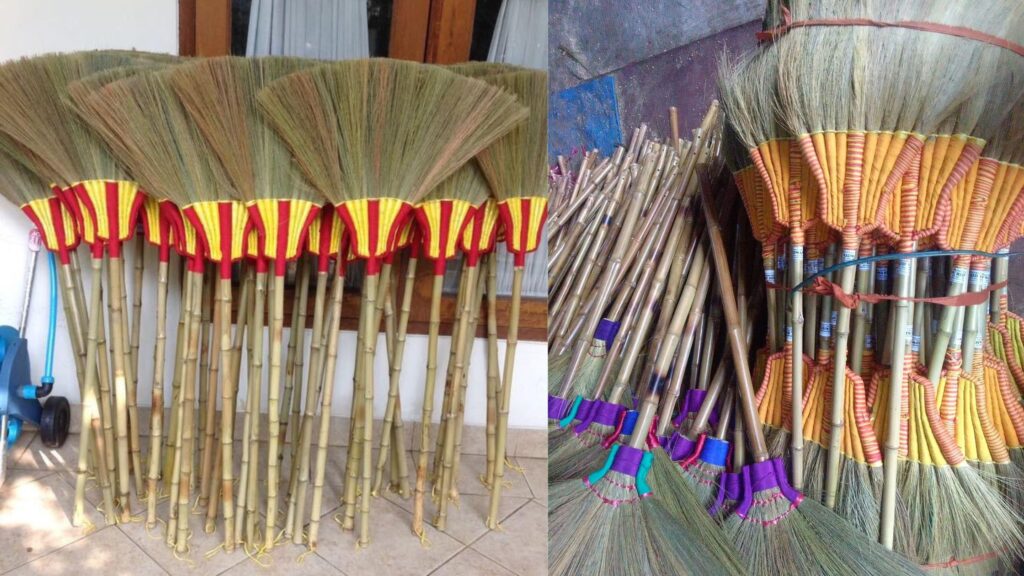
Coco Nusa Gemilang stands as a trusted manufacturer and supplier of natural grass brooms in Indonesia. The company produces several types and models, each designed to meet the needs of global markets that value durability, clean finishing, and sustainable materials. In addition, Coco Nusa Gemilang maintains strict production standards so that every broom reflects consistent craftsmanship and high performance.
Furthermore, the company is ready to supply natural grass brooms for export to markets worldwide. Buyers may request custom packaging, different broom models, or private-label branding. Pricing remains competitive, beginning at 0.9 USD – 2 USD per piece (FOB Port Semarang, Indonesia), with rates adjusted according to order volume. Naturally, prices remain negotiable depending on agreement and long-term cooperation.
Moreover, Coco Nusa Gemilang is committed to delivering the best balance of quality and value. With a reliable supply chain, skilled artisans, and a flexible production system, the company ensures that international buyers receive products that match their expectations. As global demand for natural and eco-friendly cleaning tools continues to grow, Coco Nusa Gemilang is prepared to support retailers, importers, and distributors with consistent supply and professional service.