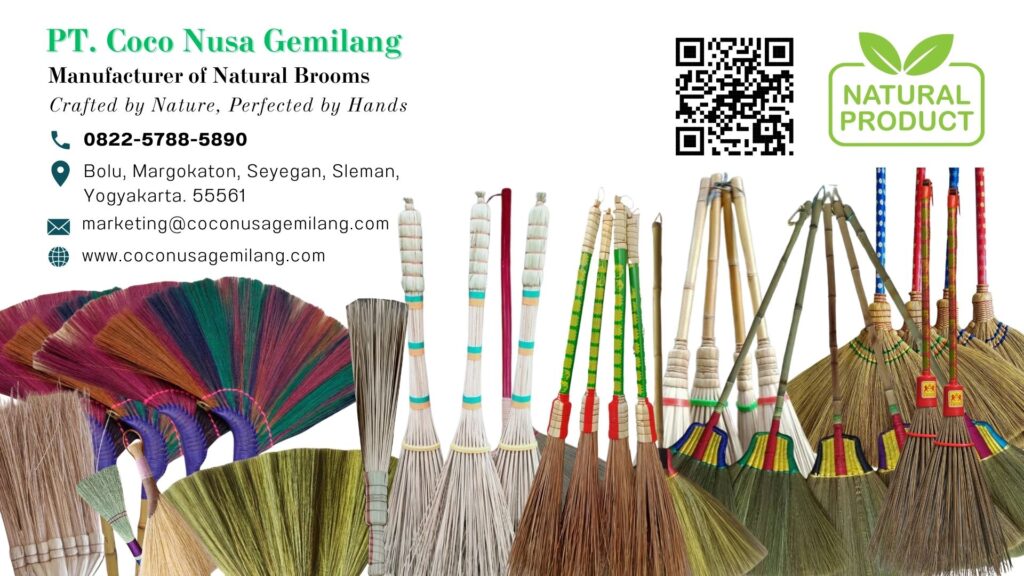

The outdoor stick broom stands as one of the most enduring tools in the history of human housekeeping. Although its structure appears simple, the broom reflects centuries of practical design and resourcefulness. Communities across continents developed variations of stick brooms long before industrial cleaning tools appeared. Even today, the outdoor stick broom maintains a central role in homes, gardens, workshops, farms, and public spaces. Its presence represents more than a cleaning instrument; it embodies a tradition of craftsmanship, ecological awareness, and practical efficiency.
Modern cleaning products often emphasize speed, convenience, and synthetic materials. Despite this, outdoor stick brooms hold their ground because they deliver a type of sweeping power that plastic bristles cannot replicate. Their rigidity makes them especially effective on rough surfaces, hardened debris, and large open areas. Furthermore, their natural composition connects them to a circular, environmentally responsible production system. For many users, this tool also carries a nostalgic quality—reminding them of family routines, open yards, and the cultural rhythm of daily cleaning. It remains relevant not by resisting change but by adapting gracefully while preserving its identity.
The Construction Behind the Tool
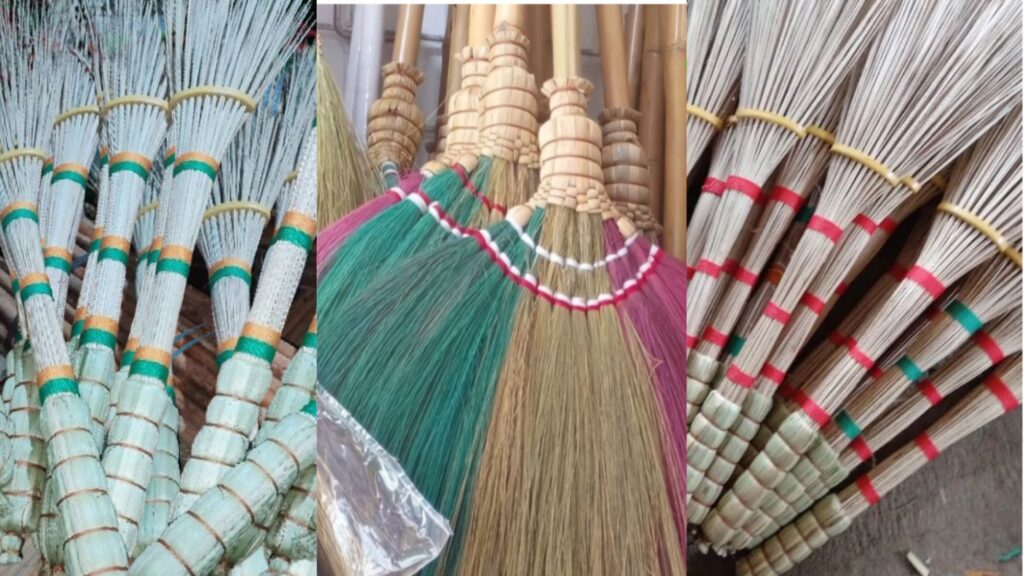
An outdoor stick broom typically consists of three essential components: the bristle bundle, the binding system, and the handle. Each element influences performance. The bristle bundle is usually made from sturdy natural materials—such as coconut midribs, bamboo twigs, grass fibers, or hardy plant stems. These materials are chosen not only for durability but also for their sweeping firmness. Because the broom is intended for outdoor settings, the bristles must withstand friction against stone, cement, soil, or wooden decking.
The binding method determines the broom’s structural stability. Some artisans use natural rope fibers; others use wire, rattan strips, or tightly woven palm cords. A well-tied binding prevents bristles from shifting even under heavy use. The handle, usually made from bamboo, hardwood, rattan, or polished wooden poles, provides balance and reach. When all components align, the broom delivers precise sweeping action that feels both controlled and powerful.
This attention to detail proves that outdoor stick brooms are not mass-made objects with minimal care. Instead, they represent knowledge built over generations. Every step—from cutting bristles to drying them, from shaping handles to binding bundles—contributes to the final product’s quality.
Cultural and Historical Context
Across Asia, Africa, the Americas, and Europe, variations of outdoor stick brooms have existed for centuries. Their persistence says much about their adaptability. Before industrial tools were common, households crafted brooms from whatever natural fibers they found nearby. In tropical regions, stiff coconut midribs formed the primary material. In colder environments, willow twigs, birch sticks, or dried shrubs served the same purpose.
The broom’s cultural meaning also differs by region. In some traditions, sweeping the yard at dawn symbolizes a fresh beginning. In others, sweeping the doorway during celebrations expresses hope for prosperity and protection. Certain communities also regard the broom as a protective symbol, placing it near entrances or using it in rituals to fend off negative influences.
Because of these layered meanings, the outdoor stick broom is more than functional—it is a cultural artifact. It speaks to daily routines that have shaped families, villages, and cities for generations. Even in modern households where vacuum cleaners and pressure washers exist, the outdoor stick broom persists because it offers something machines cannot: a direct, tactile experience with the environment.
Functional Performance in Outdoor Spaces

The outdoor stick broom excels where softer or synthetic brooms fail. Its stiff bristles remove wet leaves, sticky dirt, sand, gravel, and even compacted dust. It performs well on uneven surfaces thanks to the natural tension between its bristles. On patios, garden paths, garages, sidewalks, or farmyards, the broom’s sweeping efficiency becomes obvious from the first stroke.
Its simplicity also makes it reliable. There are no moving parts that can break, no batteries to charge, no motors to maintain. Users appreciate this dependability, especially in regions with heavy outdoor maintenance demands. Many gardeners, workshop operators, and sanitation workers prefer stick brooms precisely because they require no supervision, technology, or complex storage conditions. They work under rain, mud, heat, or dust.
Another distinct advantage lies in ergonomic control. Outdoor stick brooms allow users to adjust pressure manually. Light sweeping clears dust; firm sweeping removes more stubborn debris. This level of control improves cleaning precision and reduces repetitive strain when used correctly.
Sustainable Qualities and Environmental Impact
One of the strongest arguments for outdoor stick brooms lies in their environmental profile. They rely mostly on natural materials that biodegrade without polluting soil or water. Their production does not require plastic, chemical adhesives, or energy-intensive molding processes. Instead, artisans utilize renewable plant stems, dried fibers, and minimal processing.
In a world increasingly concerned with microplastic pollution, natural brooms offer a responsible alternative. They release no synthetic particles during use. They reduce dependency on petroleum-based materials. When they reach the end of their lifespan, they decompose safely or can be repurposed as garden mulch.
Furthermore, the raw materials used—such as coconut midribs, bamboo, and natural fibers—grow abundantly in many tropical regions. Their harvesting often supports rural communities economically while maintaining ecological harmony. This makes outdoor stick brooms not only eco-friendly but also socially beneficial.
The Role of Craftsmanship

The production of outdoor stick brooms remains deeply connected to craftsmanship. Artisans understand how material thickness affects flexibility, how drying time influences strength, and how binding tension controls durability. These insights are not easily replaced by machinery. While certain parts of the process can be mechanized, the final assembly still benefits from human judgment.
Craftsmanship also ensures uniqueness. No two brooms are entirely identical because nature itself varies. The character found in each product becomes part of its appeal. Consumers seeking handmade goods often value these variations, recognizing them as evidence of authentic production rather than mass replication.
Additionally, hand craftsmanship strengthens local economies. Many broom-making families operate small workshops that pass skills from one generation to the next. Their knowledge supports cultural continuity while providing stable income.
Global Demand and Market Dynamics
As markets shift toward sustainable household tools, outdoor stick brooms continue gaining traction worldwide. Retailers in Asia, America, Africa, and Europe seek natural cleaning tools that align with eco-friendly product lines. The durability of outdoor stick brooms makes them suitable for both residential and commercial use, and their affordability helps them compete with synthetic alternatives.
In Europe, environmental regulations encourage the use of biodegradable materials. This creates consistent demand for natural brooms with minimal chemical processing. In the United States and Canada, consumers appreciate their effectiveness in gardens, patios, and suburban driveways. In African and Asian markets, outdoor stick brooms remain everyday household essentials.
Moreover, the tool’s versatility appeals to professional sectors. Landscaping companies, municipal sanitation teams, and agricultural workers use these brooms extensively because they withstand heavy-duty use. Their long lifespan and low replacement cost further reinforce their value.
Balancing Tradition with Modern Expectations

Although the outdoor stick broom has deep historical roots, it continues evolving to meet contemporary needs. Some manufacturers introduce ergonomic handles. Others add polished finishes, color-coded bindings, or reinforced structural ties. Packaging designs now reflect modern branding standards, especially for export markets.
Nevertheless, the core identity of the broom remains intact. It retains its handcrafted nature, its raw aesthetic, and its functional strength. This balance—between tradition and innovation—is what allows the outdoor stick broom to thrive in a rapidly changing world.
COCO NUSA GEMILANG — Reliable Outdoor Stick Broom Supplier for Global Markets
Coco Nusa Gemilang stands as a dedicated manufacturer of outdoor stick brooms with production capabilities tailored for export to Asia, America, Africa, and Europe. By combining skilled craftsmanship with standardized quality control, the company ensures that every broom meets international expectations. Furthermore, Coco Nusa Gemilang sources natural materials responsibly, creating tools that align with global sustainability trends and modern household needs.
The company offers flexible and affordable pricing, adjusted according to order volume, ranging from USD 0.9 to 2.0 per piece (FOB Port Semarang, Indonesia). This structure benefits wholesalers, importers, and large retail chains who require consistency and accessible cost without compromising durability. Additionally, Coco Nusa Gemilang adapts packaging specifications and export documentation to suit varying market regulations, making the process convenient for overseas buyers.
Because Coco Nusa Gemilang focuses on maintaining strong craftsmanship, efficient logistics, and high-standard quality, it continues to position itself among Indonesia’s best handicraft and best cleaning tools manufacturers. Its outdoor stick brooms provide excellent sweeping performance, stable supply availability, and environmentally responsible materials. As global demand for natural cleaning tools grows, the company remains fully prepared to support long-term partnerships with buyers seeking reliability and authenticity.