

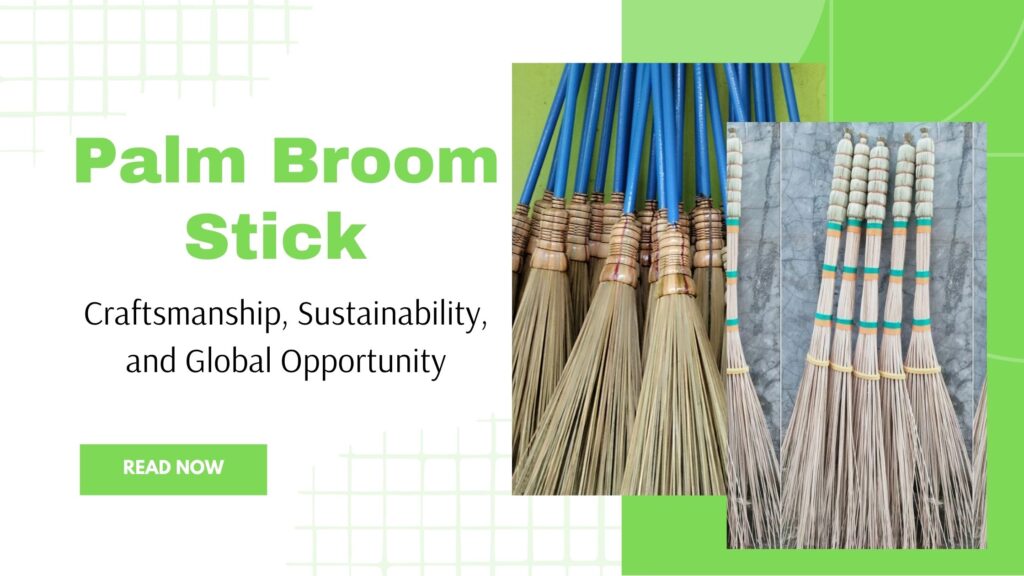
In the heart of Indonesia’s villages, far from the city’s rush, a simple craft thrives. The palm broom stick — known locally as sapu lidi sawit — is more than a cleaning tool. It is a story of tradition, sustainability, and rural resilience. This humble product, made from the midribs of palm leaves, has quietly become a symbol of Indonesia’s natural resourcefulness and artisanal spirit.
As the world turns toward sustainable and biodegradable household products, the palm broom stick stands at the crossroads of heritage and modern demand. Behind this transformation are the craftsmen, the small workshops, and the companies that maintain Indonesia’s reputation as one of the largest producers of natural brooms in Southeast Asia.
1. The Palm Broom Stick: From Nature to Necessity
The palm broom stick is made from the leaf ribs of palm trees, often from coconut or oil palm varieties. These ribs, naturally sturdy and flexible, are collected after the leaves are pruned. Once cleaned and dried under the tropical sun, they become the primary raw material for broom making.
Unlike synthetic brooms that rely on plastic fibers and chemical adhesives, palm broom sticks are entirely biodegradable. Every stage of production — from harvesting to packaging — can be done with minimal machinery. This makes the broom not only sustainable but also deeply tied to the rhythm of rural life.
In many Indonesian households, the palm broom is a daily companion. It sweeps yards, terraces, and sidewalks. Its sturdy bristles handle both wet leaves and dry dust. Its design, simple and timeless, reflects generations of refinement.

2. The Cultural and Economic Value of Broom Making
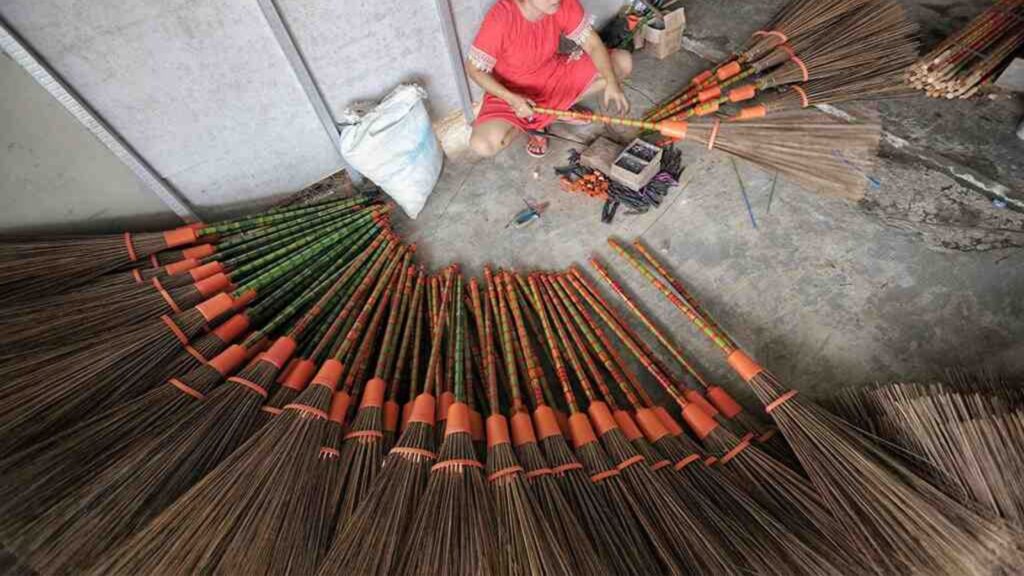
Palm broom production is not just a business — it is a culture. In many villages across Central Java, Sumatra, and Sulawesi, broom making provides supplemental income for families. During harvest seasons, the raw midribs are collected, cleaned, and bundled. In the evenings, family members gather to tie and shape the broomsticks by hand.
This micro-economy has quietly supported thousands of households for decades. It encourages the preservation of traditional craft techniques while promoting the use of renewable materials. Each broom tells a story of local craftsmanship — shaped by hand, guided by experience, and refined through patience.
Moreover, in global markets that are increasingly conscious of sustainability, Indonesian broom makers are finding renewed relevance. The world wants products that are eco-friendly, plastic-free, and ethically sourced — qualities that perfectly describe the palm broom stick.
3. Coco Nusa Gemilang: Artisans of Natural Brooms
Among the companies championing this craft is Coco Nusa Gemilang, a trusted manufacturer of broom grass and palm broom sticks in Indonesia. The company is dedicated to combining handmade quality with sustainable production, bringing traditional craftsmanship to modern export standards.
Coco Nusa Gemilang does not mass-produce in the industrial sense. Every broom is carefully handcrafted by artisans who understand the nuances of natural fibers. Each stick is selected, aligned, and tied with precision to ensure durability and balance. This attention to detail transforms a common household tool into a product of artistic and functional value.
The company’s commitment extends beyond craftsmanship. Coco Nusa Gemilang emphasizes sustainability, sourcing materials responsibly and minimizing waste during production. This focus allows the brand to align with international expectations for eco-friendly household products. Today, Coco Nusa Gemilang stands ready to supply the European market, answering the growing demand for authentic, sustainable brooms that carry the soul of Indonesian craftsmanship.
4. Sustainability and Environmental Harmony
Sustainability is not a marketing slogan for Indonesian broom makers — it is a way of life. The palm broom stick represents a zero-waste approach: a product born from agricultural residue, crafted without chemicals, and decomposable at the end of its life cycle.
Palm leaves are naturally abundant in Indonesia. When trimmed or shed, they are often discarded as waste. By converting these midribs into broomsticks, artisans give value to what would otherwise be burned or left to rot. This circular process reduces environmental impact and strengthens local economies simultaneously.
Furthermore, the production of palm brooms requires minimal energy compared to plastic alternatives. Drying is done naturally under sunlight, and cutting or shaping is mostly manual. The resulting product not only cleans homes but also supports a cleaner planet.
5. Meeting the Global Market’s Call for Natural Products
The global homecare market is undergoing a quiet revolution. Consumers in Europe, North America, and Japan are increasingly choosing sustainable, handmade alternatives over synthetic goods. This trend opens vast opportunities for Indonesian producers.
The palm broom stick, once seen as a rural household staple, is now finding its place in boutique stores, eco-markets, and online retail platforms. Its rustic look and biodegradable nature appeal to environmentally conscious buyers.
Coco Nusa Gemilang and similar manufacturers are at the forefront of this shift. They blend traditional techniques with improved quality control to meet international standards. Packaging is modernized to highlight the product’s natural origin, while export procedures ensure compliance with eco-certifications and trade requirements.
Indonesia’s advantage lies not only in its raw materials but also in its human resources. The hands that make these brooms carry generations of expertise — a heritage that no machine can replicate. As global buyers seek authenticity, Indonesian artisans deliver it effortlessly.
6. The Handcrafted Process: A Journey of Patience and Precision
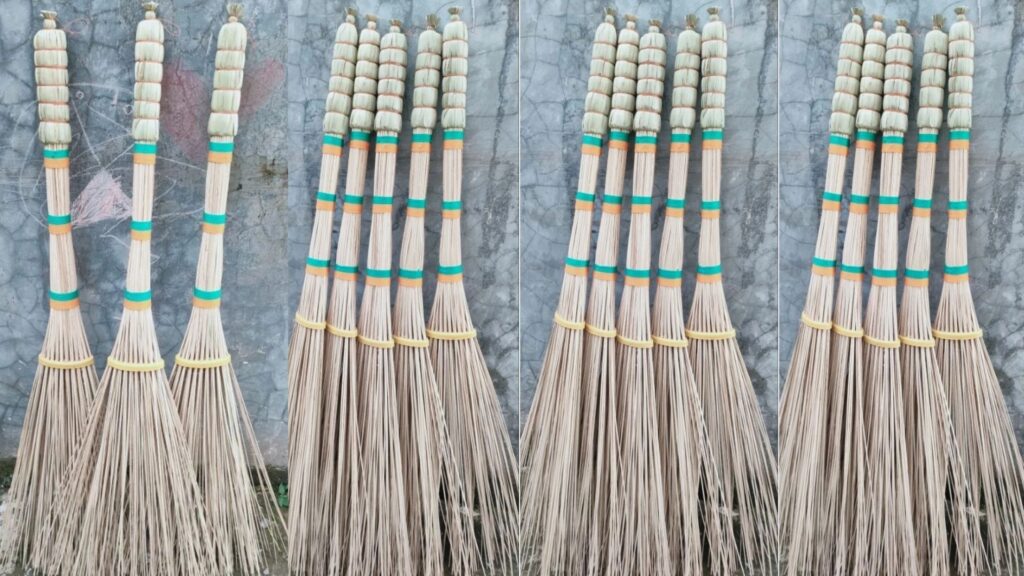
The making of a palm broom stick begins with collection. Farmers gather fallen or trimmed palm leaves, separating the midribs from the leafy parts. These ribs are then dried for several days until they achieve the desired stiffness.
Next comes the cleaning process — each stick is smoothed and trimmed manually. The artisans ensure that every piece has uniform thickness and strength. Afterward, the sticks are bundled in specific quantities depending on customer requirements — some prefer light, flexible sticks for indoor brooms, while others request thicker bundles for outdoor sweeping tools.
Tying and binding the broom is an art form of its own. Workers use natural or synthetic threads to bind the sticks tightly, forming a solid grip. This stage requires dexterity and balance, as uneven binding can affect the broom’s performance.
Finally, each broom is inspected before packaging. The goal is not just to produce quantity but to maintain consistency in quality — a hallmark of Coco Nusa Gemilang’s manufacturing philosophy. The company believes that a handmade product carries a human touch that industrial automation can never replace.
7. Challenges in the Industry
While demand for natural brooms continues to grow, challenges remain. The first lies in raw material availability. Seasonal fluctuations in palm leaf supply can affect production volumes. Deforestation and land-use changes in some regions also threaten the steady supply of raw materials.
The second challenge is market perception. In some countries, handmade products are undervalued compared to machine-made ones. Educating buyers about the craftsmanship, durability, and sustainability of palm broom sticks is essential to overcome this bias.
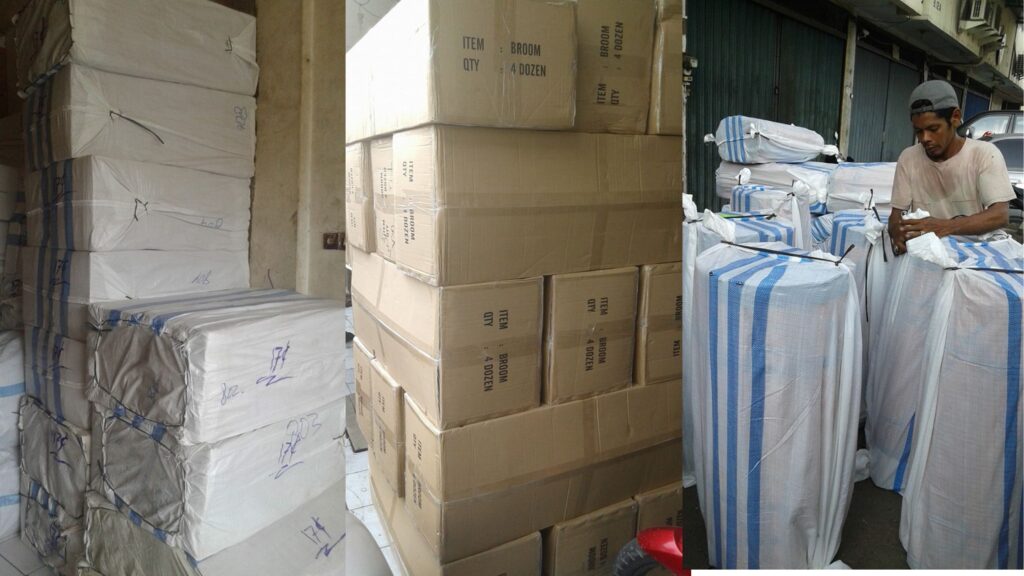
Export logistics can also pose hurdles. Shipping bulky yet lightweight goods such as brooms requires efficient packaging and cost optimization. However, Indonesian producers are adapting — using compressed packing methods and optimizing container space to remain competitive.
Despite these challenges, the resilience of the industry is remarkable. The combination of cultural heritage, environmental responsibility, and skilled labor ensures that the palm broom stick remains a viable and competitive export.

Broom Grass Suppliers in Indonesia: Handcrafted Tradition Meets Global Opportunity
8. Innovation and Modernization in a Traditional Craft
Innovation in the broom industry does not necessarily mean automation. It can take the form of better design, stronger binding materials, or improved quality control. Some Indonesian manufacturers are experimenting with hybrid brooms, combining palm sticks with bamboo handles or decorative weaving to appeal to premium markets.
At Coco Nusa Gemilang, modernization coexists with tradition. The company adopts updated packaging standards and employs systematic grading to classify products according to export quality. Their innovation lies in maintaining the authenticity of handmade production while adapting to global retail expectations.
Digital presence also plays a crucial role. Through online catalogs and B2B platforms, Indonesian broom makers can now connect directly with international importers and wholesalers. This transparency helps buyers appreciate not only the product but also the people behind it.
9. Palm Broom Stick and the Future of Sustainable Craft
The palm broom stick embodies the essence of sustainable living — using what nature provides without exploiting it. As the global economy shifts toward green solutions, traditional products like this become even more relevant.
For Indonesia, this represents more than an export opportunity. It is a chance to preserve cultural identity while participating in the global sustainability movement. By supporting palm broom production, consumers are indirectly supporting rural communities, environmental stewardship, and fair trade practices.
Companies like Coco Nusa Gemilang are paving the way for a future where traditional crafts are not forgotten but redefined. Their brooms stand as proof that sustainability, beauty, and practicality can coexist in a single product — a testament to Indonesian creativity and care.
10. Conclusion: A Simple Tool with a Powerful Message
The palm broom stick may appear ordinary at first glance. Yet behind its simple form lies a complex network of tradition, sustainability, and human dedication. It represents how rural ingenuity can meet global demand without losing authenticity.
In every strand of palm fiber, there is a story — of farmers who gather the leaves, of artisans who bind them by hand, and of companies like Coco Nusa Gemilang who ensure that these efforts reach the world responsibly.
As Europe and other markets continue their search for eco-conscious household products, Indonesia stands ready — not with factories of steel, but with hands of skill and hearts of purpose. The palm broom stick, once a modest village tool, now sweeps across continents as a symbol of balance between people, planet, and craft.