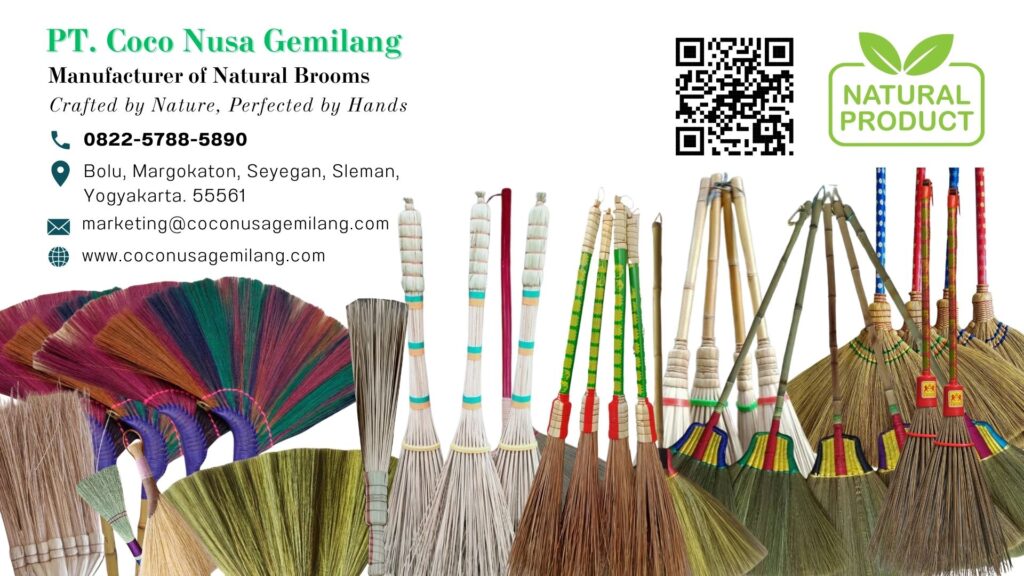

The sorghum broom occupies a distinctive place in the long history of human craftsmanship. Although simple in appearance, its design reflects a convergence of agronomy, material science, and artisanal tradition. For many communities, the sorghum broom is more than just a household tool; it stands as a tangible link between agricultural heritage and daily practical needs. In an era dominated by synthetic materials and high-tech cleaning equipment, the sorghum broom persists because it performs exceptionally well, even through intensive use.
Sorghum, especially the broomcorn variety, has been cultivated for centuries across Asia, the Middle East, Africa, and the Americas. Farmers originally planted it for food and fodder, yet its strong, straight panicles soon caught the attention of early craftsmen. These fibers possess a natural rigidity balanced by enough flexibility to withstand sweeping motions without breaking. As broom-making skills evolved, small workshops refined their techniques to produce tools that were both durable and efficient. This gradual improvement transformed the sorghum broom into an indispensable object in households, shops, and fields.
Floor Brooms: Function, Craftsmanship, and the Changing Landscape of Global Cleaning Tools
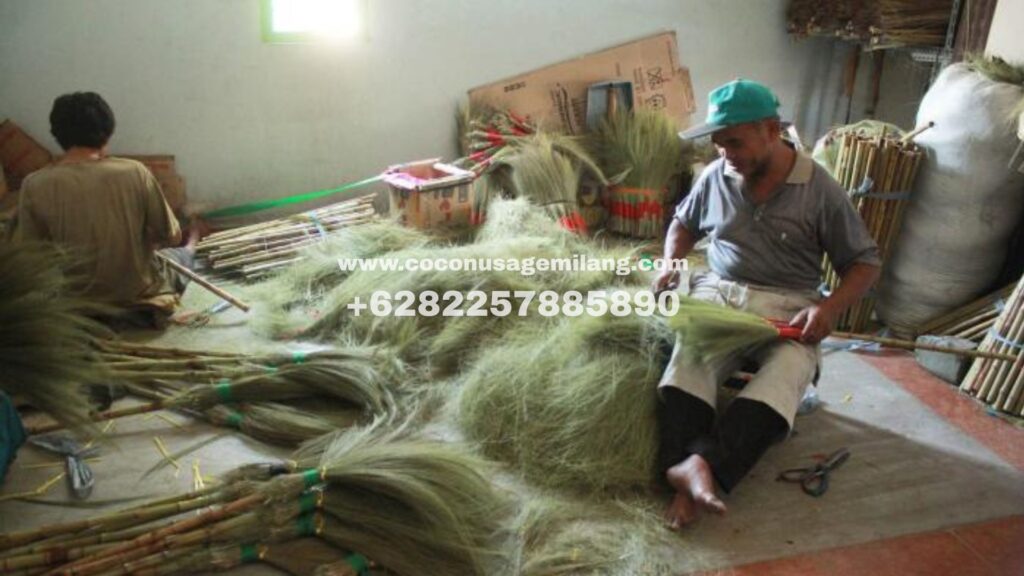
Many consumers underestimate how much thought goes into the construction of a well-made sorghum broom. The arrangement of the fibers determines not only how much debris the broom can capture but also how the flare forms as pressure is applied. Well-sorted sorghum fibers create a dense yet responsive brush capable of gathering fine dust, sand, and organic debris. Additionally, the angle at which the fiber is bound plays a crucial role in defining the broom’s sweeping width. As a result, the tool offers a blend of precision and robustness that mass-produced plastic brooms often fail to match.
Even with the availability of powered cleaning devices, sorghum brooms maintain a loyal global user base. Part of this loyalty stems from the tactile experience they offer. Sweeping with a natural broom allows the user to “feel” the surface, making adjustments instinctively while cleaning. This sensory feedback, subtle yet consistent, gives the sorghum broom an advantage when tidying rough floors, uneven surfaces, and outdoor areas where vacuums cannot reach effectively. In addition, natural fibers grip dirt differently than synthetic bristles, drawing debris inward instead of scattering it outward.
From an environmental perspective, sorghum brooms answer many concerns raised by modern sustainability standards. The material is biodegradable, farmed without excessive chemical input, and processed using techniques that require minimal energy. Unlike synthetic alternatives that contribute to microplastic pollution, sorghum returns to the soil at the end of its life cycle without leaving harmful residues. As public consciousness about environmental responsibility continues to rise, natural brooms have regained visibility as practical and eco-friendly alternatives.
Coco Nusa Gemilang: Reliable Global Manufacturer and Supplier
At this point, it is worth highlighting the role of companies that continue to elevate the sorghum broom to global markets. Coco Nusa Gemilang, a respected Indonesian manufacturer, has become a dependable source for export-quality sorghum brooms. Their catalog includes multiple types and models, each designed with careful attention to durability and consistency. Because international buyers demand predictable quality, the company places strong emphasis on uniform sizing, fiber sorting, and structured finishing.
Moreover, Coco Nusa Gemilang offers sorghum brooms at highly competitive rates, which depend on order volume and specification. Their export pricing generally ranges from 0.9 USD to 2.6 USD per piece, FOB Port Semarang, Indonesia. These prices remain negotiable, of course, and can be adjusted according to long-term partnerships or special requirements. This flexibility helps importers secure stable supply lines without sacrificing economic efficiency, a factor increasingly important in global trade.
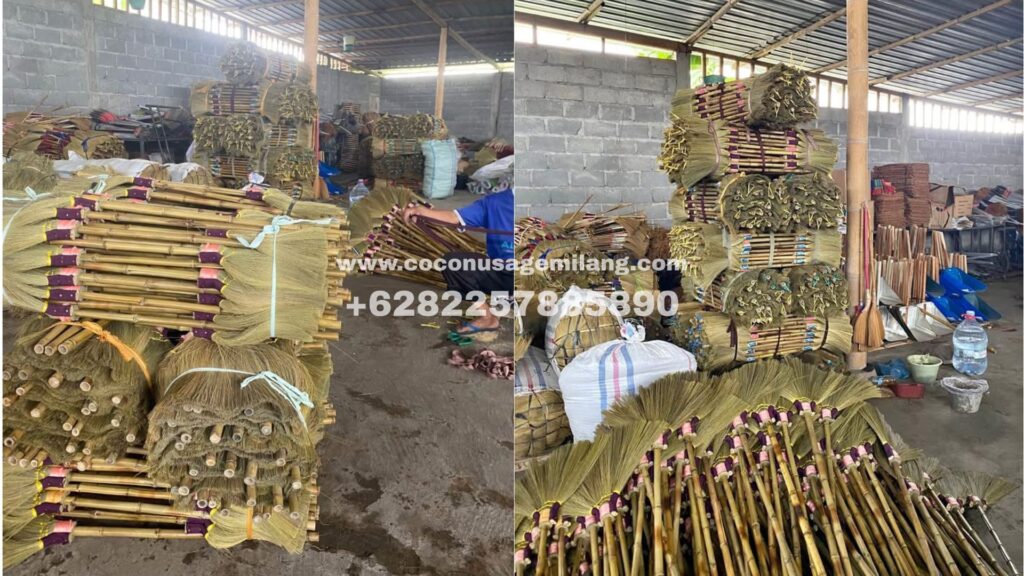
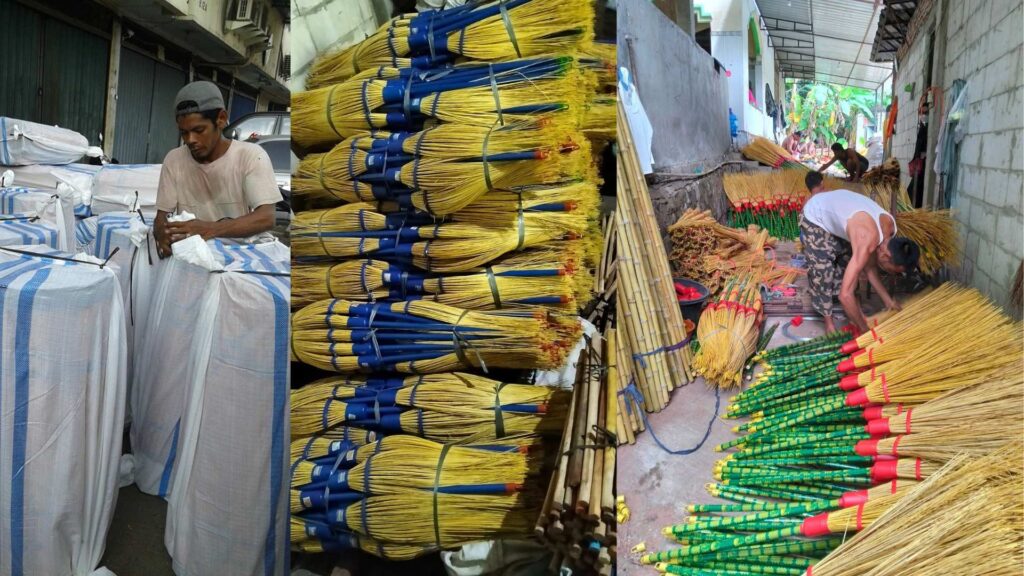
Additionally, the company maintains an extensive production capacity, allowing them to support diverse market demands. Some clients require lightweight domestic brooms, while others request industrial-grade models with reinforced stitching. Because Coco Nusa Gemilang produces sorghum brooms in a variety of designs, buyers can mix models within a single shipment. This adaptability simplifies procurement for distributors who serve multiple sectors simultaneously, such as retail chains, cleaning-supply wholesalers, and agricultural outlets.
Equally important, Coco Nusa Gemilang enforces strict quality inspections during sorting, binding, and trimming. Their craftsmanship ensures each broom arrives ready for resale and immediate use. As a result, international buyers trust the company for both product reliability and shipping consistency. Through steady communication and transparent pricing, they have positioned themselves as a leading exporter of sorghum brooms to markets across Asia, Europe, and the Middle East.
Material Advantages of Sorghum Fiber
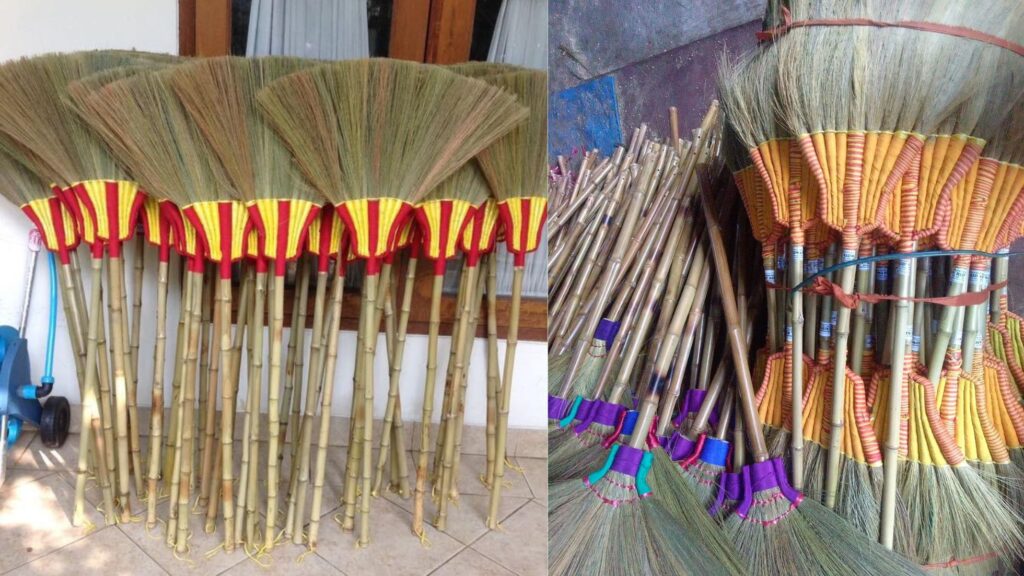
Sorghum fibers possess structural characteristics that make them ideal for broom production. Each fiber contains a combination of stiffness and tensile strength, allowing it to hold its shape even after repeated friction. The fibers taper gradually along their length, creating a natural progression from thicker, resilient bases to finer, more flexible tips. This built-in variation contributes to the broom’s ability to gather both large particles and fine dust.
Handle materials also influence performance. Wooden handles remain the preferred choice for premium brooms because they offer excellent balance and natural shock absorption. The organic warmth of wood improves grip, particularly during extended use. Some manufacturers use bamboo, which is light and highly renewable, while others opt for metal or composite handles for different strength-to-weight profiles. Regardless of the material, proper weight distribution is key to producing a broom that feels stable yet maneuverable.
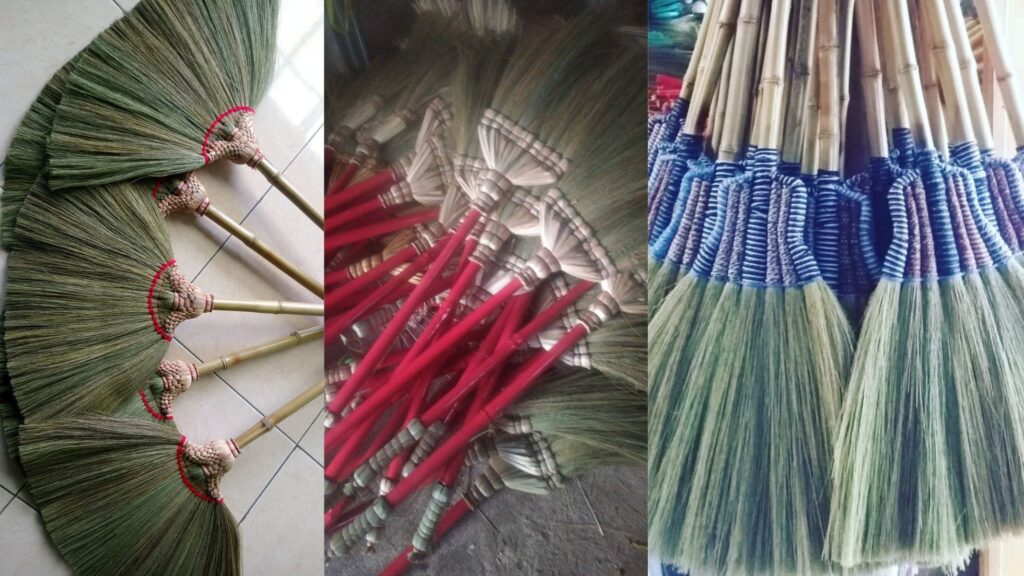
The binding process, often overlooked by consumers, determines whether a broom remains intact over time. Strong stitching with galvanized wire or high-quality twine keeps the fibers in position during vigorous sweeping. Poorly bound brooms may feel usable at first but deteriorate rapidly as fibers loosen. In contrast, a well-constructed sorghum broom maintains a tight, even flare even after months of heavy work. This reliability has helped natural brooms retain their popularity among professional cleaners.
Cultural and Historical Dimensions
Across many cultures, the sorghum broom holds symbolic importance beyond its practical function. In rural communities, broom-making workshops served as places of apprenticeship where knowledge traveled from one generation to the next. These gatherings preserved not only technical skills but also cultural stories linked to harvest rituals, household readiness, and seasonal transitions. In several traditions, a natural broom symbolizes renewal, the removal of misfortune, or the start of a harmonious domestic life.
Historical references to sorghum brooms appear in agricultural records, trade lists, and ethnographic writings from various regions. Their presence demonstrates how essential these tools were to everyday life. In markets from Central Asia to the American Midwest, bundles of broomcorn once indicated the health of local economies. Even today, the sight of hand-tied brooms in rural stalls evokes a sense of continuity, reminding people that some tools retain value precisely because they resist rapid technological change.
Industrial Use and Practical Efficiency
Despite the widespread introduction of synthetic cleaning tools, sorghum brooms continue to deliver advantages in many work environments. Warehouses, workshops, farms, and construction sites rely on them for rapid cleanup tasks. Workers appreciate how natural fibers adjust to uneven surfaces, pushing debris effectively without snagging. Furthermore, the flare created by sorghum fibers provides wide coverage while maintaining directional control, something many plastic brooms struggle to achieve.
Homeowners, too, recognize the strengths of natural brooms. Outdoor areas such as patios, driveways, and balconies often accumulate sand, leaves, and soil—materials that lightweight plastic bristles simply scatter. Sorghum brooms, in contrast, grip these particles with minimal effort. They also offer a gentler sweeping experience, generating less static electricity and preventing dust from rising into the air. As a result, these brooms remain a preferred choice for households seeking efficient manual cleaning tools.
Retailers and hospitality operators continue to place substantial orders for sorghum brooms due to their longevity. Heavy foot traffic and recurring spills demand reliable sweeping solutions. Since sorghum fibers maintain their shape longer than many synthetic blends, businesses reduce replacement costs over time. Even in humid climates, a properly stored sorghum broom resists warping and retains its performance.
Economic Relevance and Global Trade

Sorghum brooms support agricultural and manufacturing sectors across multiple countries. Farmers grow broomcorn as a cash crop, and manufacturers purchase it for processing. Exporters, in turn, supply global distributors who introduce these products to retail chains and industrial consumers. This multi-layered supply chain stimulates employment in both rural and urban regions. Even small communities benefit economically by participating in broom-fiber harvesting, trimming, and early-stage binding.
International demand for natural brooms has expanded in recent years. Importers in Europe and East Asia, for instance, seek eco-friendly products for both household and commercial use. Because the broom-making process is labor-intensive, it creates significant employment opportunities in developing countries. In this way, sorghum brooms contribute to localized economic stability and preserve artisanal knowledge that might otherwise disappear.
Maintenance and Proper Handling
A sorghum broom can last significantly longer when cared for correctly. Hanging the broom when not in use prevents the fibers from bending or warping. Periodically tapping out dust helps keep the fibers supple, while avoiding excessive soaking protects the binding from deterioration. Slight dampening can restore flexibility when the broom becomes too dry, but prolonged water exposure should be avoided. Through mindful storage and moderate cleaning, users can maintain the broom’s structural integrity for an extended period.
Future Prospects and Sustainability Trends
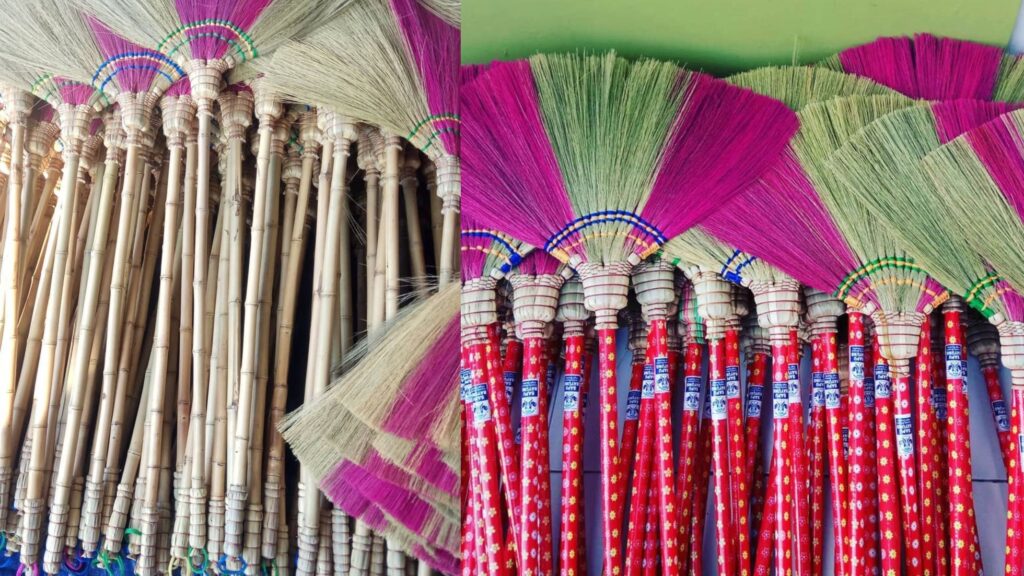
As consumers grow more selective about the tools they buy, demand for natural products strengthens. The sorghum broom aligns well with this shift because it combines functionality, sustainability, and cultural identity. Manufacturers who continue to refine quality standards and offer competitive pricing will find robust markets in both traditional and emerging economies. Retailers who prioritize eco-friendly goods have already rediscovered the value of natural brooms, promoting them as durable and environmentally responsible alternatives to synthetic brushes.
Looking ahead, sorghum brooms will likely maintain their relevance due to their low environmental impact, proven performance, and adaptability across industries. Whether used in modern homes, agricultural fields, commercial shops, or heritage crafts, they illustrate how simple, natural tools remain integral to daily life despite widespread technological change.