
Sorghum broomcorn has long been recognized as one of the most trusted natural materials for crafting brooms. While synthetic cleaning tools flood modern markets, broomcorn holds its ground because it blends durability, sustainability, and refined mechanical performance. Professionals in agriculture, housekeeping, industry, and retail continue to rely on brooms made from sorghum broomcorn for one reason: they work exceptionally well. This enduring relevance invites a closer look at why broomcorn remains unmatched in so many applications.
Broomcorn, a special variety of Sorghum bicolor, produces long, stiff fibers that resist wear even when used on abrasive surfaces. These fibers possess ideal tensile strength and structural integrity, enabling them to withstand repeated friction without breaking. Their natural tapering shape allows for both rigidity and flexibility, giving broomcorn its unique sweeping characteristics. Although modern plastics attempt to replicate these properties, they fall short in longevity, surface adaptability, and environmental
compatibility.
The history of broomcorn cultivation illustrates its close connection to human ingenuity. Ancient agricultural societies planted sorghum varieties not only for food and fodder but also for fiber production. Over time, certain strains evolved—or were selectively grown—specifically for broom making. Farmers noticed that some stalks produced panicles with superior length and stiffness. These qualities became essential for crafting brooms that could sweep large areas efficiently. As knowledge spread along trade routes, broomcorn cultivation expanded from Asia to the Middle East, Africa, and the Americas.
Craftsmen who specialized in broom-making refined techniques across generations. They experimented with binding patterns, fiber angles, and handle pairings in pursuit of greater balance and better sweeping performance. A well-crafted broom required more than simply tying plant fibers together. The maker needed to understand density, flare formation, fiber maturity, and the interplay between handle weight and brush force. As a result, broomcorn brooms transitioned from simple household items to tools engineered for precision, durability, and versatility.
Despite progress in cleaning technology, sorghum broomcorn remains indispensable in many environments. Industrial workers rely on it to sweep metal shavings, dust, and heavy debris from concrete floors. Farmers use it to clear grain storage areas. Retailers depend on it for quick cleanups, especially in spaces where vacuum machines cannot maneuver. Even households value broomcorn brooms for their ability to move fine particles without scattering them. This broad utility helps explain why broomcorn continues to appear in markets across the globe.
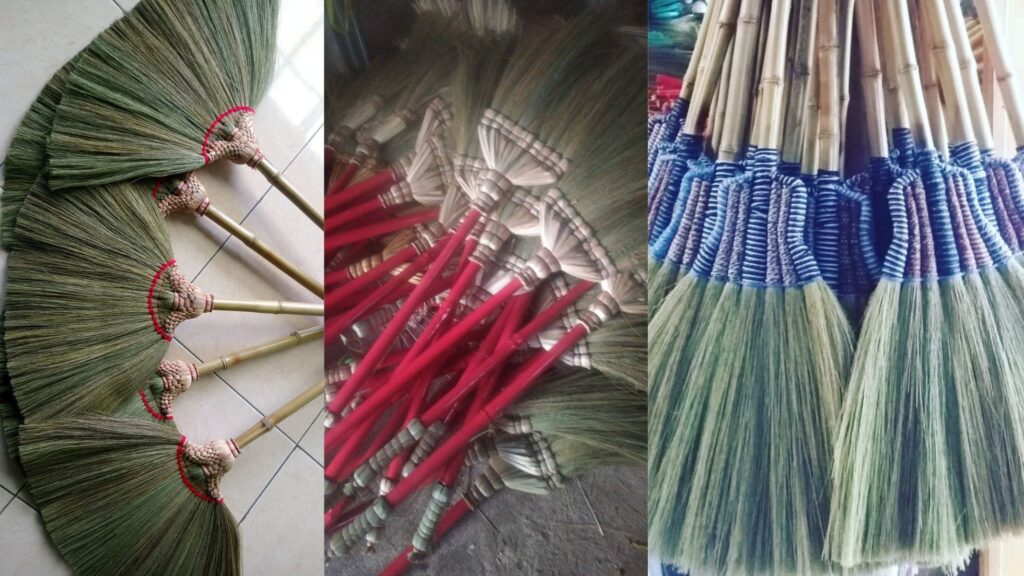
Environmental concerns further amplify its relevance. Unlike synthetic brooms that degrade slowly and contribute to microplastic pollution, broomcorn is fully biodegradable. The growing process itself generally requires fewer chemical inputs than many industrial crops, and the fibers do not demand intensive processing. For environmentally conscious buyers, broomcorn offers a product that aligns with sustainability values without sacrificing performance.
Another advantage lies in the tactile experience of using a natural broom. As one sweeps, the broomcorn fibers provide continuous feedback, revealing subtle changes in the surface beneath. This responsiveness promotes efficient sweeping and allows the user to adjust pressure and angle instinctively. Such control is often missing in mass-produced plastic brooms, which rely on rigid bristles that either scrape too harshly or flex too easily.
The technical characteristics behind broomcorn’s performance deserve attention. Each fiber contains vascular bundles arranged in a way that provides exceptional structural resilience. The outer layer resists abrasion, while the inner tissue retains enough elasticity to prevent snapping. When bound at the correct tension, the broom head forms a durable flare. This flare increases the broom’s effective width and improves its ability to trap debris within the brush rather than push it outward. Because of these natural properties, broomcorn brooms maintain their shape even after extended use.
Handle selection also influences quality. Traditional wooden handles offer balance, stability, and a comfortable grip. Some manufacturers use bamboo to reduce weight while maintaining tensile strength. Metal handles, though less common, appeal to buyers seeking modern aesthetics or enhanced durability. Regardless of the choice, proper weight distribution between handle and broom head determines how effectively force transfers to the fibers. A well-balanced broom reduces user fatigue, improves sweeping consistency, and extends the tool’s working life.
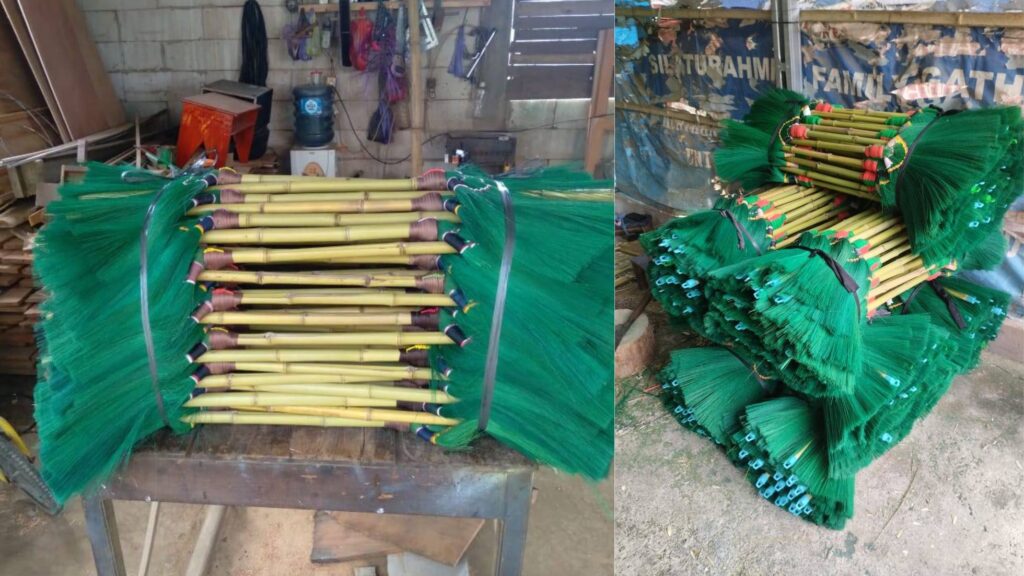
Broomcorn brooms also hold cultural significance. In many regions, they represent craftsmanship, self-sufficiency, and community tradition. Rural markets often feature hand-tied brooms made by artisans who learned the skill from their elders. The process also fosters social connection, as many villages conduct collective broom-making activities during harvest festivals. Even in urbanized societies, broomcorn appears in folklore and ceremonial customs. Some cultures use natural brooms during new home rituals to sweep away negative energy, illustrating how deeply embedded the broom is in symbolic practices.
Modern commercial demand remains strong across continents. Industries that require quick manual cleaning—such as logistics centers, workshops, and construction sites—buy broomcorn brooms in bulk. Retail chains continue to stock them because customers recognize their superior sweeping ability. Hospitality businesses, from hotels to restaurants, choose broomcorn for routine maintenance since it handles both fine dust and stubborn debris with equal efficiency. These sectors value tools that work reliably without constant replacement.
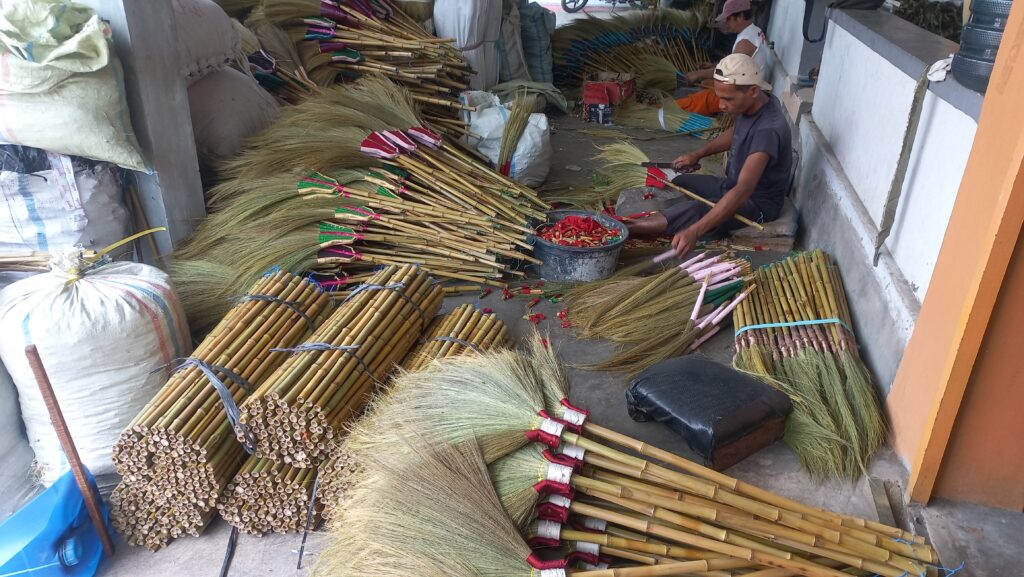
The global supply chain for broomcorn brooms supports numerous stakeholders. Farmers cultivate broomcorn in regions with favorable climates, processing the fibers through drying, sorting, and trimming. Manufacturers transform the fibers into finished brooms using skilled labor and specialized binding equipment. Exporters then ship the goods to distributors around the world. This interconnected process not only sustains rural agricultural communities but also creates jobs in manufacturing, transport, and international trade.
Coco Nusa Gemilang: Global Supplier of Sorghum Broomcorn
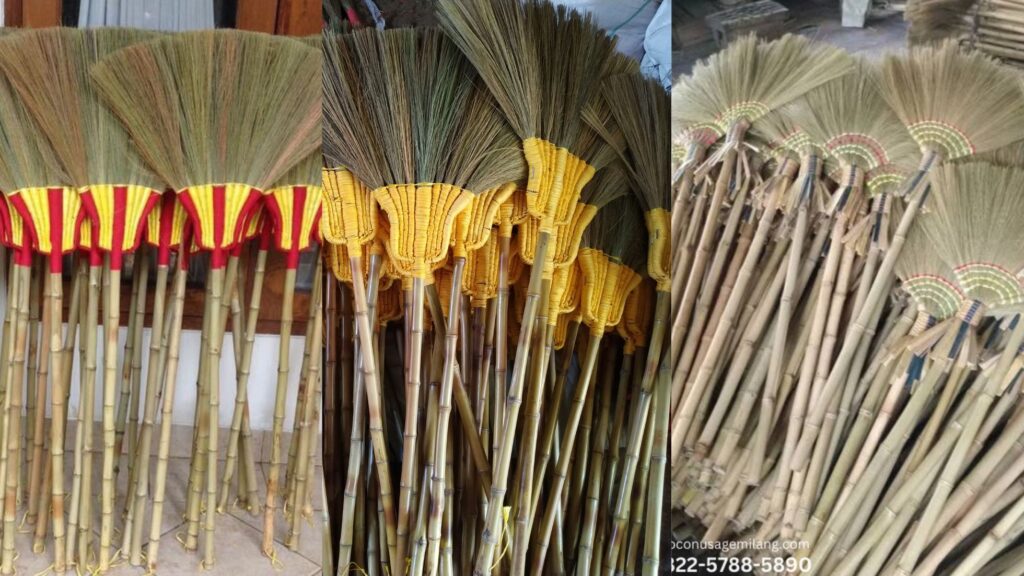
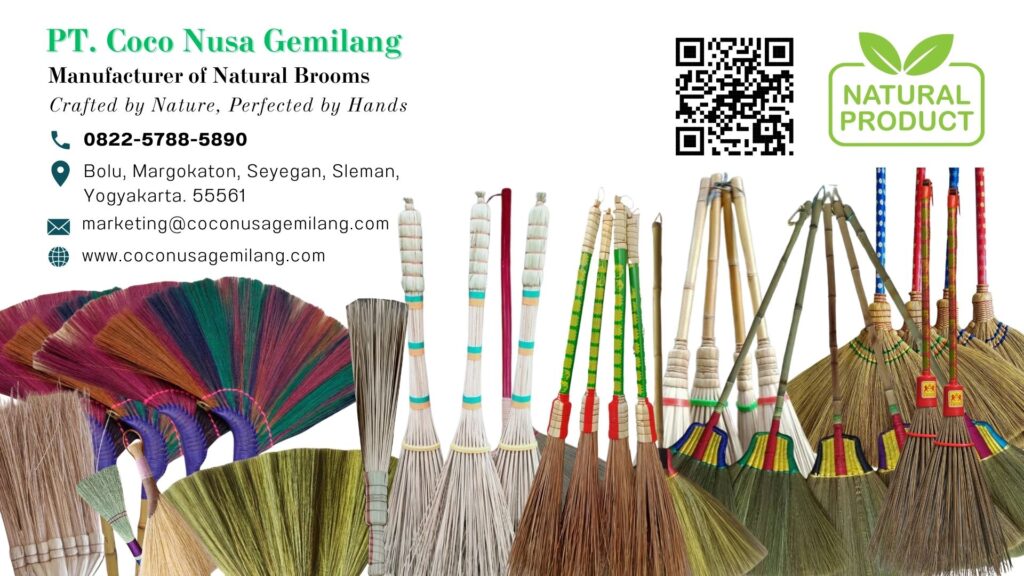
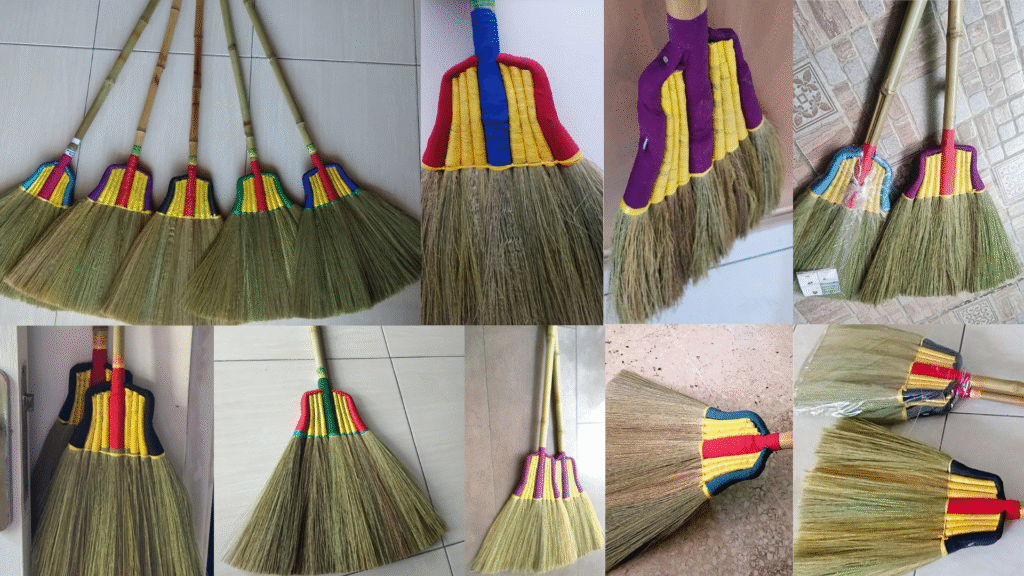
At this point, it is important to acknowledge the contribution of companies that bring sorghum broomcorn products to global markets. Coco Nusa Gemilang, based in Indonesia, stands among the dedicated manufacturers supplying export-ready sorghum broomcorn brooms. Their focus on consistent quality sets them apart, as they produce numerous types and models tailored to the needs of international buyers. Because demand varies across regions, the company develops brooms for household use, industrial sweeping, commercial cleaning, and outdoor maintenance.
Furthermore, Coco Nusa Gemilang operates with a pricing system designed to accommodate buyers of different scales. Their export prices range from 0.9 USD to 2.6 USD per piece FOB Port Semarang, Indonesia, depending on fiber density, broom design, and total order volume. These rates remain flexible, of course, and the company welcomes negotiation to reach mutually beneficial agreements. This openness allows importers to secure consistent supply without compromising their margins or quality expectations.
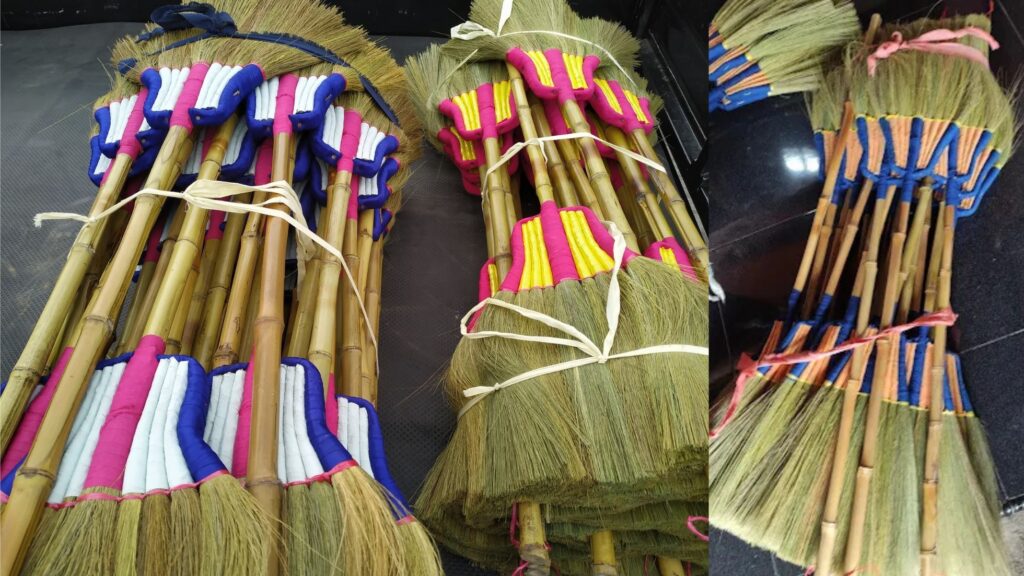
Moreover, the company’s manufacturing capacity supports high-volume orders while maintaining attention to detail. They offer sorghum broomcorn brooms in multiple configurations, allowing buyers to select ideal combinations for their target markets. As a result, distributors from Asia, the Middle East, Europe, and emerging economies trust the company for dependable shipments and uniform product standards. Through steady communication and efficient logistics planning, Coco Nusa Gemilang has established a reliable presence in the international broom industry.
Equally important, Coco Nusa Gemilang emphasizes strict quality inspections. Their production process includes fiber selection, controlled drying, precise sorting, secure binding, and aesthetic finishing. Each broom is examined before packing to ensure that it meets export expectations. Because of this commitment, customers receive products that perform well immediately, reduce return rates, and satisfy end-users. This dedication reflects the company’s long-standing belief that quality craftsmanship remains essential even in a globalized, competitive market.

Looking Forward: The Future of Sorghum Broomcorn
The future of sorghum broomcorn looks promising. As sustainability discussions intensify across industries, natural products gain renewed importance. Broomcorn aligns perfectly with these values, offering biodegradability, low processing impact, and long functional life. Manufacturers who invest in refining production techniques will continue to meet growing demand. Retailers and wholesalers, in turn, benefit from offering products that address both ecological concerns and practical needs.
Consumer preferences are shifting as well. Many buyers seek tools that do not rely on complex mechanisms, disposable plastics, or heavy energy requirements. A sorghum broomcorn broom fits these criteria intuitively. It requires no electricity, produces no secondary waste, and endures through years of routine use. The simplicity of its design is precisely what makes it so effective—a reminder that some natural materials outperform synthetic solutions even in the modern age.
Furthermore, broomcorn maintains cultural, historical, and emotional appeal. People appreciate tools that reflect skill, tradition, and honest craftsmanship. The broomcorn broom embodies these values, making it both a practical object and a meaningful symbol. Its continued presence throughout homes, workshops, farms, and commercial spaces shows that utility and heritage can coexist.
In conclusion, sorghum broomcorn remains an exceptional material for sweeping tools due to its reliability, eco-friendliness, and rich cultural background. The industries that rely on it do so for good reason. As long as people value durable, efficient, and sustainable cleaning tools, sorghum broomcorn will maintain its place in global markets and everyday life.