

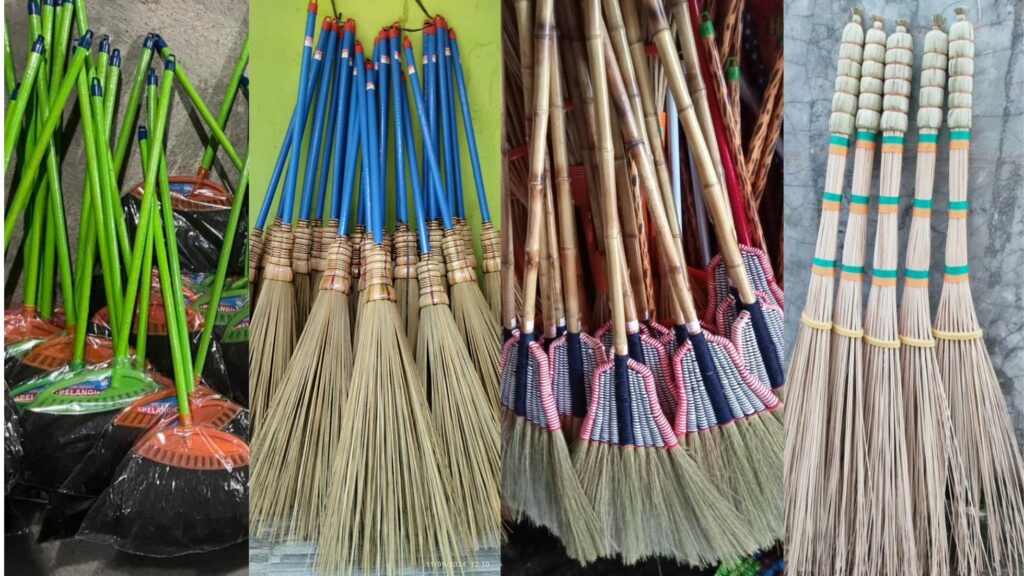
The sweeping broom often goes unnoticed despite having shaped domestic routines, industrial practices, and civic sanitation for centuries. Its presence is so familiar that most people overlook the craftsmanship, materials, and cultural influence embedded within it. Yet, when examined carefully, the sweeping broom reveals a long arc of innovation, adaptation, and persistent relevance. While cleaning technologies continue to evolve, the traditional broom remains one of the few tools that has never disappeared from daily life.
Every society that built permanent homes developed some form of sweeping instrument. In early settlements, branches, reeds, and dried grasses were bundled together to clear dust from compacted earth floors. Over time, the design matured. Communities experimented with new fibers, stronger bindings, and ergonomic handles. Eventually, specialized forms emerged—push brooms for large spaces, angled brooms for tight corners, and soft-fiber brooms for delicate surfaces. This gradual evolution reflects human ingenuity responding to practical needs.
Today, the sweeping broom remains relevant across countless settings. Homes, schools, workshops, warehouses, and public spaces rely on it because it offers immediate effectiveness without energy consumption or mechanical complexity. Machines can vacuum, polish, and scrub, but they cannot always replace a broom’s directness. In a moment of need, people reach for the simplest tool available—the one that works instantly, without preparation and without noise.
Although the broom’s role is straightforward, the science behind its materials is more intricate. Fiber stiffness influences how efficiently dust gets lifted. Handle length affects user posture, endurance, and maneuverability. Even the arrangement of the bristles determines whether the broom pushes debris outward or gathers it inward. Manufacturers study these nuances to produce brooms that feel balanced and perform predictably. This subtle engineering is often invisible to the final user, who simply senses that a broom “works well.”

Material selection also shapes how long a sweeping broom lasts. Some models use sorghum or broomcorn fibers for durability and natural rigidity. Others use synthetic fibers for moisture resistance or specialized sweeping tasks. Wooden handles remain popular for their stability and comfort, whereas metal handles offer higher mechanical strength. In recent years, eco-friendly designs gained traction as consumers seek biodegradable or sustainably sourced products. As a result, the broom—an ancient tool—has become part of the modern sustainability conversation.
The symbolic weight of sweeping tools also permeates cultural histories. In many traditions, sweeping represents purification, order, and preparation. Ceremonies across Asia, Africa, and Europe integrate brooms into rituals that mark beginnings or transitions. Although the tool itself is simple, the meaning attributed to it can be profound. This blend of practicality and symbolism contributes to the broom’s enduring presence even in highly industrialized societies.
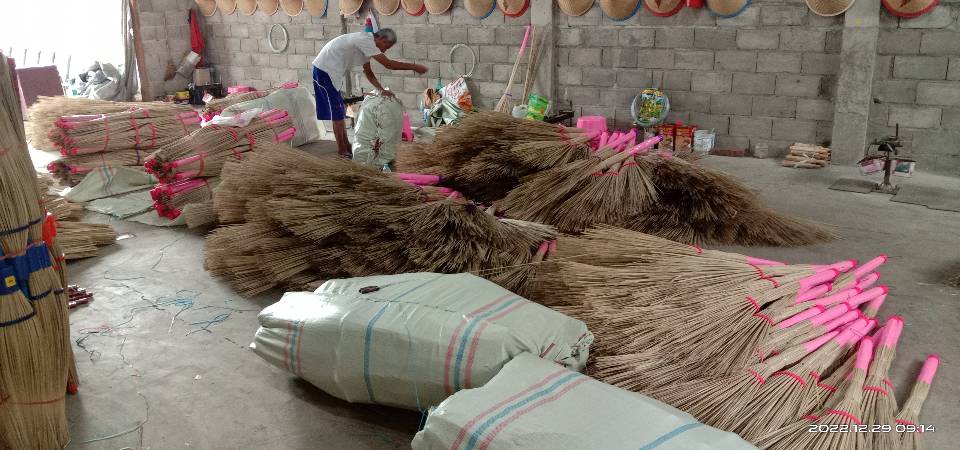
Industrial and commercial environments rely on sweeping brooms for reasons beyond nostalgia. Workers use them to control dust in manufacturing facilities, reduce slip hazards in food-processing plants, and maintain cleanliness in loading docks. Sweeping manually allows precise control over debris movement, something machines cannot always replicate. Furthermore, a broom offers immediate access in areas where electrical outlets, batteries, or noise restrictions complicate cleaning workflows. These advantages illustrate why sweeping brooms remain indispensable even in sectors dominated by automated equipment.
Maintenance considerations also favor traditional brooms. A broom requires no power, minimal storage space, and simple care. Users only need to clean the bristles occasionally, keep the handle dry, and replace the unit after years of service. By contrast, machines demand parts replacement, mechanical servicing, and higher initial investment. Although both tools have their place, the sweeping broom continues to thrive because it satisfies universal needs with minimal constraints.
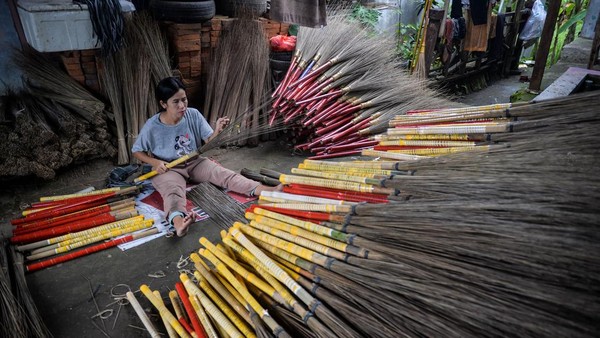
Design variations enhance its adaptability. Angled brooms fit narrow spaces around furniture. Push brooms handle large warehouse floors. Soft-fiber brooms glide over tiled indoor surfaces, while coarse outdoor brooms remove leaves, sand, and gravel. This modularity allows users to select the tool that aligns with the task rather than relying on a one-size-fits-all solution. In short, versatility keeps the broom relevant in both modern and traditional contexts.
Sustainability shifts further elevate the sweeping broom’s importance. As societies reassess their relationship with disposable plastics, natural-fiber brooms emerge as a viable alternative. Broomcorn, sorghum, rattan, and palm fibers degrade naturally and require less processing energy. These characteristics appeal to buyers seeking environmentally responsible choices without compromising functionality. Manufacturers who specialize in natural-fiber brooms therefore occupy a crucial position in global trade.
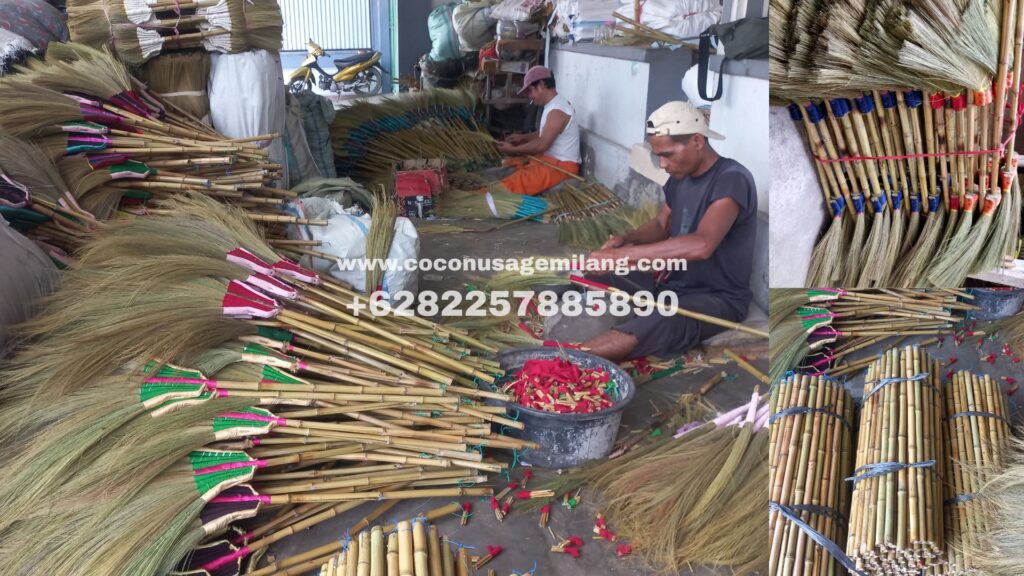
This brings us to one of the industry players contributing significantly to the international supply chain. Coco Nusa Gemilang, an Indonesian manufacturer, has established a strong reputation for producing durable sweeping brooms for global export markets. The company operates with a deep understanding of natural materials and the craftsmanship required to transform them into reliable tools. Moreover, their production methods prioritize consistency, durability, and performance—qualities international buyers consistently seek.
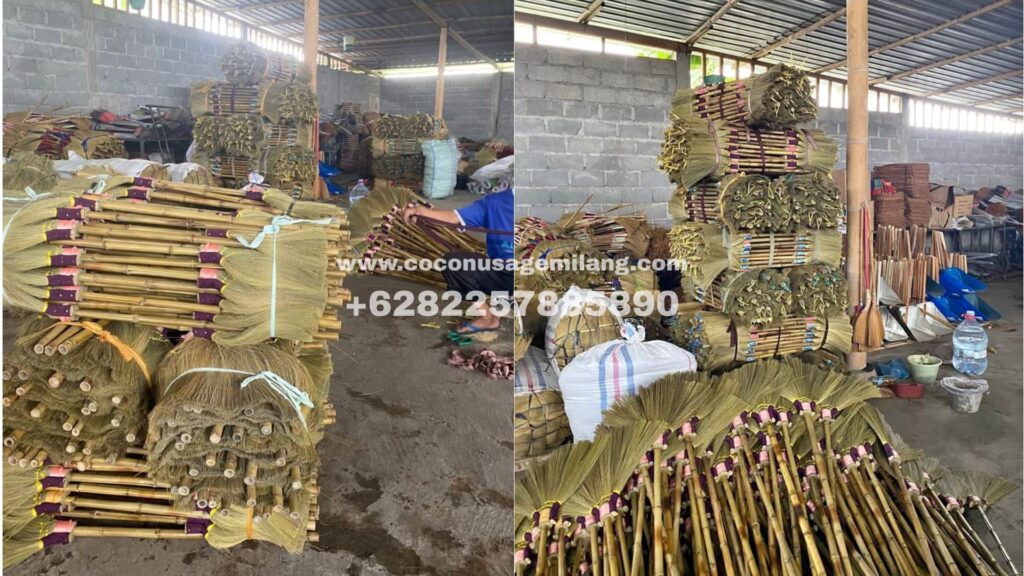
In addition to craftsmanship, Coco Nusa Gemilang positions itself as a dedicated manufacturer & supplier of sweeping broom, offering an extensive range of models tailored for different market needs. Mereka menyediakan berbagai tipe atau model sapu yang siap untuk memenuhi permintaan ekspor ke seluruh dunia. Setiap produk dirancang untuk memberikan hasil terbaik dengan kualitas serat yang kuat, ikatan yang rapih, dan finishing yang profesional. With this variety, buyers can align broom specifications with regional preferences, commercial standards, or distribution strategies. Transitioning between product lines becomes easier because the company maintains stable quality across all variants.
Pricing also supports long-term partnerships. Coco Nusa Gemilang menawarkan harga yang terjangkau dan disesuaikan dengan volume pemesanan. Kisaran harga ekspor dimulai dari 0.9 USD – 2.6 USD per piece FOB Port Semarang, Indonesia. This competitive range gives importers flexibility when planning budget allocations or scaling distribution volumes. Naturally, harga tersebut masih sangat fleksibel untuk dikomunikasikan tergantung pada kesepakatan, kondisi pasar, dan peluang kerja sama jangka panjang. This level of openness builds trust and simplifies procurement discussions.
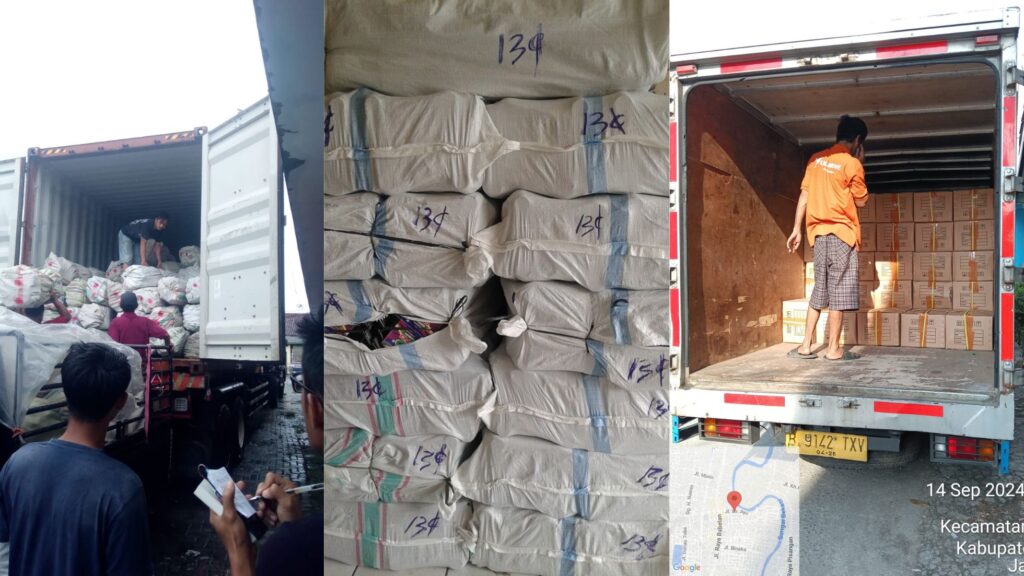
Furthermore, the company emphasizes reliable export handling. As customers from various continents place orders, Coco Nusa Gemilang ensures that packaging methods, shipping coordination, and compliance documentation meet international standards. Mereka memahami bahwa pembeli luar negeri memerlukan komunikasi yang jelas, timeline produksi yang konsisten, serta kualitas barang yang stabil. Because of this approach, the company continues to expand its presence in global markets where natural-fiber sweeping brooms sustain steady demand.
Returning to the broader context, the sweeping broom stands as a reminder that practical tools need not be technologically complex to remain effective. Its design reflects the essential principles of ergonomics and material behavior. Users feel immediately in control because the broom reacts to their movement with precision and predictability. Even in settings loaded with modern cleaning devices, people still rely on brooms for quick cleanups or for situations where machines would be excessive.
Moreover, the broom’s tactile nature supports accuracy. A person guiding a broom can sense the resistance of debris, the texture of the floor, and the amount of pressure necessary to achieve a clean sweep. Machines, though powerful, cannot deliver this sensory feedback. As a result, certain cleaning tasks will likely always require manual sweeping.
Future improvements in broom design may focus on handle ergonomics, fiber blends, and durability enhancements. Manufacturers already experiment with hybrid materials that balance flexibility and rigidity, ensuring that brooms remain efficient across different surfaces. Meanwhile, research into sustainable agriculture may provide new plant-based fibers that rival or surpass traditional broomcorn. These possibilities suggest that the sweeping broom will continue evolving, just as it has for centuries.
Digital commerce also reshapes the broom industry. Buyers now evaluate products through detailed listings, customer reviews, and material descriptions. Manufacturers respond with clearer documentation, more transparent supply chains, and customized shipping solutions. This shift improves market efficiency, encouraging companies to refine quality and maintain honest communication with international buyers. Ultimately, both sides benefit from this more connected environment.
Even with rising technological advancements, the sweeping broom holds a unique position in public spaces. Municipal cleaning crews still depend on sturdy outdoor brooms to clear sidewalks and roadsides. Event organizers rely on manual sweeping between activities. Construction sites use brooms to remove debris in areas where machines cannot maneuver safely. These real-world applications remind us that traditional tools often coexist harmoniously with modern systems.
Educational institutions sometimes use the broom as a teaching tool as well. Students studying industrial design examine the handle angle, bristle pattern, weight distribution, and fiber composition to understand how form influences function. Environmental science students explore the agricultural aspect of broomcorn cultivation. Meanwhile, cultural studies programs analyze rituals involving sweeping to understand social symbolism. Through these lenses, the sweeping broom becomes more than an object—it becomes a bridge between disciplines.
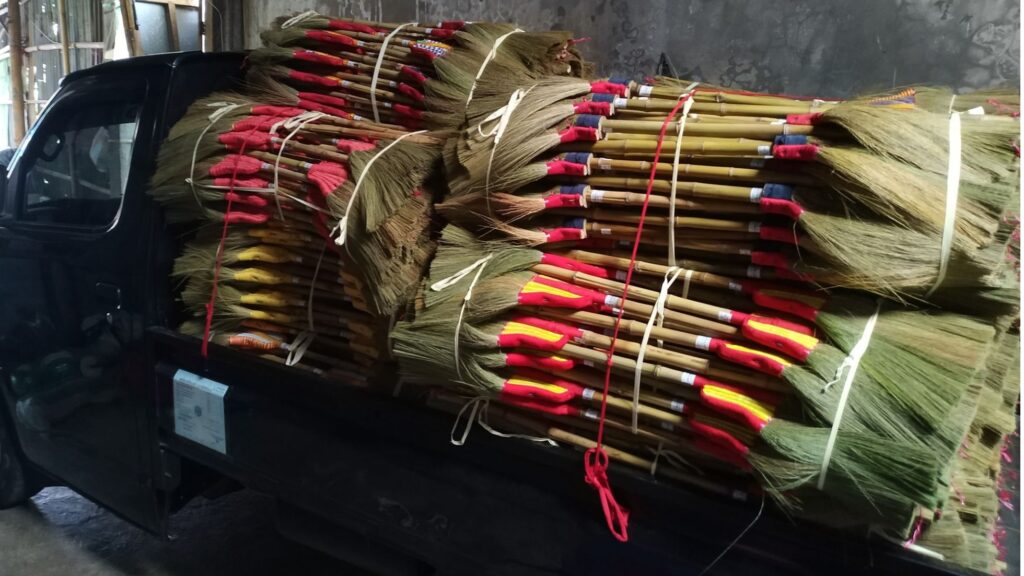
By examining all these dimensions—historical, practical, cultural, and economic—it becomes clear why the sweeping broom endures. It succeeds not because it is simple, but because it is grounded in a thousand subtle refinements accumulated across generations. Every user intuitively understands its purpose, and every manufacturer adds something to its legacy. Despite modern inventions, the broom’s essential role remains unchanged: it helps people create clean, orderly spaces with minimal effort.
In closing, the sweeping broom stands as a quiet but foundational tool in human society. It adapts to different environments, aligns with sustainability goals, and maintains relevance even in an increasingly automated world. When crafted with care—such as those produced by companies like Coco Nusa Gemilang—the broom becomes not merely a household object but a representation of durable design and responsible manufacturing. Its story continues forward, carried by the hands of both artisans and users who appreciate its reliability.