

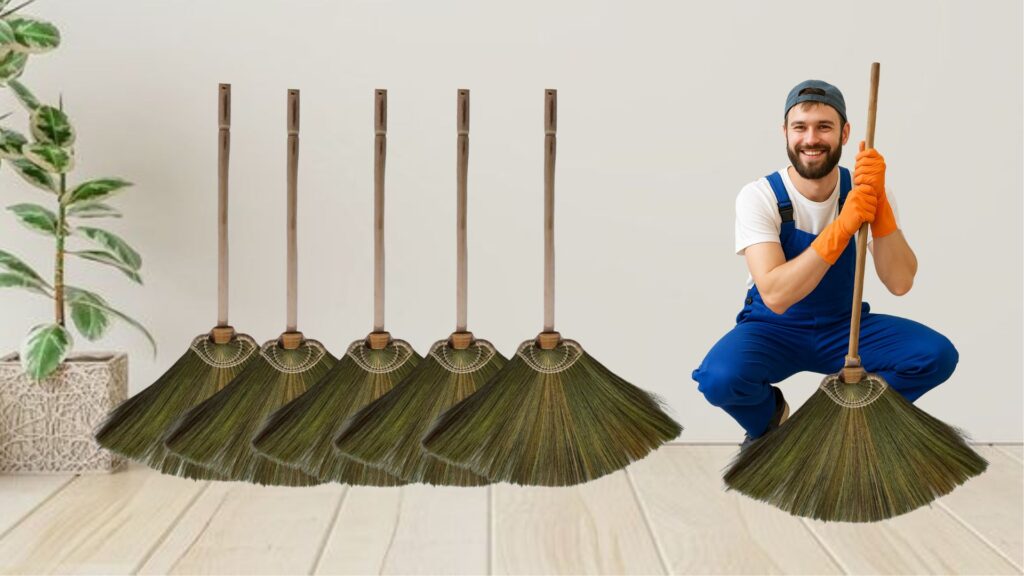
Across the archipelago of Indonesia, where agriculture and craft have long been intertwined, a simple yet enduring tool remains a quiet testament to both heritage and ingenuity — the straw broom. Made from dried natural fibers, tied by hand, and used daily in homes and workplaces, the straw broom is far more than a cleaning tool. It represents the continuation of rural craftsmanship, sustainable production, and a modest but significant export potential for Indonesian manufacturers.
This article explores the historical roots, materials, production processes, and market evolution of the straw broom in Indonesia. It also highlights Coco Nusa Gemilang, a dedicated manufacturer producing handmade, high-quality straw brooms with a strong commitment to sustainability and export readiness for the European market.
1. The Cultural and Historical Context of Straw Brooms
Long before modern synthetic alternatives appeared, Indonesian households relied on brooms made from natural materials. Whether crafted from grass, rice stalks, or coconut leaves, these tools were essential to daily life. Their presence extended beyond function; sweeping symbolized both cleanliness and renewal. In many local traditions, cleaning one’s home before religious holidays or ceremonies was a ritual to invite prosperity and harmony.
This connection between cleanliness, community, and the use of natural materials remains deeply rooted. Even as urbanization spreads, the straw broom continues to occupy a familiar corner in Indonesian homes — a reminder that practicality can coexist with cultural continuity.
In rural areas, broom-making became a livelihood. Families gathered after harvest seasons to dry and bind grasses into sturdy bundles. The work was simple but skillful, demanding patience and precision. Each broom reflected the maker’s touch, and in many villages, the craft was passed down through generations.
Today, while industrialization has changed much of Indonesia’s production landscape, the straw broom industry persists — evolving from a local craft to an internationally traded commodity.
2. Natural Materials and Their Role in Quality
The defining quality of a straw broom lies in its raw material. In Indonesia, artisans use a range of plant-based fibers — including Imperata cylindrica (alang-alang grass), rice stalks, palm leaf midribs, and coconut fibers. Each material offers distinct benefits.
- Alang-alang grass produces soft yet durable bristles, ideal for indoor sweeping.
- Coconut leaf sticks provide sturdiness, often used for outdoor or heavy-duty brooms.
- Rice stalks are lightweight and flexible, perfect for smooth surfaces.
Harvesting and preparing these fibers requires experience. They must be cut, sun-dried, cleaned, and sorted by hand to ensure consistency. Excess moisture can cause mold, while uneven fiber size may weaken the broom. Therefore, craftsmanship begins long before assembly — in the careful selection and preparation of each strand.
What distinguishes Indonesian straw brooms from mass-produced alternatives is this deep respect for natural materials. Every piece carries the essence of the land and the labor of the hands that shaped it.
3. The Handmade Process: From Fiber to Finished Tool
Unlike factory-made plastic brooms that roll off automated lines, Indonesian straw brooms are handmade from start to finish. The process remains largely artisanal, involving steps that demand attention, skill, and a steady rhythm of labor.
The general process unfolds as follows:
- Gathering and drying – Freshly harvested fibers are sun-dried to achieve ideal moisture levels.
- Cleaning and trimming – Each stalk or strand is cleaned, smoothed, and cut to uniform length.
- Sorting and bundling – Fibers are grouped based on thickness and texture to ensure balance.
- Binding to handles – Artisans bind the fibers tightly to wooden or bamboo handles, often using natural ropes or strong synthetic twine.
- Finishing and inspection – The final broom is inspected for balance, firmness, and aesthetic appeal before packaging.
Each broom, therefore, carries the unique fingerprint of its maker. Slight variations in binding style, tension, or handle finishing give every unit a handcrafted individuality. For many artisans, this process is more than labor — it is an act of creative expression.
4. Coco Nusa Gemilang: Artisans of Natural Quality
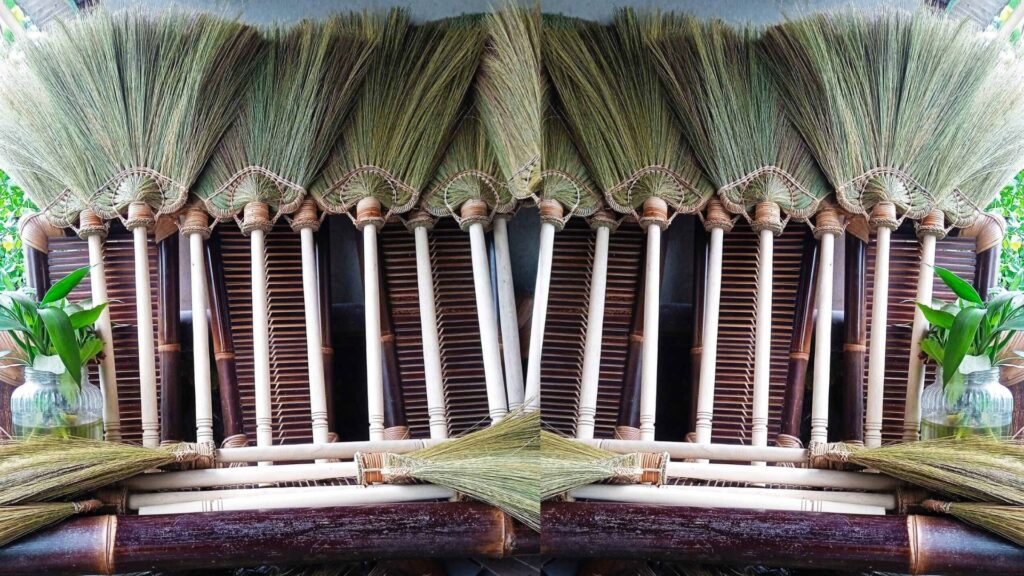
Among the companies preserving this craft at scale, PT Coco Nusa Gemilang stands out. Based in Indonesia, the company manufactures and exports natural handmade straw brooms made from coconut and grass materials.
What makes Coco Nusa Gemilang distinctive is its philosophy: to merge traditional craftsmanship with international standards. Each broom is hand-tied by skilled artisans, using locally sourced natural fibers that embody both resilience and ecological responsibility.
The company’s production model honors sustainability — not merely as a marketing term but as a guiding principle. The use of renewable plant materials, eco-friendly packaging, and waste-minimizing processes reflects a long-term vision for responsible trade.
Coco Nusa Gemilang is also export-ready for the European market, having developed products that meet global expectations of quality, durability, and ethical sourcing. Their approach emphasizes both functionality and aesthetics, positioning their brooms not only as household tools but also as handcrafted home goods that tell a story.
In essence, Coco Nusa Gemilang’s operations show that small-scale craftsmanship can coexist with global commerce — as long as quality, transparency, and sustainability remain at the heart of production.
5. The Sustainability Equation
In an age dominated by synthetic convenience, the sustainability of straw brooms offers a quiet but powerful alternative. Every component — from the fibers to the wooden handle — is biodegradable. When a straw broom reaches the end of its life, it returns harmlessly to the soil.
This natural lifecycle contrasts sharply with the environmental cost of plastic brooms, which often end up in landfills or oceans, taking centuries to degrade. By comparison, a straw broom has a much smaller ecological footprint throughout its life cycle: from raw material sourcing to disposal.
Furthermore, the industry supports local economies. By sourcing materials from farmers and involving local craftspeople, companies like Coco Nusa Gemilang contribute directly to rural livelihoods. This form of distributed production sustains communities that might otherwise be left behind by mechanized manufacturing.
In that sense, the humble straw broom becomes part of a broader sustainability model — one that balances environmental stewardship with social equity and economic opportunity.
Broom Grass Importers in Indonesia: A Sustainable Trade Shaping Global Markets
6. Economic Relevance and Global Market Potential
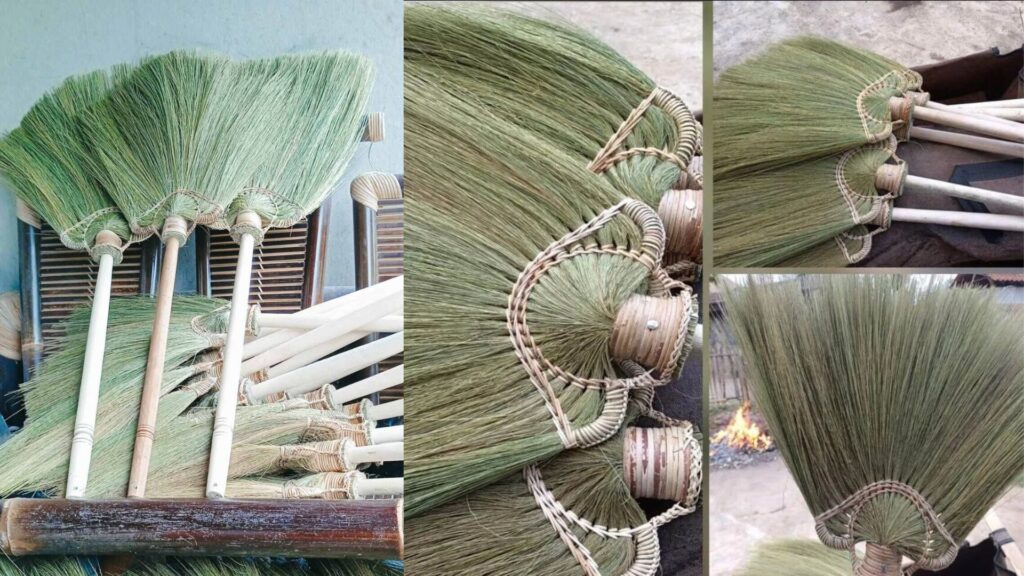
While it may seem modest, the straw broom represents a valuable export commodity. Demand from international markets, especially in Europe and Asia, has been rising as consumers become more conscious of sustainable household products.
European buyers, in particular, have shown growing interest in eco-friendly handmade goods. The aesthetic of natural fibers, combined with the appeal of traditional craftsmanship, fits neatly within the European ethos of sustainability and minimalism.
Here, Coco Nusa Gemilang has positioned itself strategically. With its focus on handmade quality and sustainable sourcing, the company can meet the preferences of eco-aware consumers and distributors abroad. By adhering to export standards — such as proper packaging, moisture control, and documentation — it ensures reliability for international partners.
Moreover, Indonesia’s abundance of raw materials offers a comparative advantage. Local access to coconut by-products and grasses reduces cost and carbon impact from transport. Combined with skilled labor, this gives Indonesian broom manufacturers the potential to compete globally without compromising ethics or quality.
7. Challenges Facing the Industry
Despite its promise, the straw broom industry faces real challenges. Inconsistent supply of raw materials due to seasonal cycles can disrupt production. Rainy weather, for example, limits drying opportunities for grass and coconut fibers. Climate variability adds further unpredictability.
Another issue is market competition. Synthetic brooms, produced cheaply in mass quantities, often dominate urban markets. Although less sustainable, they appeal to price-sensitive consumers. Artisanal brooms must therefore differentiate themselves through quality, longevity, and storytelling.
Furthermore, maintaining export-grade quality requires strict control. A single batch affected by moisture or pests can compromise shipments. To address this, manufacturers must adopt proper storage facilities, regular inspections, and training programs for workers.
Companies like Coco Nusa Gemilang have recognized this reality and invested in systematic quality assurance. By integrating traditional techniques with modern management practices, they ensure that each broom meets both functional and aesthetic expectations.
8. Human Craftsmanship: The Hands Behind Every Broom
The value of a handmade broom lies not only in its material but also in the human labor it embodies. Each artisan develops a rhythm — sorting fibers, binding handles, trimming edges — in a pattern that blends precision and intuition.
For many, broom-making provides stable employment in regions where job opportunities are limited. It supports women and small households, allowing flexible work hours and supplemental income. These social dynamics turn broom production into a community-driven enterprise rather than a purely industrial process.
Moreover, the craft fosters a sense of dignity and continuity. When artisans see their work shipped abroad, labeled “Made in Indonesia,” it affirms that their skills hold global value. In turn, this recognition strengthens the preservation of local craftsmanship traditions.
Through such human effort, each broom becomes more than a tool — it becomes a story of livelihood, culture, and perseverance.
9. The Future of Straw Brooms in a Changing World
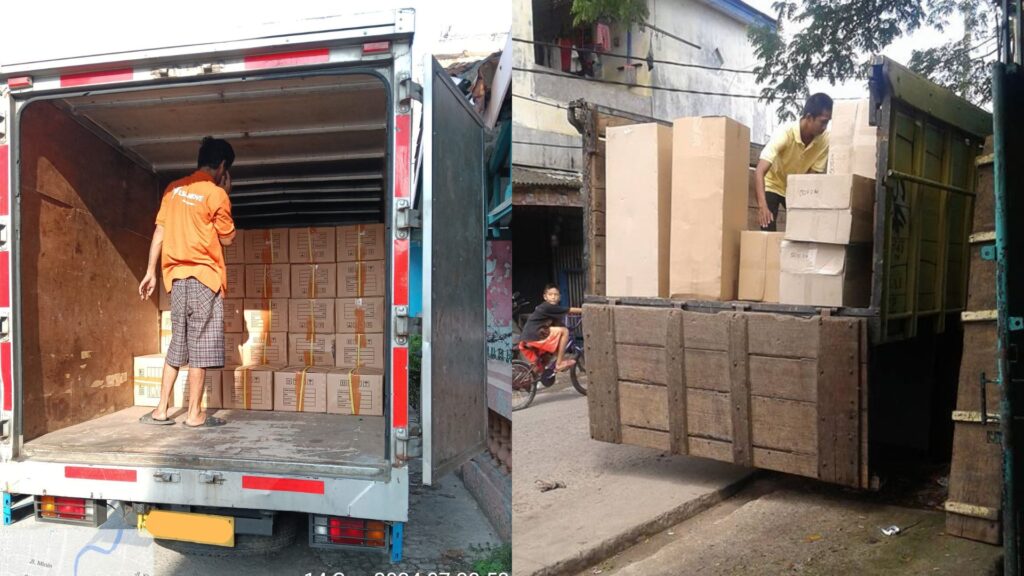
The global shift toward sustainable living creates fertile ground for industries like broom-making to thrive. As consumers re-evaluate their relationship with disposable goods, demand for durable, biodegradable, and ethically made products will continue to rise.
For Indonesian producers, the opportunity lies in combining craftsmanship with innovation. Adding ergonomic handles, eco-certified finishes, or decorative designs can elevate the broom from a basic utility item to a lifestyle product. With the right branding, a straw broom can become an emblem of conscious consumption — practical, beautiful, and responsible.
Coco Nusa Gemilang has already taken steps in this direction. By focusing on design refinement, export readiness, and brand storytelling, they represent the evolving identity of Indonesia’s natural crafts sector. Their brooms demonstrate that sustainability need not sacrifice style or utility.
Looking ahead, collaboration between producers, designers, and environmental advocates could further enhance market reach. By creating fair-trade networks and adopting transparent sourcing policies, the straw broom industry could become a model for sustainable rural entrepreneurship.
10. Why the Straw Broom Still Matters
In a world increasingly defined by convenience, the straw broom stands as a quiet counterpoint. It invites reflection on what it means to create and use things consciously. Its form, unchanged for generations, proves that not every tool needs reinvention — some simply need recognition.
The straw broom’s endurance in Indonesia reveals much about cultural resilience and environmental awareness. It survives not because it is cheaper or faster to make, but because it embodies principles of simplicity, balance, and sustainability that modern society often overlooks.
When one considers the journey of a handmade broom — from the hands of a farmer gathering coconut leaves to the artisan binding them, to the home of a European customer seeking natural products — it becomes clear that this humble item connects worlds. It unites craft and commerce, nature and necessity.
And within that intersection stands Coco Nusa Gemilang, representing how local artisanship can scale responsibly, bringing the spirit of Indonesian craftsmanship to the global stage.
Conclusion
The story of the straw broom in Indonesia is, ultimately, a story of endurance — of people, of tradition, and of sustainable practice. Through decades of change, this simple household item has adapted without losing its essence. It remains handmade, renewable, and deeply human in its creation.
For companies like Coco Nusa Gemilang, broom-making is both livelihood and legacy. By upholding craftsmanship, prioritizing natural materials, and aligning with global sustainability values, they prove that traditional industries can thrive in a modern economy.
In the end, the straw broom reminds us that progress does not always mean replacing the old with the new. Sometimes, it means refining what already works — preserving what is honest, useful, and beautiful.
As global markets rediscover the worth of handmade, eco-friendly goods, Indonesia’s straw broom industry stands ready — poised to sweep not just floors, but perceptions — showing that craftsmanship, when guided by care and sustainability, remains timeless.